AI Advertising Trends 2026: The Real Content Comeback No One Saw Coming
Not so long ago — when AI seemed like the ultimate shortcut to creativity. It promised faster turnarounds, endless creative variations, and personalization at a large scale we had never seen before.
Now, here we are in 2026, and that same AI promise still exists. But something unexpected has shifted. As AI-generated content floods our feeds, people aren’t just consuming it anymore; they’re questioning it. Audiences want much more than that: they want “realness.”
This presents an interesting paradox influencing advertising opportunities with Artificial Intelligence (AI) into 2026; as AI becomes increasingly commonplace in our society, what feels human, imperfect, and emotionally true is starting to stand out again. Human-centered storytelling isn’t just returning—it’s becoming a differentiator.
The AI boom that changed everything
In the last couple of years, AI has gone from a tool in testing to a key component for every brand. Brands use AI to create everything from ad copy and visuals to videos and entire campaigns. AI was the lead ingredient for many high-profile advertisements during Super Bowl 2026.
The business benefits of using AI for advertisement creation include:
- Faster production cycles
- Lower costs for creative
- Countless opportunities for testing
AI can produce advertisements quickly using hundreds of variations in just minutes. Research has shown that AI-generated advertisements can be as persuasive as, or more persuasive than, human creatives.
However, efficiency does not necessarily result in an emotional connection with the audience.
Rise of a backlash against AI-generated content
As AI-generated content has increased, so has the public’s response to it. Consumers are starting to react negatively to seeing AI-generated ads.
- Only 26% of those surveyed prefer to see content created by AI that resembles a creator, down quickly from years past.
- Many people view AI-Generated Content as being “soulless” and “repetitive”.
- Even campaigns that use AI were criticized for their inability to tell a story, such as the AI-heavy Super Bowl ads.
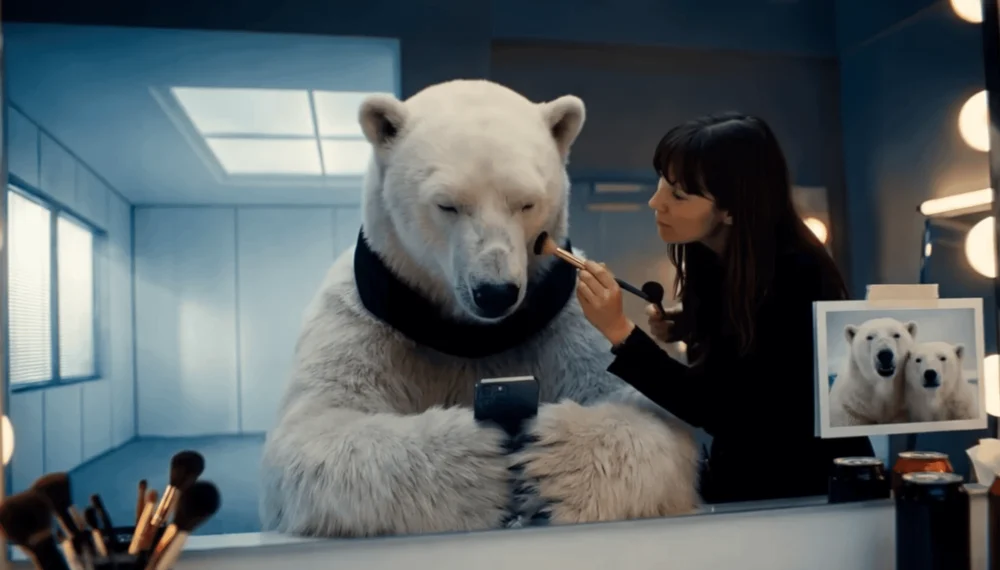
And when AI goes wrong, it goes very wrong.
For example, Gucci faced backlash after an ad created by AI, while poorly executed AI-created visuals were labeled “cheap” or “tacky” during other campaigns.

Additionally, the creation of deep-fake ads featuring celebrities has created concerns about trust and safety as they blur the line between advertising and manipulation.
Takeaway: AI has not only increased the number of pieces of content that exist throughout the world; however, but it has also decreased the amount of trust that is present when creating content.
Human vs AI content marketing: The trust gap
This raises the discussion of one of the biggest issues facing marketers today: the use of humans versus Artificial Intelligence to create and generate content marketing.
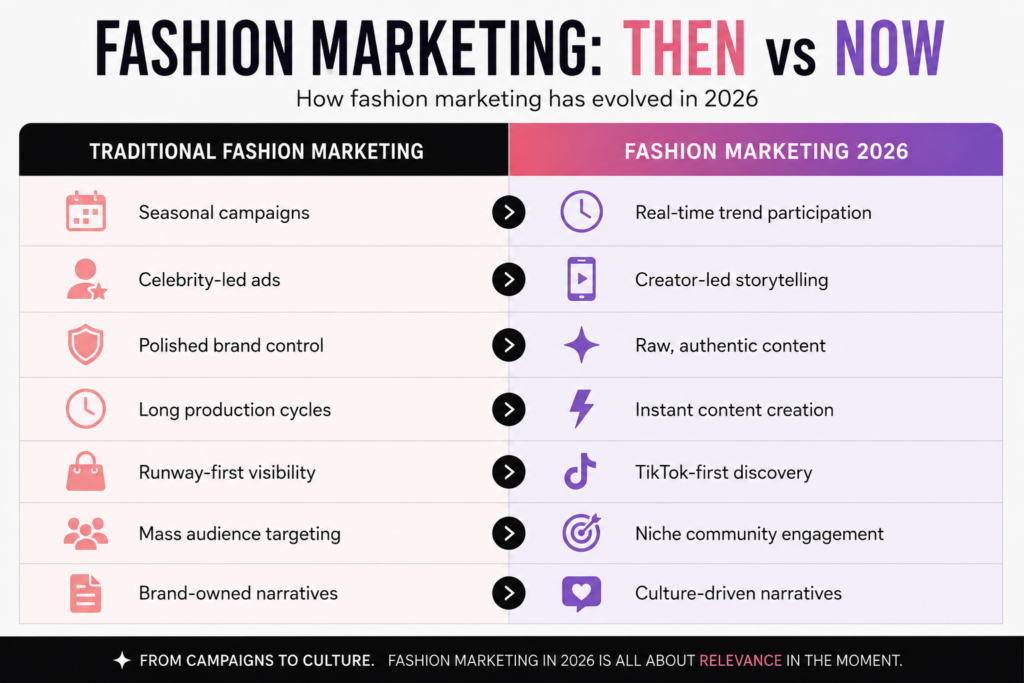
While the quality of the content is certainly different, there is also a disparity in terms of how consumers view it.
- 74% of consumers trust other “humans” like themselves more than they do corporations and other automated systems.
- Gen Z and Millennial consumers are very wary of advertising created by AI unless the advertisements have been made transparent regarding the use of AI.
That results in the creation of what experts are calling the “Trust Gap of AI.”
AI can:
- Create content very quickly.
- Create individualized content for large audiences.
- Produce content that performs much better than anything created by a human.
On the other hand, human beings provide:
- The ability to add emotional layers.
- The ability to provide cultural context.
- Storytelling skills to provide an authentic experience.
By 2026, the ability to create emotional layers will become the most significant competitive difference.
Looking at the return of ‘Real’ content marketing
The emergence of AI fatigue has led many companies to turn back to an older, but still effective, strategy of using authentic content marketing. We can see this trend happening clearly right now:
- Campaigns that highlight “made by human” content.
- The telling of ‘Behind the Scenes’ stories.
- Content is being created and shared raw and unedited by content creators.
Even large corporations are promoting/advertising “human-created” content. There are even some campaigns that specify no use of AI and promote the value of “real” content.
This represents the growth of real content in the marketplace where imperfection is regarded as a positive quality. In a world full of perfect AI-generated visual media, there is no question that “imperfection” will be viewed as being “real” when you compare it to those perfect visual media.
The true definition of content marketing strategy: 2026
So, what will a true definition of content marketing strategy be in 2026? It isn’t to completely discard AI, but rather to reinvent how we define and utilize it:
1. Use AI for Scale and Humans for Storytelling
Effective brands will utilize AI technology for its ability to provide:
- Variations
- Testing
- Production
But keep humans at the core of:
- Narrative
- Brand voice
- Emotional hooks
2. Personality-Based Marketing Strategy
Individuals establish a relationship with another person and not a brand identity symbol. The increase in use of personality-based content marketing has occurred because of the inclusion of the following:
- Founder-based content
- Employee voice
- Influencer collaboration
The brand, then, is humanized instead of seen as a large, impersonal entity.
3. POV Content Marketing Strategy
Instead of traditional polished ads, brands have moved toward creating:
- Opinion
- Take
- Cultural commentary
POV content feels less like advertising—and more like participation, which makes it far more engaging.
4. Using Transparency as a Competitive Advantage
Brands that provide clear indicators of their use of AI are receiving increased consumer engagement. This is not because individuals like AI, but rather that individuals respect a company for providing accurate information.
Examples of AI-generated ads—Successes and failures
With the rapid evolution of AI-generated advertising (AI ads), so too have consumer reactions to them. There are brands experimenting with AI to push creative boundaries, while other brands demonstrate how sensitive consumers are to issues of authenticity and trust.
Meta AI Sandbox Advertisements
Meta’s introduction of AI-generated advertisements for brands allowed marketers to create automated creatives with little human involvement; however, advertisers felt that the final product was not human enough or had been generated automatically.
Google AI-generated search advertisements (SGE Experience)
Google’s use of AI-generated advertisements at the search level and AI-generated summaries has allowed brands to efficiently scale their messages to be more personal and perform well for brands in performance-based marketing, while also raising some debate about transparency.
The lesson learned is that AI-based campaigns are performing better than traditional (human) efforts when the use of AI improves a campaign in terms of efficiency and scale; whereas when AI is used to replace creative methods of storytelling or to develop a brand’s identity, AI-generated advertisements are not performing as well.
Authenticity is now the strategy
A major theme among the most discussed advertising campaigns of 2026 is the idea of being human.
- Showing true customer experiences
- Using raw, spontaneous user-generated content
- Making creative, inspiring work that embraces imperfection
Furthermore, large brand companies are using unpolished or authentic looks because their audiences find them more credible than other types of advertising. Authenticity is now a strategy used in marketing to create branding strategies, as opposed to a brand value.
Human storytelling in advertising is the new premium
In 2026, there is a paradox:
AI has reduced the cost of producing content to an unprecedented level. The value of human storytelling in advertising has never been higher than it is now.
In the world of automation;
- Genuine emotions are clearly identifiable
- Genuine experiences are relatable
- Genuine voices are persuasive
Authenticity is not optional; it’s how companies differentiate themselves.
The future of advertising 2026: Hybrid, no longer human vs AI
So, what is happening now? The future isn’t human versus AI; rather, it is human plus AI, the right way.
AI will continue powering the production of everything, personalizing things for you, and driving more efficient production.
But it is human beings that will define what something means, how it feels, and how much trust we have in that thing.
The brands that will be successful in 2026 will not be those that use the most AI, but rather those that use AI without taking away their human element.
Cut to the chase
Content that is generated by AI is not only faster, cheaper, and ubiquitous; however, it does not always deliver the best value. With AI-created content overwhelming the feed, there is a desire among users for something that is real, authentic, and has an emotional connection. By 2026, the only way to break through will be with authentic content.
FAQ’s
Audiences are growing tired of repetitive AI-generated content and are craving more real, human storytelling.
No. AI helps with scale and production, but humans still drive emotion, storytelling, and brand connection.
The future is hybrid—AI for efficiency, humans for authenticity and emotional impact.