How Synthetic Can Advertising Become? AI Influencers, Synthetic Audiences, and the New Reality
Advertising has long been the most creative and accommodating space for AI experiments. Yet by the end of the first half of 2026, artificial intelligence had moved beyond being a creative assistant for marketers.
Adobe’s 2026 AI and Digital Trends Report, based on a survey of 3,000 customer experience leaders, argues that the industry is already moving beyond generative AI toward a synthetic ecosystem, or habitat.
What we call it “a synthetic advertising stack”. It is an ecosystem in which creators, audiences, production workflows, media optimization, and even customer interactions are increasingly powered by AI.
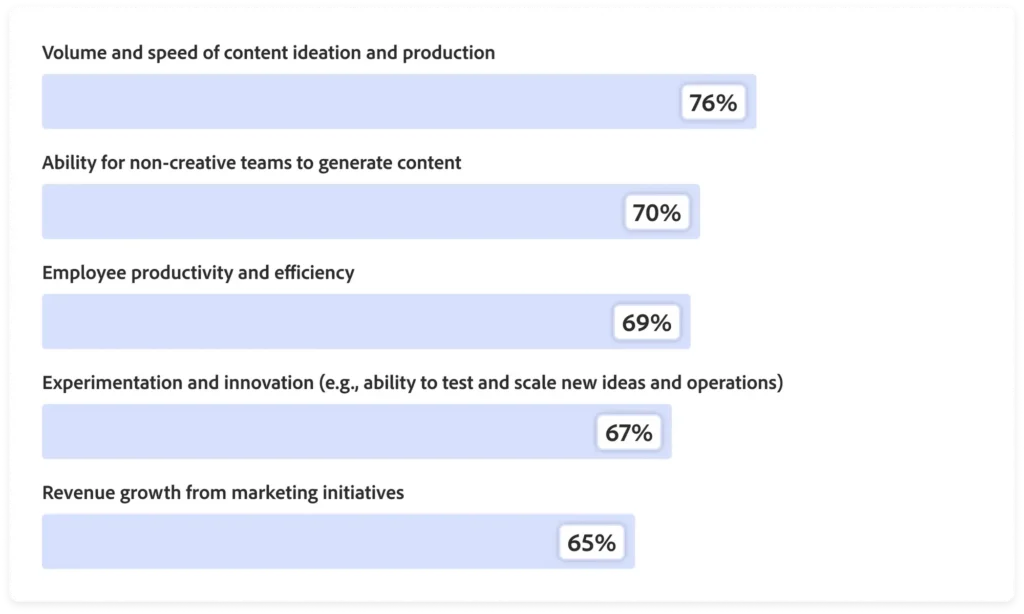
To what extent has generative AI improved the following in your organization?
AI influencers can work on pure data and brand growth trajectories. Synthetic audiences can boost brands’ consumer behavior studies. Self-capable AI agents can create ads for the synthetic ecosystem.
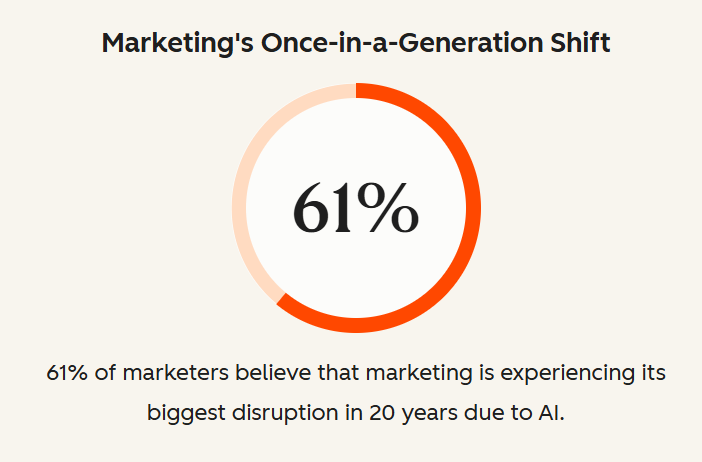
According to HubSpot’s 2026 State of Marketing Report, 61 percent believe AI has created the biggest disruption to marketing in the past two decades. At the same time, Adobe warns that many organizations remain unprepared because of fragmented data and limited AI readiness.
So, today’s big question is not whether advertising can become synthetic, but how far it can realistically go before human creativity, trust, and authenticity become the stronger competitive advantages.
Synthetic advertising, an ecosystem of creative AI agents
Unlike traditional AI-assisted marketing, which focuses on improving human workflows, synthetic advertising replaces or simulates parts of the advertising ecosystem itself.
That includes:
- AI-generated videos and images
- AI voiceovers and digital actors
- Virtual influencers
- Synthetic audiences for campaign testing
- AI-generated user-generated content (UGC)
- AI-powered media planning and optimization
- Autonomous AI agents interacting with consumers
In other words, synthetic advertising is not a single technology but an operating model in which AI participates at almost every stage of campaign development, so the shift is structural rather than a narrow tool upgrade.
AI influencers are becoming brand assets
Perhaps the most visible example of synthetic advertising is the rise of AI influencers.
Virtual personalities once served as marketing experiments, but brands increasingly view them as scalable intellectual property. Unlike human creators, AI influencers never miss deadlines, require travel, or age out of campaigns. Their appearance, language, and personality can be tailored to different markets almost instantly.
Brands have also begun experimenting with digital twins of real people. Fashion retailer H&M, for example, announced initiatives that allow models to create licensed AI versions of themselves for commercial work, highlighting a future in which human likeness becomes a reusable digital asset rather than a one-time photoshoot.
For marketers, the appeal is obvious: faster production, greater localization, and lower long-term costs. However, these benefits come with growing questions around disclosure, consent, and consumer trust.
The rise of synthetic audiences
If AI influencers represent synthetic creators, synthetic audiences represent synthetic consumers.
Rob Chandler, Head of Marketing Science at Ogilvy, summed up their utility on a panel discussion organized by Ogilvy:
“You can explore the boundaries of creativity by working with consumers during the creative process with the help of these clones. Far further, they are synthetic — they don’t get offended, you cannot upset them.”
Instead of recruiting thousands of people for focus groups or surveys, brands are beginning to simulate customer behavior using AI-generated personas trained on demographic, behavioral, and market data.
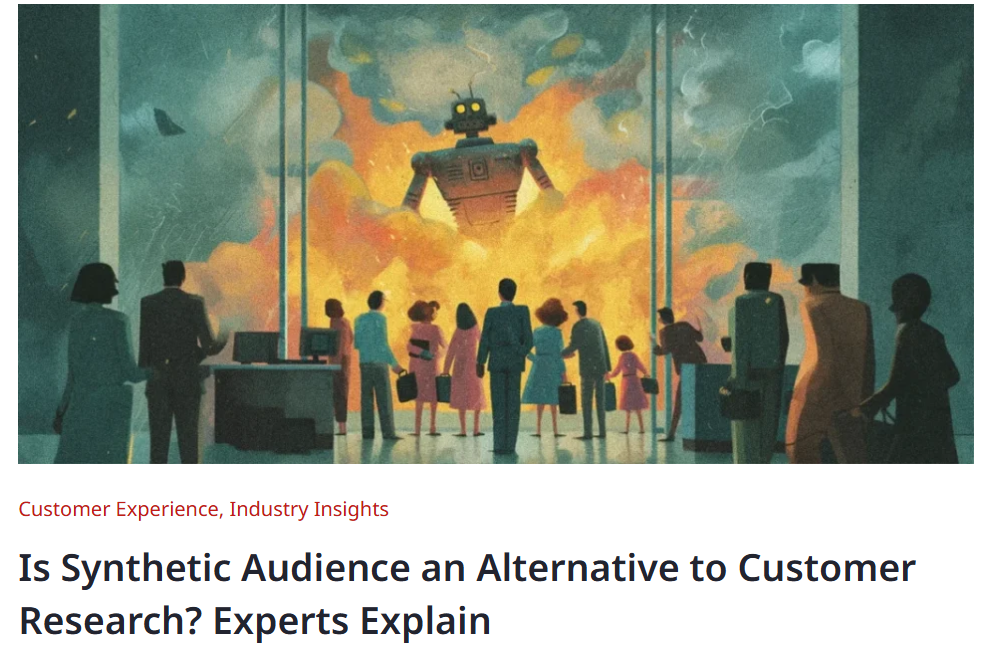
But one data point from Ogilvy introduces a conflict: synthetic audiences can predict 85 percent of human behavior, leaving 15 percent of human unpredictability untouched.
The technology remains in its early stages, but it reflects a broader industry trend toward predictive marketing. As a result, synthetic audiences promise faster insights and lower research costs, particularly when testing multiple creative variations.
Jessica Cuebas, Director of Advertising Strategy at Workday, shared her experience creating synthetic audiences.
“We have created global agents with personas based on regions, positions, and needs. Someone from France must have a different approach to a product than a person from Latin America or Japan.”
However, marketers should also approach them cautiously. AI models learn from historical data, which means they can reinforce existing biases or overlook unexpected consumer reactions.
Rather than replacing human research entirely, synthetic audiences are more likely to become another decision-support tool within market research. In that role, they complement rather than interrupt existing research workflows.
Advertising production, synthetic by default
The biggest transformation may not be customer-facing at all; it is the shift in how advertising is produced.
AI-powered production has dramatically compressed campaign timelines. Tasks that once required creative agencies, photographers, designers, and editors can increasingly be completed through generative AI platforms.
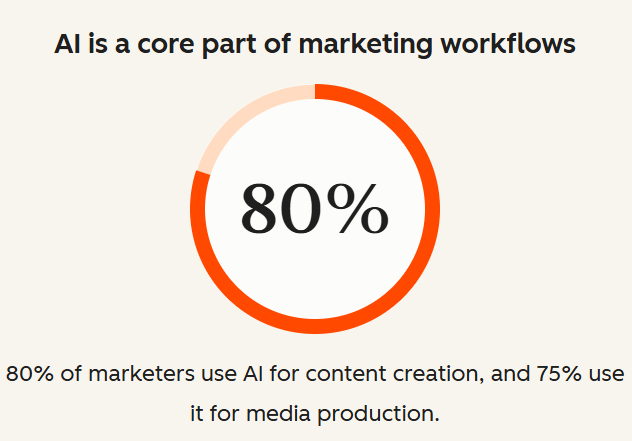
HubSpot reports that AI has become part of mainstream marketing workflows with automation extending well beyond content generation into reporting, campaign management, and personalization.
Nevertheless, Blake Droesch, Senior Analyst at EMarketer, commented that AI is entering a phase of mistrust.
“AI-generated content is growing and eroding the trust the public usually holds for content. Trust has been declining since 2000, and it has reached its lowest level today. U.S. audiences are very wary of tech platforms—including media, marketing, and brands.”
One of the earliest signs came in 2022 with the rollout of Advantage+ in Meta advertising. AI exposes the brand behavior. Over-polished, perfectly optimized messaging can backfire if it doesn’t reflect reality.
Ad Pulse has also reported the logic of the scam economy: scale first, accountability later.
Synthetic advertising is reaching distribution
Another major shift is taking place outside creative departments.
Advertising has traditionally focused on persuading human audiences. Increasingly, however, marketers are optimizing content for AI systems that recommend products, summarize information, or answer consumer questions.
This has fueled growing interest in Generative Engine Optimization (GEO) and Answer Engine Optimization (AEO).
HubSpot reports that over 92 percent of marketers are already planning or implementing optimization strategies for both traditional search engines and AI-powered search experiences.
Meanwhile, Google AI jeopardized brands and businesses. The search mode puts businesses at risk by failing to provide ROI-measuring tools for AI search. The company had an ‘available soon’ placard for AI ROI measuring tools.
Brands cannot sustain without trust and authenticity
Advertising is unlikely to become entirely synthetic because trust remains the biggest concern.
The long-term question is what happens to brand building. Simulated environments are based on models of behavior, not actual behavior. While they can provide directional insights, they may not fully capture the complexity of real consumer decisions, which are influenced by cultural, emotional, and situational factors.
Despite its promises and scope, synthetic advertising has several challenges. That is why the industry is moving toward a hybrid model in which AI handles scale, speed, and personalization, while humans provide strategic judgment, cultural understanding, and creative direction.
Instead, the industry is moving toward a hybrid model in which AI handles scale, speed, and personalization, while humans remain essential for strategic judgment, cultural understanding, and creative direction.
The next competitive advantage will not come from using AI alone. It will come from deciding where synthetic systems create value and where human creativity must remain irreplaceable.
Cut to the chase
The first half of 2026 has shown that synthetic advertising is now embedded in creative processes and brand growth, but its limits are just as clear: humans still prevail.