This isn’t Sci-Fi: AI Clones in Marketing Might be your Next Influencer
A strange new reality is unfolding in marketing—one where brands can have multiple ambassadors at once, and CEOs can deliver speeches in different languages simultaneously without ever stepping on stage.
This is now possible due to the digital doppelgänger era—AI-created duplicates, avatars, & synthetic personas are rapidly changing how a brand presents itself, grows, & sells. Ans, yes, this isn’t the glimpse of the future—it’s already shaping the present.
So, let’s deep dive in and explore this new AI clone transformation in marketing, from virtual influencers to digital avatars. What does this shift mean for the future of authenticity at scale?
Meet your digital twin (Yes, brands have them too)
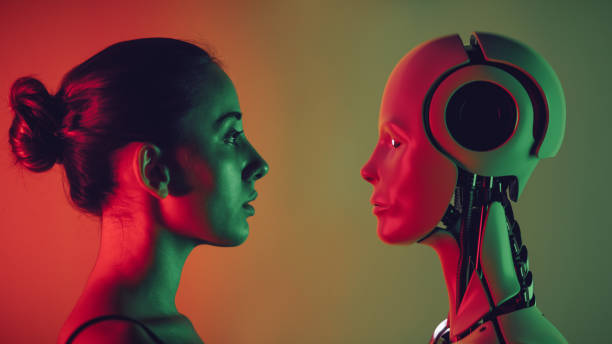
Digital doppelgängers — also known as AI clones, digital twins, or synthetic avatars – are hyper-realistic human replicas generated by AI. These replicas can simulate a human’s appearance, voice, tone, and sometimes even personality.
While this might sound like science fiction, brands have begun taking advantage of this modern technology for their own use, and it is being utilized as part of a brand strategy. Brands are currently utilizing:
- AI-generated avatar for brands (virtual spokespeople).
- AI voice clones for multilingual campaigns.
- AI generated influencer clones to scale creator presence.
- Digital twins marketing strategies (replication of real people at scale).
The reason is simple there is no limit to how many times you can utilize an AI clone as opposed to a human being who will experience burnout, miss deadlines, and require retakes.
Why marketers are betting big on AI clones
Now let’s discuss size, rate, and expenses. AI clones (digital avatars) can help brands
- Create content 10 times faster than before
- Tailor messaging to each individual consumer (one-to-one)
- Guarantee brand consistency worldwide
And this growth won’t stop anytime soon.
In fact, experts estimate that the worldwide avatar market will grow from $2 billion in 2022 to $270 billion by 2030, as many more companies invest in developing and producing their own AI-generated content. So, this isn’t a few people trying out some technology. This is a new way to do business.
From influencers to ‘infinite influencers’
Influencer marketing is experiencing an incredibly strange transformation these days. Brands have stopped hiring additional content creators; instead, they are turning to clones of content creators. Several latest trends are becoming apparent:
- An increasing number of influencers are creating AI versions of themselves in order to create content at scale and manage to prevent creator burnout.
- Some AI influencers have hundreds of thousands of followers and are already generating brand partnerships.
Consumers are on board with this idea.
According to a recent report, 28.7% of consumers follow virtual influencers on YouTube, so synthetic influencers are entering into the mainstream.
There is now a new vision for continuous creators: infinite influencers, or influencers that can create content all the time, in multiple languages, on all the platforms, in different time zones.
Some real-world examples you shouldn’t ignore
AI clones are no longer an idea; today they are transforming how brands act. From fashion to finance industries, there are tangible examples of how companies are using digital versions of themselves to improve upon their marketing strategies; therefore, digital doppelgängers have now become a viable marketing asset and no longer just a concept of the future.
H&M digital twins of models
H&M has created an AI digital model twin (digital model) of its actual models so that it can continuously create infinite visual assets for ad campaigns through automated production and without the need for re-shoots.
This marks a shift from “captured” content to “generated” content.
AI Executives & Virtual Company Executives
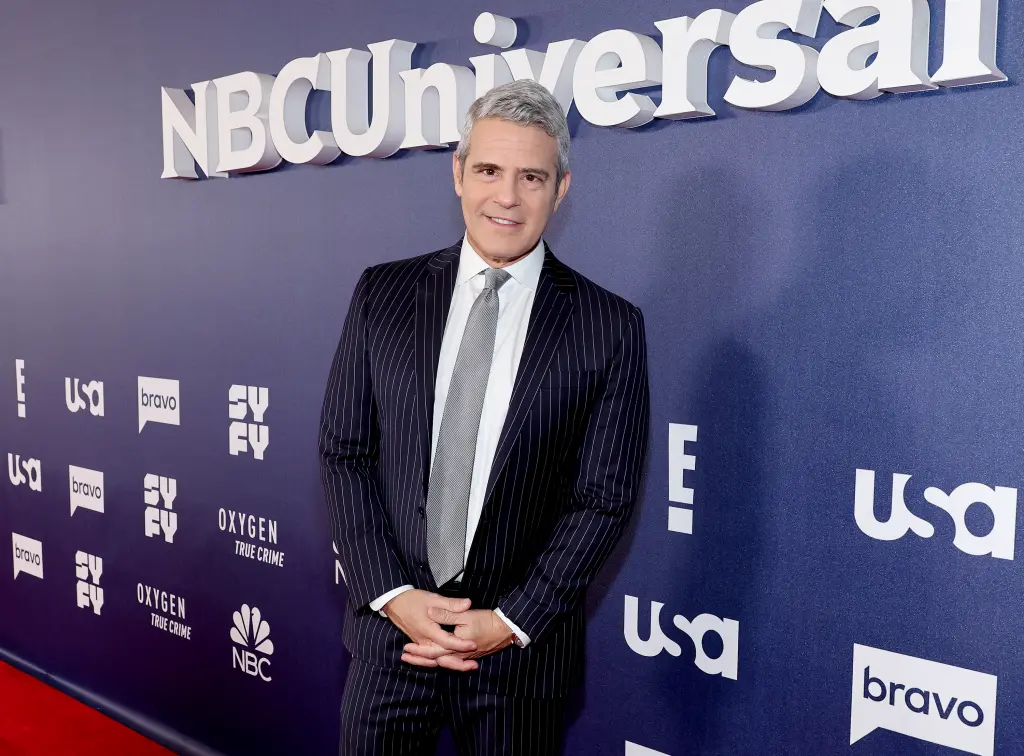
Both UBS and NBCUniversal are positioning themselves to utilize digital versions of their executives to provide and present insights and accountability across the globe.
Picture your CEO speaking 100 times at 100 different places simultaneously.
Virtual Influencer Examples, Like Aitana Lopez
Many AI influencers have begun forming partnerships with different companies and generating excessive amounts of “followers” all while being non-existent.
They do not have a single scandal or unpredictability while working with these corporations. They are entirely controlled by corporations through their storytelling.
The strategy shift from campaign to clones
Behind all the hype, AI clones are already moving from concept to execution—quietly reshaping how brands create and scale content. This is not simply a different way to promote but an entirely different way to market.
In traditional marketing:
Campaign > Content > Distribution
In AI clone marketing:
Clone > Ongoing Content > Limitless Personalization
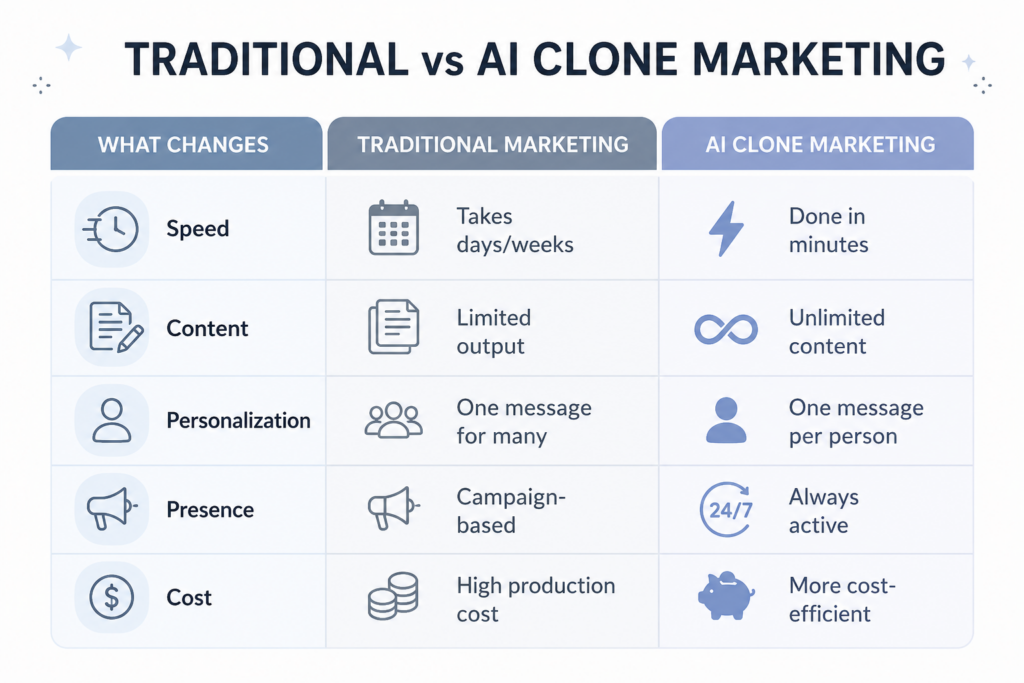
With the introduction of AI clones, brands will shift away from:
- Static campaigns > Perpetual presence
- Mass message > Strongly personalized narrative
- Limited reach > Broadly dispersed and geographically specific
Therefore, brands are no longer producing products — brands are generating creators.
The power of AI voice clones
The use of voice cloning has opened a new level of personalization to many brands.
Now Brands can:
- Translate their advertisements into numerous languages using one voice
- Use voice-cloned podcasts or customer service agents to appear as if they were human
- Keep tonal consistency around the globe
This allows localization of materials to occur faster than ever, at lower costs, and with a lesser degree of inauthenticity; thus, brand owners no longer need to recruit multiple voice artists.
Real or replica? The trust crisis behind AI clones
AI clones offer possibilities for growth and control on a massive scale; however, they create an unsettling feeling of being “too perfect” for some people. Critics believe that lack of emotional depth may lead to blur the line between real and artificial
Ironically, the ultimate illusion of reality has already been created by different types of audiences through the daily consumption of controlled, altered versions of “real life.” AI simply highlights this deception in an even more dramatic way.
The bigger issues continue to loom over brands, as they cannot avoid addressing them, such as, who has the legal right to use another individual’s likeness without their consent? Is it legal for anyone (with your permission) to duplicate either your physical appearance or voice? And should ‘AI Influencers’ be forced to declare themselves to be artificial (as opposed to authenticity)?
By regulations regarding the use of a person’s likeness being created by computer code, authenticity becomes negotiable and the impact of such a change could create quite the headache for brands in terms of their reputation and how they market their products/services.
What does this mean for marketers right now?
Marketers will not be replaced by AI clones, but rather their roles will change. Marketers will win by:
- Scaling and being efficient with AI clones
- Working with Humans for emotion and trust
- Mixing AI clones and Humans in hybrid storytelling ecosystems
One point of view in the industry is that there isn’t an AI vs. human future, but an AI for consistency future and a human for credibility future.
Cut to the chase
AI clones are turning brands into always-on storytellers—scaling content, presence, and personalization like never before. But as digital doppelgängers blur the line between real and replica, trust becomes the real differentiator. Are you ready to future-proof your marketing? The next phase should not be about implementing AI. It will need to involve creating AI that consumers will believe is real and authentic.
FAQ’s
Digital replicas (avatars, voices, influencers) used by brands to create and scale content.
For virtual influencers, multilingual ads, and always-on brand ambassadors.
No—AI handles scale, while humans bring trust and creativity.