
Why the Best Marketing Strategies Still Rely on the Basics
Marketing has never had more tools and never been more confused. Every trend report repeats the same buzzwords: AI, automation, personalization at scale, creator economy, immersive experiences. It feels like marketing is evolving fast, but clarity is getting lost in the noise.
However, there is one thing that never changes about marketing: how to market successfully, which can be done through the basic principles of marketing.
In 2026, successful marketing campaigns won’t be defined by what’s new but by how well brands execute what has always worked. Successful marketing begins with leveraging time-tested principles.
Always has…and always will be successful regardless of the time/era in which they are implemented. Let’s deep dive into the fundamentals.
The shiny tools change. Human behavior doesn’t.
Marketing isn’t about platforms—it’s about people. Always has been. Marketing is based on what we know about how people think, feel, interact, and make decisions. The psychology behind why someone buys something from a billboard in the 90s is pretty much the same as that behind an extremely targeted Instagram ad today.
Regardless of the platform or advances in technology or communication, ultimately, the people who purchase products will continue to want the same 3 things:
They want to feel:
- Understood
- Valued
- Confident in Their Choices
The brands that win today aren’t just using better tools—they’re using those tools to execute timeless marketing strategies more effectively.
What are marketing fundamentals, really?
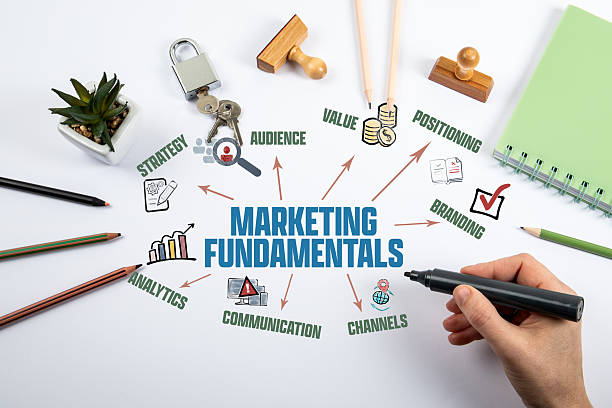
Here’s the irony: marketing fundamentals aren’t complex—they’re just consistently ignored. The marketing fundamentals include:
- A deep understanding of your target market
- A clear value proposition
- Brand positioning that is distinguishable
- Consistent messaging
- Building trust over time
These core principles of marketing may seem very simple, but they are the foundation of every successful marketing strategy, from long-established companies to upcoming digital-native businesses.
The biggest myth in modern campaigns
An assumption that can be harmful to the industry is:
“If we adopt the latest tools, results will follow.” That’s the myth—and it’s costing brands.
Most of the time, this isn’t accurate at all.
Many modern campaigns fail not because of poor execution, but because they skip the fundamentals. They jump straight into tactics—launching ads, experimenting with AI tools, chasing trends—without answering basic questions:
- Who is your audience?
- Why should they care about what you are talking about?
- What is the issue that you are solving?
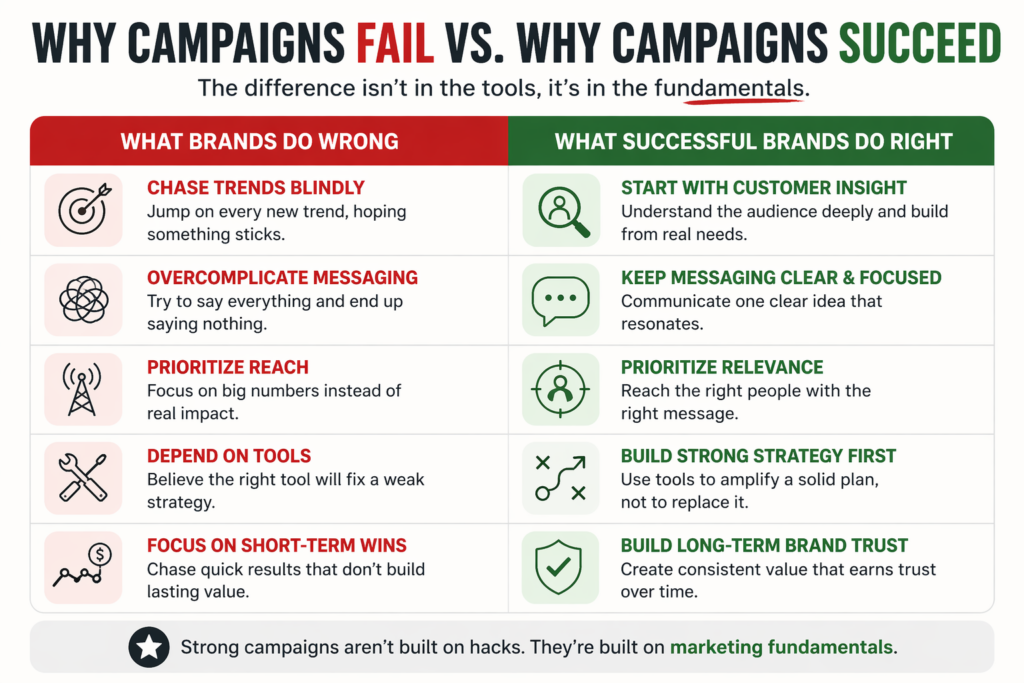
If you don’t have those answers, then you will not likely achieve a successful digital marketing campaign, no matter how technologically sophisticated your campaign is. Technology amplifies strategy—it doesn’t replace it.
Case in point: The campaigns we actually remember
Reflect on the campaigns that left a lasting impression on you. The latest successful advertising must do more than heavily rely on technology; the latest successful campaigns have relied more on fundamentals done right:
OpenAI Brand Campaign (2025): The campaign used real-life, relatable use cases of AI rather than focusing on what AI could become in the future. This helped demonstrate, in an accessible way, how people can be productive with AI through simple metaphors. The campaign transformed advanced technologies into human situations—making it easy for people to trust AI and adopt it into their lives.
Beats by Dre: Listen to Your Heart Campaign (2025): The campaign blended storytelling from elite athletes with emotional narratives about how they perform at their best because of their inner drive. The campaign connected the audience to Beats by Dre through a universally shared emotional experience, allowing the brand to be viewed as more personal and less about functionality.
Why marketing fundamentals matter more in 2026
As marketing becomes more complex, the basics are more critical than before. Here are four reasons:
1: It is harder to gain attention for your marketing message. Consumers have an incredible amount of content available to them, making it extremely challenging to convey the message you want to convey.
2: Trust is very fragile with all of the misinformation out there, as well as the increasing ad fatigue and skepticism about influencers, brands need to have a strong foundational piece to build credibility.
3: Platforms are unpredictable in nature. For instance, platform algorithms change regularly, and channels rise and fall frequently. However, if you have a strong positioning and a well-defined value proposition, those attributes will remain constant and not change based upon any platform’s unpredictability.
4: The advent of AI has provided all brands with access to powerful tools. However, access to all brands will not set them apart as much as will how well the brand develops its marketing strategy.
This is why the marketing fundamentals will continue to matter more than ever before in the future.
The role of fundamentals in digital marketing strategy success
This isn’t anti-innovation—it’s pro-foundation. Rather, this post is about getting everyone aligned on their goals. There are many successful examples of how digital marketers have implemented the above strategy. Here are the steps:

1. Begin with the basics: Determine who your target market is, how you will position yourself relative to that target market, and what message you will send them.
2. Incorporate technology into your marketing mix: Use Artificial Intelligence (AI), Analytics, and Automation to help you achieve your goals.
3. Continually test, monitor, and make changes based on results: Remember to continually check to ensure that your fundamental message and goals remain intact.
Skip the basics, and everything else becomes guesswork.
Timeless thinking, future-proof results: why fundamentals still win
While high-performing contemporary campaigns may appear innovative, they are based on the same proven principles: strong insight, clear messaging, a consistent narrative, and delivering actual value to customers. The difference is in how they are executed faster, with more personalization, and at scale.
So why do so many brands miss the target? Because it’s not glamorous to focus on the basics! Many brands become so caught up in trend-chasing and new marketing tools that they pile on messaging complexity, prioritize reach instead of relevance, and lose sight of their strategy. The effect? Beautifully executed campaigns that do not generate results.
Smart marketers do not have to choose between being innovative and going back to basics; they combine both strategies. Marketers are leveraging data to deepen their understanding without replacing their current knowledge base and are building flexible strategies that align with the fundamental principles of marketing.
The real competitive advantage is that while others are searching for what’s next, strong brands focus on being clear, consistent, and customer-focused—and they are winning.
In addition, the fundamental principles of marketing do not stunt creativity—they fuel it!
Back to basics is the new competitive advantage
Many people assume that by focusing on the essentials of marketing, you are no longer innovative or cutting-edge in your approach — this could not be further from the truth.
The most progressive marketers today are those who creatively combine fundamental marketing principles with the latest technological advances to enhance their overall understanding of customers by using data that generates insights into customers, but does not replace this knowledge. These marketers build adaptable marketing strategies rather than unyielding ones, and therefore do not oppose innovation but rather support it through their fundamental marketing knowledge and techniques.
This is where a true competitive advantage lies.
By mastering marketing fundamentals, many companies have developed a competitive edge because so few companies practice them effectively. While so many marketers are focused on the “next best thing,” only those companies that focus on clarity, consistency, and customer knowledge are actively differentiating themselves from their competition.
They do more than just attract customer attention; they convert it.
They do more than just execute marketing campaigns; they build brands.
The future of successful marketing strategies
Marketing consistently evolves; however, the 1 thing that will always remain:
- Tools will be updated
- Channels will be updated
- Formats will be updated
While the fundamentals of marketing across time will remain unchanged.
Marketers in the future who effectively balance the two realities of the marketing function will create successful marketing strategies because they do not rely on fads alone but rather on time-tested principles as their underlying foundation.
Cut to the chase
Successful marketing isn’t simply about following trends; it is about mastering the fundamentals and using the right tools to enhance their effectiveness.
Successful campaigns succeed because they understand their audience, communicate clearly and consistently, and deliver real value. In a world obsessed with what’s next, mastering the basics is what actually sets brands apart.
FAQ’s
Core principles like audience understanding, clear messaging, positioning, and trust-building.
Because human behavior hasn’t changed, clarity and relevance still drive results.
They provide a strong strategy, making campaigns more targeted, effective, and scalable.