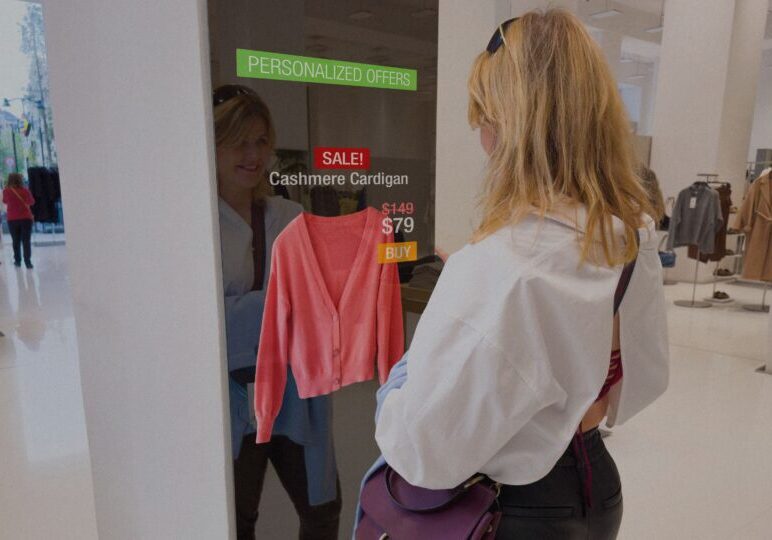

Publicis and Microsoft Alliance 2026: 7 Things Marketers Must Know
On April 8, 2026, ten years after co-creating Marcel, Microsoft and Publicis Groupe expanded their alliance. They announced a plan to build a unified, full-stack marketing solution.
Their aim: unify legacy systems, AI agents, and identity-based data to accelerate marketing in the era of agentic AI.
This time, the ambition is to reshape how marketing gets done, with AI managing key processes from audience segmentation to campaign deployment.
We break down the Publicis and Microsoft Alliance into 7 essentials every marketer should know.
1. The bigger bet on agentic marketing
Both companies are naming and owning a category. Through this alliance, they will embed agentic AI across the workflow, refocusing marketers on strategy, creativity, and original ideas.
“This partnership reflects our belief that AI must do more to serve humanity by empowering creativity and innovation.”
— Judson Althoff, CEO, Microsoft Commercial Business
“Ten years ago, with Microsoft, we co-created Marcel, marketing’s first AI platform.”
— Arthur Sadoun, CEO, Publicis Groupe
The phrase “agentic marketing” is what you’ll hear a lot in the months ahead. AI know-how has become critical for large agencies, but some analysts remain skeptical of proprietary platforms.
Now, the question is whether clients outside the Publicis network can access it, and whether “agentic AI” delivers on outcomes or becomes the new buzzword for over-promised automation. According to a report from Microsoft News Center, the announcement does not specify whether the unified solution will be prioritized for Publicis Groupe clients or if there are plans to make it more widely available to external marketers. Marketers outside the network should watch for updates as the partnership shapes industry standards.
2. Epsilon becomes the secret ingredient
Every AI system is only as good as the data it runs on. Unlike AI built on public data or siloed models, this partnership is anchored in Epsilon, Publicis’ IP intelligence layer. Epsilon connects customers and prospects to drive measurable outcomes by fusing identity, media, marketing, and customer intelligence.
AI agents built on Microsoft Fabric and powered by Epsilon will be able to reason, decide, and act on trusted, real-world, and proprietary data.
For marketers, it means the AI agents working on your campaigns will not be guessing from generic datasets. They will be operating from verified, identity-linked consumer intelligence.
3. AI agents within your guardrails
The partnership paints a very specific picture of what agentic AI looks like in practice. An AI agent can:
- Autonomously identify high-value customer segments.
- Generate and personalize content.
- Deploy campaigns across channels.
- Continuously optimize spend in real time —
within guardrails set by marketing leaders.
That last point — “within guardrails” — is doing a lot of work. The human marketer remains the decision-maker. The agent executes. That distinction matters for anyone worried about AI replacing creative and strategic roles.
4. Microsoft moving its media business to Publicis
Here is the deal behind the deal. As part of the arrangement, Microsoft is moving its global media business to Publicis. Reports put the value of that account at approximately $1.2 billion. Notably, Publicis won the account without a pitch — as part of the expanded strategic partnership.
This is a significant signal of commitment on both sides and shows that the partnership has real investment beyond a press release.
5. Publicis’s 114,000 employees on Microsoft Copilot
The scale of internal rollout is worth pausing on. Publicis is rolling out Microsoft 365 Copilot to all 114,000-plus employees worldwide and naming Microsoft Azure as its preferred cloud provider.
What this means for marketers at Publicis agencies: the tools they use daily — briefs, reports, presentations, campaign tracking — will all be AI-assisted through Copilot. The intent is to reduce friction in workflows, so strategy and creative can take the front seat.
6. Publicis Sapient gets a big upgrade
The new agreement implements Microsoft technology, including the Azure cloud-computing infrastructure and the Copilot assistant, which will power Publicis’ Epsilon identity solution and Sapient’s consultancy arm.
Sapient has long been Publicis’ bridge between advertising and technology consulting. With Azure and Copilot embedded deeper into its offering, Sapient becomes the implementation arm that helps brand clients actually adopt agentic marketing.
7. Alliance is an architecture decision
Most agency-tech partnerships involve licensing software or co-branded integrations. This one is different. The deal brings together Microsoft’s Azure cloud, Copilot tooling, and AI agent infrastructure with Publicis’ Epsilon identity data layer and Sapient consultancy arm.
The stated goal is to move marketers away from fragmented AI point solutions toward connected systems in which agents handle execution.
Cut to the chase
For marketers, this Publicis and Microsoft alliance is a signal, a partnership to build marketing product.The industry’s direction of travel is now clearer: identity-based data, AI-driven execution, and human-led strategy are converging into a single stack.