

The Rise of Agentic Marketing, and the Missing Proof
In 2026, AI agents have moved from experimental features to full-blown infrastructure. Marketing platforms now position them as autonomous systems capable of handling everything from lead qualification to campaign optimization.
The promise is about faster decisions, continuous execution, and better outcomes at scale.
But beneath the rapid adoption lies a question the industry has not answered convincingly—are these systems actually driving measurable revenue impact, or are they just making marketing operations more efficient?
In this article, we will cover the emergence of AI agents in marketing, where the hype is loud in front of the real impact.
The confusion: Consumer behavior VS AI impact
Much of the current narrative around marketing transformation is rooted in changing consumer behavior. A widely cited example is the “messy middle” framework by Google, which explains how consumers move non-linearly between exploration and evaluation before making decisions.
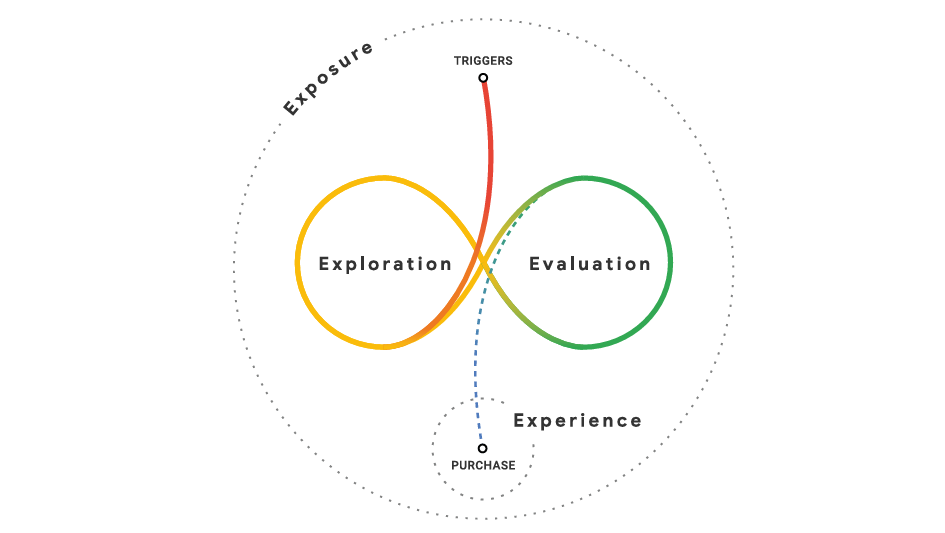
That framework reshaped how marketers think about the funnel. It showed that decision-making is complex, iterative, and influenced by multiple cognitive biases.
However, it is important to draw a clear line:
This research explains human behavior—not the role or impact of AI agents within that behavior.
AI agents introduce an entirely new variable. They do not just influence decisions; they can mediate, guide, or even automate parts of the decision-making process. Treating behavioral shifts and agent-driven systems as the same phenomenon has led to a misleading narrative about their impact.
Real doings of AI agents
To understand the gap in measurement, it is necessary to first clarify what AI agents are designed to do.
Unlike traditional automation tools, AI agents operate with a degree of autonomy. In marketing contexts, they can:
- Respond to customer queries in real time
- qualify leads based on behavioral and contextual signals
- Recommend products dynamically
- trigger follow-ups across channels
- Adjust campaign parameters without manual intervention
- simulate audience responses through synthetic environments
These capabilities position AI agents as a decision-making layer within marketing systems, rather than just execution tools.
This shift has real implications. It means that decisions once made by marketers—who to target, what to say, when to engage- are increasingly being delegated to systems that operate continuously and at scale.
The reality check of efficiency and ROI
Most of the available research on AI in marketing focuses on operational improvements. Reports from organizations such as McKinsey & Company and Boston Consulting Group consistently highlight gains in speed, output, and cost efficiency.
Campaigns can be produced faster. Content can be generated at scale. Workflows can be streamlined.
These are meaningful advancements. But they do not answer the central question:
Are AI agents improving revenue outcomes in a measurable and sustained way?
At present, there is limited publicly available evidence that directly links the use of AI agents to:
- consistent revenue growth
- improved conversion quality
- increased customer lifetime value
The absence of this data does not mean the impact does not exist. It means it has not been clearly measured or widely validated.
The attribution problem no one has solved
One of the biggest barriers to measuring ROI is attribution.
Even before the rise of AI agents, assigning credit across the customer journey was complex. With agents now operating across multiple touchpoints, that complexity has increased significantly.
Consider a typical scenario:
- an AI assistant recommends a product
- a brand’s system personalizes the offer
- another platform facilitates the transaction
In such a flow, identifying which interaction drove the outcome becomes difficult. Traditional attribution models are not designed for environments where multiple autonomous systems interact in real time.
This lack of clarity affects more than reporting. It makes it harder for marketers to optimize strategies, justify investments, and understand what is actually working.
It is in this context that Gartner has raised concerns about the success of AI-driven initiatives, pointing to governance and measurement challenges as key risks.
Synthetic audiences and the risk of closed-loop validation
Another emerging practice is the use of synthetic audiences: AI-generated personas that simulate consumer behavior. These systems allow marketers to test campaigns, messaging, and creative assets before launching them in the real world.
The appeal is obvious. Testing becomes faster, cheaper, and more scalable.
However, there is a fundamental limitation: synthetic validation is not equivalent to real-world validation.
Simulated environments are based on models of behavior, not actual behavior. While they can provide directional insights, they may not fully capture the complexity of real consumer decisions, which are influenced by cultural, emotional, and situational factors.
At present, there is little long-term evidence demonstrating that performance in synthetic testing environments translates directly into improved market outcomes.
The long-term question is what happens to brand building
AI agents are highly effective at optimizing for immediate outcomes. They can respond instantly, personalize interactions, and nudge users toward conversion.
But marketing is not only about short-term performance. It also involves building brand recognition, trust, and emotional connection over time.
There is currently limited research on how AI-mediated interactions influence these longer-term metrics. Questions remain around whether:
- AI-driven journeys strengthen brand relationships
- or primarily accelerate transactional behavior
Without this understanding, it is difficult to assess the full impact of AI agents on marketing effectiveness.
A measurement gap that’s getting harder to ignore
The adoption of AI agents is accelerating. Their capabilities are expanding. Their presence in marketing systems is becoming standard.
Yet, the frameworks used to measure marketing performance have not evolved at the same pace.
This has created a disconnect:
- execution is becoming more advanced
- Measurement is lagging behind
Marketers are deploying systems that can make decisions in real time, but they are still relying on metrics and models that were built for a different kind of ecosystem.
AI agents are not theoretical. They are already embedded in marketing operations, influencing how campaigns are created, executed, and optimized. They are making marketing faster, more responsive, and more automated.
But the industry is still in the early stages of understanding its true impact.
Cut to the chase
Agentic marketing hype has been echoing for two years. There is a growing body of evidence around efficiency gains. But there is far less clarity around revenue outcomes, attribution, and long-term value. They may have taken over large parts of marketing systems, but whether they are consistently moving revenue is still an open question.