
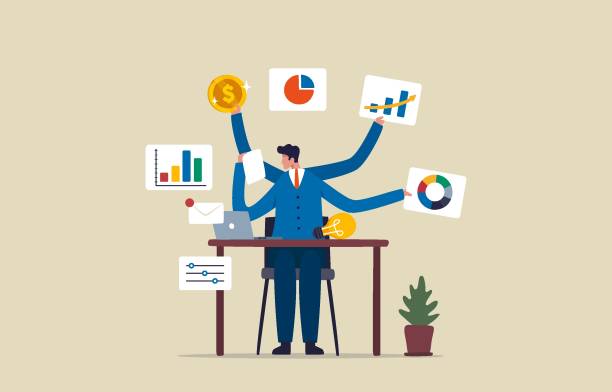
Marketing in a Multitasking Economy: Winning in the Age of Digital Attention
Today’s ad world is no longer competing against ads, it’s competing within a multitasking marketing reality. It’s competing with WhatsApp notifications, Instagram scrolls, half-watched Netflix episodes, and that “just one quick reply” on Slack.
Welcome to a multitasking world, where attention is no longer just fragmented; attention is being auctioned off in micro-moments. As consumers go back and forth between their various screens, conversations, and content, it would be very rare for them to pay full attention to any one thing they are watching, scrolling, replying to, or listening to.
For advertisers, this isn’t a problem; this is a total change.
The old playbook of capturing undivided attention is obsolete. Today, success lies in mastering multitasking marketing—designing experiences for audiences who are everywhere, all at once, and never fully present.
The rise of the multitasking consumer
The change was not sudden. This was an outcome of the increase in devices, platforms, and content types. The smartphone not only enabled people to access information, but also to do so constantly.
Examples of how our world is filled with digital distraction include:
- Two screens (Television and Smartphone)
- Background media (Podcasts and YouTube)
- Simultaneous communication (WhatsApp, email, direct messaging)
Essentially, we now live in an advanced attention economy rather than an outdated one. This has changed from grabbing someone’s attention to competing for attention amid many levels of distraction.
Digital attention marketing today is to except one thing:
You are very rarely the main attraction in these moments
From full attention to partial presence
Since marketers have traditionally focused on viewability, impressions, and time spent watching, the fundamental assumption made by virtually all these measurements was that the audience was actually paying attention.
However, in reality, people often have only a portion of their attention occupied by the online environment.
For example:
- Someone is checking their phone while a YouTube ad is playing.
- One is looking at a LinkedIn post between meetings, or
- A brand video plays in the background while the user types an email.
Consequently, designing for partial attention is essential in today’s marketing environment.
Instead of asking, “How do we get users to fully engage with this content?” you should be asking, “What if the best they can do is see 3 seconds of this video?”
The new guidelines for marketing with multitasking
To succeed in a multitasking environment, we need a major shift in how we create, distribute, and evaluate content.
1. Get as much value up front as possible
You don’t have 30 seconds. You barely have 3. Make sure your message is delivered immediately, even if the viewer drops off quickly.
- Lead with your strongest imagery
- Display your brand first (rather than at the end)
- Share your core message in the very first frame of your video or image
If your content only works when watched in its entirety, you’ve already failed.
2. Build content for no sound and scanning
Most people now consume content silently and passively.
That means:
- Captions are necessary
- Telling the story visually means you are getting the message across
- Movement is attracting attention rather than distracting it
Social Media platforms like Instagram and TikTok are designed so people scan content rather than view it. You need to deliver your content in accordance with how people consume it.
Step 3: Create a cross-platform content approach
Your audience will not interact with your brand from a single location. Your content is engaging and provides a coherent message across multiple channels:
- Hooks for social media platforms such as TikTok
- Longer narratives on traditional platforms like YouTube
- Positioning your brand as an expert on LinkedIn (thought leadership)
- Being able to be easily identified by your display ads.
Each of these platforms has a unique role to play as part of the overall story, which includes creating multiple stories from various perspectives, but none tell the entire story individually.
Step 4: Create for multiple screens
The second screen allows for user interaction, and your brand has the opportunity to engage users through second-screen experiences.
When multiple screens are used together, it creates a unique opportunity for you to interact with your target audience, who may be viewing your ads on multiple platforms:
- Create a cross-device brand campaign across mobile and television
- Use live and real-time social media to reach your target audience
Use the same messaging across multiple screens so that when your television advertisement piques curiosity, your mobile presence is there instantly to capture your target audience’s interest.
5. Make your brand instantly recognizable
As we multitask through life, we find it easier to be recognized by a brand than to understand its meaning. This is because it takes less cognitive load to recognize than it does to interpret.
- Use distinctive colors and visual codes.
- Maintain a consistent tone of voice and style.
- Create repeatable brand assets.
The quicker your consumers recognize your brand, the less time you will have to spend gaining their attention.
6. Turn repetition into strategy, not spam
In the past, repetition meant the number of times you have shown your audience something. Today, repetition is about the context in which you have shown something to someone.
Your audience may not absorb what you are saying on the first interaction, but they will retain it over multiple interactions.
Consider:
- A YouTube pre-roll is viewed.
- An Instagram reel is viewed from the same content.
- A LinkedIn post reinforces the previous two interactions.
While each of these interactions is an incomplete part of the overall impression of the previous interactions, together they will develop retention.
Rethinking metrics in the multitasking attention economy
In the fragmented attention landscape, successful marketing is not about getting views of content but instead is about gaining recognition and recall.
Metrics such as scroll depth, thumb-stopping rate, visual engagement, and cross-platform recall will be more important than completion metrics for content. Simply put, the goal of attention economy marketing is to build impact by repeatedly generating partial impressions of content rather than relying on a single complete instance of engagement.
In addition, audiences are multitasking and therefore process content differently, making digital attention marketing especially important when designing for partial attention. People rely more on visuals, familiarity, and emotion than logic—so your content must be instantly clear and easy to grasp.
The more immediate it is to feel and comprehend upon just a few seconds of seeing the content, the more likely it is that your audience will retain it.
Trends setting brands apart—and what can be expected
Some brands have already shifted to such an economy:
- Short, punchy video ads that work without sound.
- Meme-driven content that omnipresently communicates
- Campaigns that are rich but spread across multiple platforms instead of one format.
These brands are exhibiting an understanding that marketing in a multitasking environment is not about depth, it’s about density. Each frame, each second, every touch point must have weight.
As never before, this will continue to evolve—expect to see more personalization through AI-powered solutions, more instant adaptation to content, and more seamless cross-platform storytelling than ever. The future of multitask marketing.
Cut to the chase
Brands that are succeeding at present are developing fast, powerful content (that is all-platform) and appealing to short attention spans.
The future of multi-task marketing will be characterized by providing the right information to individuals when they need it, with little or no involvement from them, yet with very high recall.
FAQ’s
Multitasking marketing is the strategy of creating content for audiences who consume media across multiple screens and platforms simultaneously, often with limited attention.
Digital attention marketing helps brands capture and retain user interest in a distracted, fast-scrolling environment where full attention is rare.
Brands can win attention by delivering quick, visually engaging content, optimizing for sound-off viewing, and using cross-platform strategies to reinforce messaging.