
June Marketing Rundown: 6 Must-Know Stories That Shaped the Month
The year 2026 has reached the halfway point in its completion. June marketing rundown is more about structural transformation and less about campaign launches. The month’s biggest stories centered on retail media consolidation, the institutionalization of the creator economy, AI’s transition from novelty to business infrastructure, and new expectations for measurable marketing performance.
If February was about AI enthusiasm and May about restructuring, June became the month when the industry began redefining what modern marketing organizations will look like over the next decade.
Let’s find out the must-know marketing stories from June.
NBPA’s PLYRS UNTD Signals the Next Evolution of Athlete Marketing
The National Basketball Players Association launched PLYRS UNTD in June 2026 to expand commercial opportunities for current and former NBA players.
The initiative moves beyond the traditional endorsement model. It allows players to participate in brand creation, equity partnerships, licensing, media ventures, and intellectual property.
PLYRS UNTD will serve as the commercial arm of the players’ union. Brands can work with multiple athletes through a centralized platform instead of negotiating individual agreements.
The organization will also support product development, storytelling, and business collaborations across consumer goods, entertainment, technology, and sports.
The launch reflects a broader shift in athlete marketing. Players are increasingly seeking ownership stakes instead of endorsement fees. Brands are also looking for long-term partnerships that extend beyond advertising campaigns. The NBPA said the platform is designed to help athletes build sustainable businesses while giving marketers access to one of the largest collective talent networks in professional sports.
Walmart Strengthens Retail Media Business with Acquisition of Vibe
Walmart acquired connected TV advertising platform Vibe in June 2026, strengthening its Walmart Connect advertising business. The acquisition expands Walmart’s presence in streaming television and premium video advertising. It also builds on the company’s growing retail media ambitions.
Vibe operates a self-service platform that allows advertisers to buy connected TV inventory across multiple streaming services. Walmart plans to combine Vibe’s technology with its first-party shopping data and closed-loop measurement capabilities. Brands will be able to connect television advertising directly with consumer purchasing behavior.
The acquisition follows Walmart’s earlier investment in Vizio and reflects the retailer’s broader strategy to compete with Amazon, Google, and Meta for advertising budgets. Retail media is no longer limited to sponsored product listings. Companies are increasingly offering full-funnel advertising solutions that include streaming television, commerce data, audience targeting, and campaign measurement.
The deal positions Walmart as one of the fastest-growing advertising businesses in the United States.
Creator Economy Takes Center Stage at Cannes Lions 2026
The Cannes Lions International Festival of Creativity highlighted a major shift in how brands approach creator marketing. Creators were no longer treated as campaign amplifiers.
Instead, they were positioned as business partners, media companies, and product collaborators. Brands, agencies, and technology platforms announced new creator initiatives throughout the festival. Discussions focused on creator-led commerce, audience ownership, retail partnerships, and intellectual property. Agencies also introduced dedicated creator divisions and measurement frameworks to support long-term partnerships.
The event showed that creator marketing has become a permanent part of media planning. Brands are allocating larger budgets to creators across product launches, commerce, entertainment, and live experiences. Several industry leaders said the conversation has moved beyond influencer marketing toward creator-led business models.
Cannes Lions reflected that transition, making the creator economy one of the defining themes of the 2026 advertising industry.
Google Accelerates Shift to AI-Native Search Advertising
Google accelerated the rollout of AI-native advertising following announcements made at Google Marketing Live 2026.
The company expanded advertising opportunities within AI-powered Search and conversational experiences. The changes affect how brands appear during product discovery and information searches. Google also introduced additional generative AI tools inside Google Ads. Advertisers can now automate creative production, campaign setup, asset generation, and audience optimization using AI. The platform increasingly relies on machine learning rather than manual campaign management.
The rollout is changing search marketing strategies. Brands are placing greater emphasis on structured data, high-quality content, and machine-readable information. Traditional keyword optimization is becoming less central as AI-generated responses reshape search behavior.
The update represents one of the largest changes to Google’s advertising business since the introduction of automated bidding. Marketing teams are now adapting campaigns to maintain visibility inside AI-generated search experiences.
Netflix Expands Mobile Discovery Strategy with Vertical Video Clips
Netflix expanded its mobile content strategy by rolling out Clips, a vertical video feature designed to improve content discovery. The feature allows users to browse short scenes from movies and television shows before deciding what to watch.
Users can save titles directly from the feed, share clips with others, or begin streaming immediately. The experience resembles browsing formats popularized by TikTok, Instagram Reels, and YouTube Shorts. Netflix is using short-form video to reduce browsing time and increase viewer engagement.
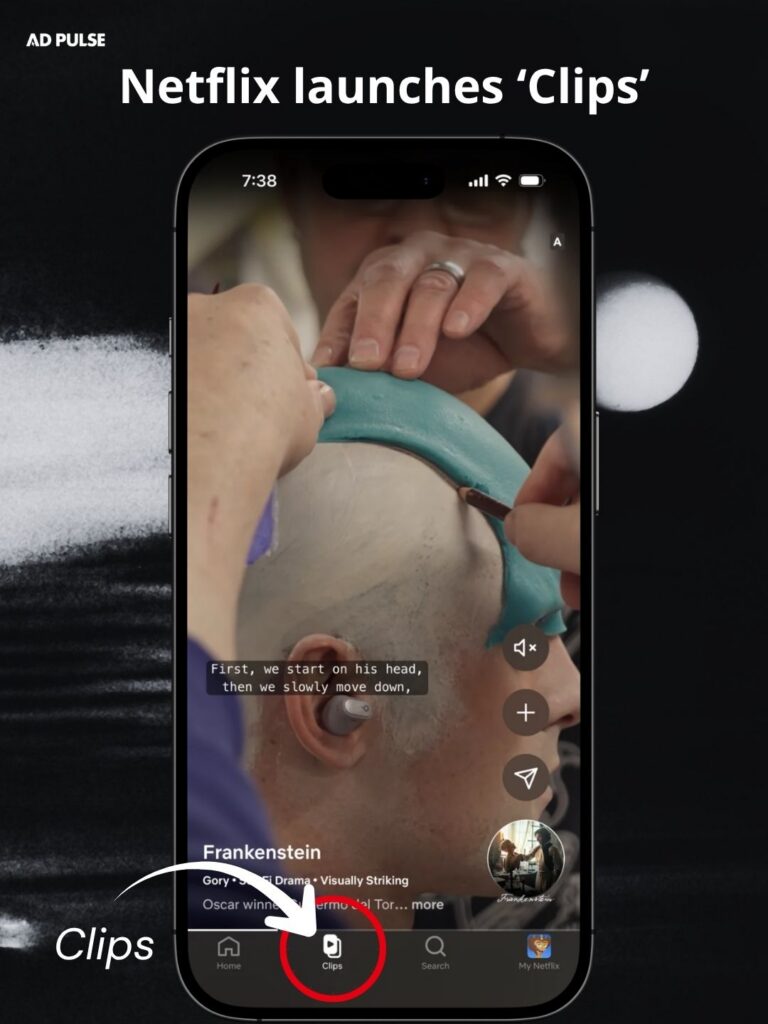
The launch reflects growing competition between streaming services and social media platforms. Mobile viewing continues to shape entertainment consumption, particularly among younger audiences. Vertical video has become an important discovery tool for both creators and streaming companies.
Netflix is adapting its interface to match changing viewing habits while creating additional promotional opportunities for its original programming and licensed content.
OpenAI Expands ChatGPT Advertising to Build New Revenue Streams
OpenAI expanded advertising opportunities inside ChatGPT during June 2026. The company introduced sponsored recommendations and commercial placements within selected user experiences. The expansion forms part of OpenAI’s broader effort to diversify revenue beyond subscriptions and enterprise products.
OpenAI said paid content will remain clearly identified and separate from AI-generated responses. The company is developing advertising formats that allow brands to appear during product discovery without influencing factual answers. The strategy aims to preserve user trust while creating new commercial opportunities.
The expansion reflects changing consumer behavior. More users are relying on AI assistants for shopping, research, and product recommendations. Brands are beginning to treat conversational AI as a marketing channel alongside search engines and social media.
The move also increases competition between OpenAI, Google, and other AI platforms seeking to capture advertising budgets tied to AI-powered discovery.