

Generative AI Advertising: Campaigns That Worked (and Why)
Yes, it’s true—the hype around generative AI in advertising is over; now it’s a huge creative resource and facilitator of idea creation and co-creating with consumers (audiences). As Ad Pulse rightly puts it, “Generative AI is not just another technology buzzword thrown into the marketer’s toolbox — generative AI is a paradigm shift.”
Today’s brands are using generative AI to build a variety of products, whether they are trying to experiment, shape culture, or produce and distribute customized narratives on a large scale. As a result, the way that brands interact with their consumers has completely changed. Rather than being only gauged by impressions or clicks, brands now engage with consumers more deeply, create stronger emotional bonds, and eventually become more relevant to them.
Let’s look at some of the most innovative and successful uses of generative AI in advertising, how these initiatives succeeded, and what we, as marketers, can learn from them moving forward as AI continues to develop within the broader modern creative framework.
1. Kalshi — AI-controlled Ad for NBA championship 2025
Kalshi, a financial exchange, produced an advertisement for the 2025 NBA Championship entirely via AI, including ChatGPT, Gemini, and Veo 3. The following are some unique elements of the ad:
- AI technology produced surrealistic images, such as an extraterrestrial drinking beer and a farmer floating.
- The production costs were around $2,000, and the broadcast was in primetime slots
- Reaching almost 20 million cumulative impressions showed that generative AI can be used to create imaginative, powerful advertisements on a tight budget.

What made it successful: It broke conventional advertising expectations by having an independent client create eye-catching ads that could compete with more expensive, big-budget traditional advertising through absurdity and timeless cultural references.
2. Google — First fully AI-generated Thanksgiving TV ad (2025)
As part of their “Create Real Magic” campaign, Coca-Cola uses generative AI to enable customers to co-create artwork and graphics that align with the original Coke brand. The audience’s artwork was shown in public spaces, including Times Square.
Why it worked:
- Custom AI-produced Coke images by fans – integrating the public into the creative process
- In larger cities, all the finished artwork was displayed on digital billboards.
- It was successful because it made viewers into makers, boosted audience participation, and demonstrated a fusion of modern technology and tradition.
Why it was successful: It turned the audience into creators, increasing audience engagement, and showing a blend of new technology and heritage.
4. Burger King — “Million dollar whopper” (2025)
Using an AI-enhanced co-creation campaign, Burger King allowed fans to create their ideal Whopper through an integrated app-based design tool. The AI created unique jingles for each design, in addition to photorealistic depictions of each new Whopper. The winner of the competition would get a $1,000,000 reward for the “best” Whopper invention.
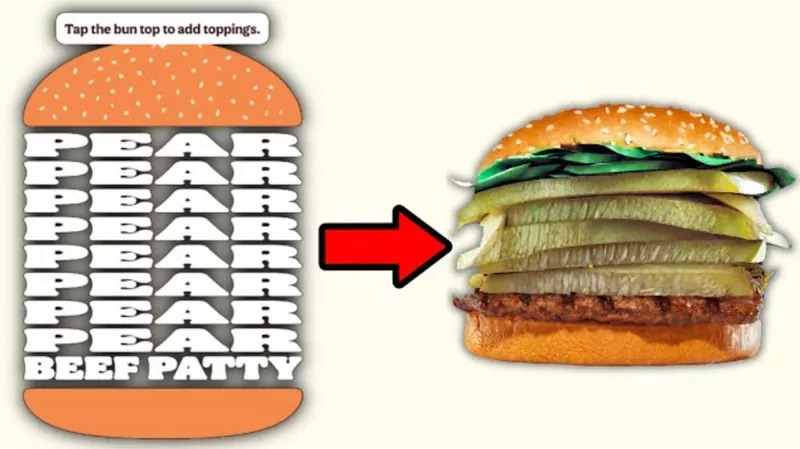
The innovative campaign created attention by:
- Providing users with personalized imagery of their creation to share across popular social media platforms.
- Providing users with a fun and entertaining AI-generated jingle for their creation.
Why it worked: The campaign successfully engaged people by converting them from passive to active content consumers, generating ROI from both gamified customer/brand engagement and organic word-of-mouth marketing.
5. Nutella — Seven million unique AI labels (2026)
Nutella’s AI personalization initiative had a very strong impact and presence in the U.S. market. Even if not strictly an American company. They implemented generative algorithms to generate 7 million unique labels for their jars. Thus, converting an otherwise mundane packaging item into something that people will seek to collect.

What made this project unique:
- All jars had unique identities; you will never see two jars with the same design.
- The campaign sold out rapidly and was extensively shared on social media.
How it worked: It is by combining personalization and product together. So that users feel they own some portion of the branding process — a unique application of generative AI that positively impacts actual buying decisions.
6. Dove — Ethical AI Prompting & “Real Beauty” Campaign (2025)
While generating visuals is one type of AI work, Dove’s Real Beauty Prompt Playbook focused instead on how users can prevent generative AI from producing biased image results through inclusive prompt guidance and counter stereotypical AI output.
Why is this important?
- Dove’s campaign did not use AI to create advertisements; instead, it aimed to create responsible AI-generated advertisements.
- The campaign has received several significant industry awards for its approach to ethical marketing.
How did this campaign achieve success? Its success can be attributed to how it positioned the Dove brand as an industry leader in the ethical creation of generative AI-generated advertisements. Thereby building consumer trust in the Dove brand while engaging consumers on a significant cultural subject.
How Generative AI is effective in Advertising
Several common themes arise from the examples of the many brands that have already successfully used generative AI in their marketing campaigns:
- Inc customizing materials: Through the use of AI, brands can create tailored content, a feat that was very challenging prior to the rise of generative AI technology. Such as creating celebrity endorsements for individuals and utilizing dynamic video technology. That automatically creates different versions of your video ad based on consumer interests, behavior, and preferences.
- Audience design co-creation: Generative AI campaigns that invite audiences to engage with and create content (e.g., Heinz, Coca-Cola, and Burger King) have proven successful.
- Data and creativity: Generative AI brings together powerful analytical capabilities and creativity through storytelling — resulting in smarter, more relevant advertisements.
- Ethical responsibility: Many brands are leveraging generative AI to create new types of advertisements that frankly address its limitations in their campaigns and incorporate those messages into their marketing.
- Integration of AI with human strategy and emotional intelligence: Ultimately, the success of any generative AI advertising campaign will be determined by the strategy and emotional intelligence of the people behind it, not simply by how well it is executed.
Cut to the chase
Generative AI isn’t hype anymore—it’s a creative engine that’s reshaping how brands build relevance, emotion, and participation at scale. Let’s break down the AI ad campaigns that actually worked—and what smart marketers should steal from them.
Your Generative AI advertising questions, answered
Generative AI advertising uses AI models to create content such as visuals, videos, copy, and experiences—often in real time and at scale.
Brands use generative AI for creative experimentation, hyper-personalized ads, co-creation with audiences, and faster campaign production.
Yes—when used thoughtfully, generative AI campaigns drive higher engagement by making ads more relevant, interactive, and culturally timely.
Marketers must ensure human creative oversight, cultural sensitivity, and ethical use to avoid generic, biased, or off-brand outputs.