Fashion Marketing 2026: The Rise of Creator Economy, Viral Trends & Brand IP
There was once a predictable seasonal calendar in the fashion industry— (Spring/Summer, Fall/Winter) for each season, with a polished product within the marketplace. Today, fashion is a constantly evolving process, as a single 15-second reel can accomplish what used to take million-dollar advertising campaigns.
Creators don’t follow scripts—they create moments such as the spontaneous “get ready with me,” chaotic memes, or surprising collaborations between creators can take a product from zero to sold out before brands have time to refresh their dashboards.
Virality is no longer just cultural—it’s transactional. The influencer marketing industry has crossed $32.5 billion globally, with fashion leading creator-led discovery. Fashion marketing is no longer about anticipation; it’s about acceleration. Not about storytelling over months, but about relevance in moments.
Welcome to the era where influence isn’t built slowly—it explodes.
The slow-burning campaign is dying
In the old days of fashion marketing, everything had a long timeline, including glossy magazine spreads, runway shows, and editorial placements. This type of model is starting to feel obsolete.
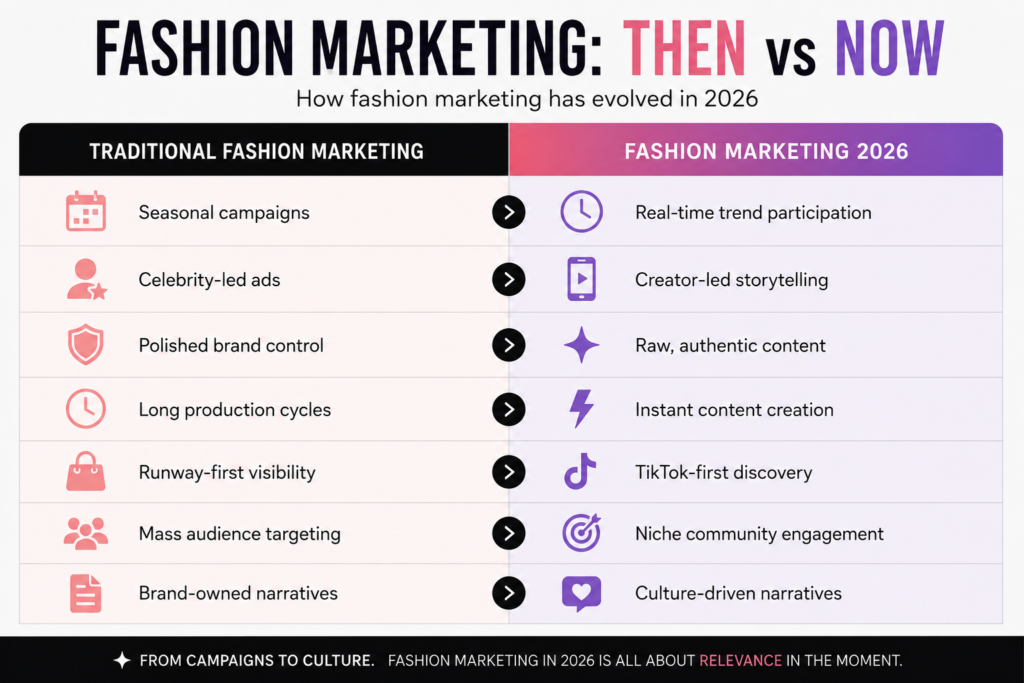
Thanks to the explosion of short-form videos, real-time shopping experiences, and algorithm-driven content discovery, things have changed. TikTok, Instagram, and other platforms do not wait for brands to tell stories; they reward those who instantly become part of the conversation.
For example, the ongoing trend of “Office Siren” aesthetics on TikTok has extended into 2026, driving search spikes and rapid product adoption as corporate-core styles—sharp glasses, tailored skirts, and structured fits—go viral through creator content.
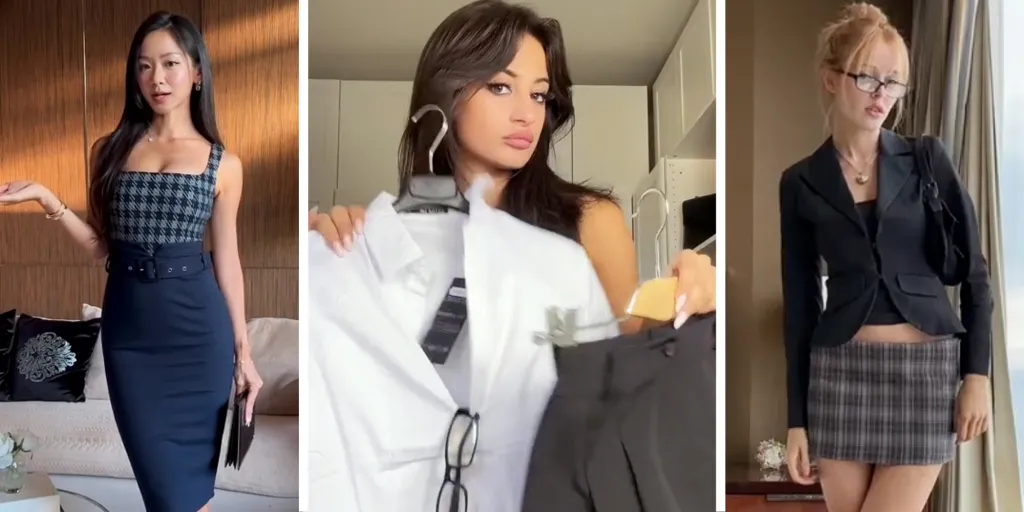
No single brand led it; creators did—proving participation beats control.
Fashion’s front row: The evolution of the creator economy
The creator economy has moved from simply being an influencer to being a partner and working with brands to co-create products. We’ve moved from just being influencers or amplifiers to:
- Designers
- Brand collaborators
- Trend originators
We’ve moved into a new type of marketing through the influencer space, where brands are giving up control over what creators put out and creating native (and more relatable) content as opposed to paid promotional content.
One notable example of this is Emma Chamberlain’s partnership with Louis Vuitton. Instead of doing an endorsement for a brand, Emma is helping tell the Louis Vuitton story through campaigns, attending fashion shows, and infusing her raw, candid style to resonate with the brand’s Gen Z audience.
When creators integrate products naturally, performance follows—because it feels like culture, not marketing. It feels like culture is evolving right in front of you.
Micro is the next massive thing
Even though mega influencers can still give you a lot of reach, the fashion marketing of the micro-influencer is where you will find true depth. Micro-influencers (generally have between 10,000 and 100,000 followers) provide brands:
- Higher engagement
- Strong trust
- Access to a niche audience
Because of these factors, by 2026, brands will have started moving their marketing budgets away from a few large influencers towards hundreds of small creators. The reason brands are making this shift is that influence is now driven by many smaller, more diverse, and authentic voices rather than a single loud voice.
The fashion intellectual property economy is growing
An interesting change in the fashion marketing landscape will be the rise of the fashion intellectual property (IP) economy. Whereas fashion brands previously sold products to consumers, they are now building their IP.
For example, signature design features, well-known aesthetics, and digital/virtual fashion can all be considered forms of fashion IP, as can any IP created through collaboration with a digital creator.
With the speed of replication, designs are created and instantly duplicated, making fashion IP a significant asset for many fashion companies/talents to own. Brands will be more focused on owning ideas rather than just products.
Similarly, this will develop the fashion IP licensing side of brands, whereby brands monetize their brand or identity beyond apparel into areas such as gaming, virtual fashion, and digital wearables in addition to, or instead of, fashion clothes.
Collaboration > Campaign
In 2026, creative collaboration outperforms traditional campaigns. Here’s why:
- Create urgency
- Tap into multiple audiences
- Feel culturally relevant
Whether it’s a streetwear label teaming up with a digital artist or a luxury brand collaborating with a niche creator, these partnerships drive instant buzz.
The best part is that creative collaborations don’t feel like marketing.
The rate of trend change (speed) is faster than recent trends
The life cycle of trends has become significantly shorter. What took months in the past now lasts only a few days. This may have caused some brands to rethink:
- Production schedules
- How they handle inventory
- How they create their content
To be successful in Fashion Marketing in 2026 and beyond, brands need to act like media companies, staying constantly present and prepared. Therefore, Real-Time Marketing isn’t something you do as an extra; it’s essential for surviving the business!
Data comes into play in cultural change
Although we might think of virality as completely unpredictable, we can easily create data to help determine what will “go viral.”
Brands are using things like:
- Social listening tools
- Trend forecasting algorithms
- Real-time analytics of performance
The tricky part is that while collecting data is important, you also have to understand your audience’s culture to create a viral opportunity. Brands that succeed today are finding a way to connect both their statistical analysis of potential virality (data) with gut feelings (intuition).
Authenticity is no longer a trend
In 2026, shoppers will have an innate knack for identifying fake content. Extremely dramatic ad campaigns rarely outperform authentic, creator-controlled content. The answer to that question lies in shoppers’ trust in people far more than in brands.
The influence of fashion influencers on brands stems from the trust these two groups share. When an influencer naturally aligns with a brand, they add credibility to that brand and its ability to convert sales.
Authenticity itself has become a measurement of performance.
The changing role of fashion brands
Fashion brands do not simply make products any longer; they are also:
- Participants in Culture
- Studios of Content
- Communities of People
The transition is not dramatic, but very powerful.
Instead of asking, “How do we sell this collection?” brands will begin asking themselves, “How can we make this collection culturally relevant?”
This mentality defines successful fashion marketing today.
What should be the next step?
In the creator economy, we’re seeing more brand-influencer collaborations than ever before.
The future of creators and brands collaborating looks like this:
- Creators are going to build their own clothing lines with help from brands.
- Using Artificial Intelligence will provide a faster way to forecast trends and create products.
- Digital fashion and real-world fashion will continue to blend.
- Communities will drive growth versus advertising revenues.
Fashion marketing continues to grow; however, one thing that will never leave the industry is the use of influencers and viral content.
Cut to the chase
Fashion Marketing 2026 runs fast, through creators, culture, and not through campaigns. Those things that go viral will win, and things that feel real will sell. Brands that succeed are NOT controlling the narrative; they are being created together with it. Stop marketing at Culture and start building with culture.
FAQ’s
Fashion marketing in 2026 focuses on creator-led content, viral trends, real-time engagement, and cultural relevance rather than traditional long-form campaigns.
Micro influencers drive stronger engagement, audience trust, and niche community connections, making their content feel more authentic and relatable.
The creator economy is pushing brands toward co-creation, influencer collaborations, and creator-led storytelling that feels native instead of promotional.