Blurry Selfies Are Back. No, Really. Here’s Why Nostalgia Marketing Is Working in 2026.
The internet is starting to look a lot like 2016 again.
TikTok and Instagram feeds are once again filled with blurry mirror selfies, Tumblr-style mood boards, flash photography, chaotic photo dumps, and Indie Pop edits. What started as a nostalgic meme has quickly evolved into a powerful example of nostalgia marketing, become one of the biggest marketing trends of 2026.
For brands and creators, this is a chance to reconnect with the messy, emotional, and imperfect side of the internet.
Audiences don’t just want polished content anymore — they want the internet to feel human again. Let’s unpack why the internet is suddenly obsessed with 2016 again.
The rise of the “2026 is the new 2016” internet
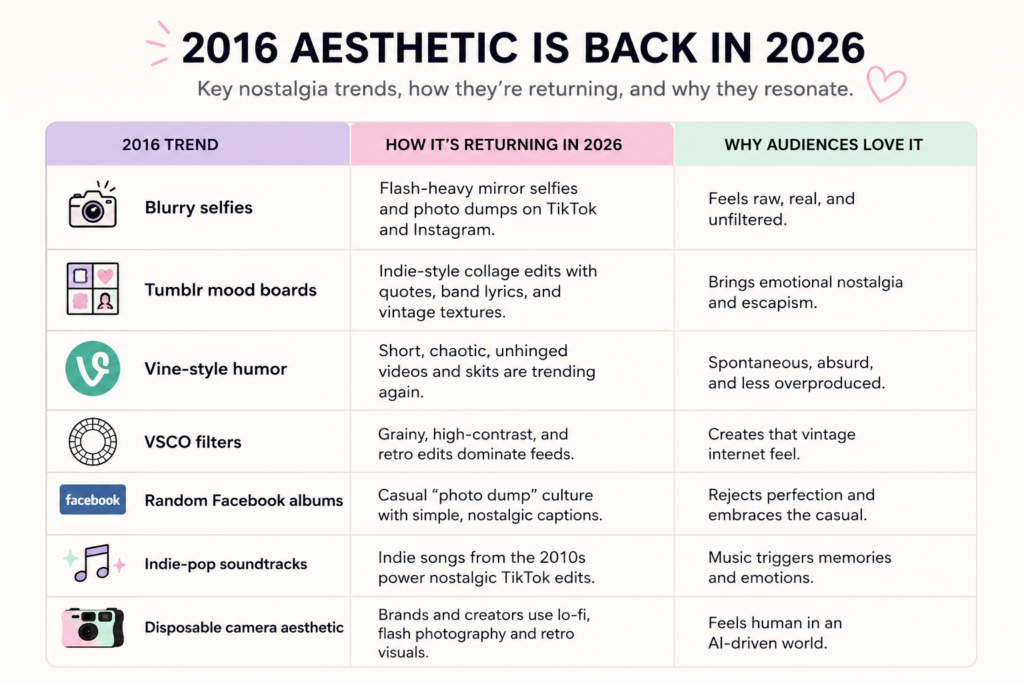
In 2026, TikTok and Instagram feeds became flooded with grainy flash photos, blurry mirror selfies, Tumblr-style edits, and nostalgic music montages featuring songs like “Sweater Weather” and “Closer.”
Users began recreating VSCO edits, reviving Vine-style humor, and embracing chaotic “photo dump” aesthetics inspired by old Instagram culture.
The internet proclaimed that “2026 will be the new 2016.”
Landmark searches around the topics of “2016 aesthetic,” “Tumblr girl’s aesthetic,” and “2016 vibes” were trending when many users were recreating their own flower crown selfies, Coachella-inspired blurry edits, outdated Snapchats, and indie-sleaze fashion from the high-flying days of Tumblr.
But why did so many users adopt the 2016 aesthetic in 2026?
For many Gen Z users, 2016 feels like the last era of the “fun internet.”
It was the internet before every post became a monetization strategy, and every creator optimized content for engagement. Ultimately, the recent revival of the 2016 Tumblr aesthetic has been seen as an act of rebellion against the hyper-curated digital environment.
Genz’s obsession with nostalgia marketing
Many people participating in the trend were kids in 2016. Moreover, they have only minimal experience in that timeframe. Nonetheless, people have established an emotional connection to 2016.
Why? Because people’s nostalgia—once confined to one’s personal history—is now expanding into a collective nostalgia or “historical nostalgia.” One has formed an emotional connection to a generation of culture, no matter how they experienced it (personally or digitally).
Gen Z grew up with algorithm-driven feeds, AI-generated content, and constant online optimization. Compared to today’s polished creator economy, 2016 feels spontaneous, messy, and emotionally real.
Here are examples of how the 2016 era felt authentic in the moment:
- Blurry selfies were tolerable
- Tumblr quotes were decent
- Flash photography used too much flash
- Humor was spontaneous and unpredictable via Vine
- Random Facebook albums were in, with titles like “lol.”
All of this seems much more authentic to the present day. And in today’s economy, authenticity is one of the most valuable currencies for marketers.
Tumblr’s aesthetic is officially a brand strategy
No longer a nostalgic representation of the past through the internet, Tumblr’s aesthetic is now an established marketing strategy in the world of brands.
Brands are increasingly utilizing blurry flash photos, messy collages, handwritten fonts, and indie rock-soundtracked melodies. And low-fi pictures of chaos—seemingly based on a 2010s-style internet emotional experience—to evoke a nostalgic reaction in their audiences.
Brands such as Urban Outfitters and American Eagle have adopted a lo-fi visual campaign use as opposed to traditional advertising styles with high degrees of polish.
Audiences have experienced years of highly curated social commerce experiences. They are beginning to prefer to consume imperfect, nostalgic, and emotionally direct content.
Selfies, flash photos, & chaotic edits make a comeback
The 2016 aesthetic revival has been significantly influenced by the return of the “bad selfie” as part of that movement. The so-called “bad” selfie is not really bad; rather, it is a purposeful nod to nostalgia.
Selfies with:
- Front Camera Flash
- Blurry Mirror Photography
- Over-Exposed Highlights
- Chaotic Room Backgrounds
- Heavy Filters
- Random Stamps
Marketers are embracing the unpolished, messy-looking aesthetic that they had avoided previously. The revival of disposable cameras, blurry pictures taken with a flash, and ‘retro’ style images from earlier versions of iPhones is gaining traction.
In a digital world flooded with AI-enhanced content, audiences are increasingly drawn to visuals that feel raw, nostalgic, and human.
That emotional connection creates engagement.
Viral trends fueling the nostalgia comeback
Due to many viral trends emerging on TikTok and Instagram, we are experiencing a major resurgence of the 2016 “nostalgia wave” in 2026.
Blurry “photo dump” edits featuring flash photography, grainy concert clips, and chaotic mirror selfies are dominating TikTok again, as well as other social media aesthetics introduced at the time are also being revived. One example is how comedic Vine-style content is back in fashion, as are Tumblr-style clothing and flower crown accessories/hairstyles, while some indie edits are reminiscent of peak 2010s internet culture.
The viral “2016 core” trend on TikTok has especially accelerated this comeback, with creators recreating old VSCO edits, Tumblr-inspired photo dumps, and Coachella-style aesthetics using nostalgic filters and music.
As marketers, these viral trends not only recreate previous styles but also provide us with a sense of nostalgia, as we move away from highly curated online content and back toward emotional connection through the internet.
Why nostalgia marketing works so well right now
Nostalgia marketing isn’t new — but in 2026, it feels more powerful than ever. It has a greater impact among consumers than in the past due to the increased prevalence of:
- AI-generated content
- endless trend cycles
- hyper-curated feeds
- algorithm fatigue
When brands tap into older internet culture. It gives audiences emotional relief by reminding them of a version of the internet that feels more personal and less transactional.
Younger people seek comfort (to feel good) by being able to connect with “the old school internet” when/wherever they are. Therefore, nostalgia generates higher levels of engagement (more clicking and sharing) and an emotional connection with them.
Nostalgia can easily turn into cringe
This is an important point I want to make clear: Internet audiences have an amazing ability to instantly recognize when nostalgia is done poorly.
On TikTok and Reddit, you’ll find many examples of people calling out brands for trying to recreate “2016 vibes” and doing so inaccurately. Whether it’s the wrong Instagram filters, Tumblr layouts, edits like those seen on Vine, or aesthetics reminiscent of indie pop.
Why does this matter? Because nostalgia on the Internet tends to be very detailed. Individuals can remember not only the angle at which they took a selfie but also the texture of the flash photos as well as the different ways each of the chaotic editing styles appeared.
If a brand copies the look and feel of those types of images without understanding the culture in which they were created, users will label that as cringeworthy almost immediately.
Therefore, nostalgia marketing will only be successful when it is a genuine emotional experience for consumers — not an inauthentic one.
The biggest shift behind this trend and the future
The return of 2010s internet culture says something important about the future of social media: people are exhausted by perfection.
After several years of highly refined feeds, algorithmically driven content, and never-ending personal branding, audiences are looking for something much messier, more relatable, and more emotionally authentic.
This is why blurry selfies, messy edits, photo dumps, and low-tech visuals are generally outperforming the extremely polished photos that we have been using for years on the internet.
The Internet is gradually reverting to its original state of authenticity; marketers who recognize this emotional transition early will create better relationships with their younger customers.
By 2026, the future of marketing looks surprisingly familiar to marketers from the past.
Cut to the chase
The Internet appears to be building toward recreating 2016 through a combination of “blurry selfies,” “Tumblr aesthetics,” and an overwhelming amount of online nostalgia, which has also pushed many brands to implement them as part of their marketing strategies for 2026. Marketers who embrace messy, genuine, and emotional content will have a greater online connection with Gen Z as viewers shift away from pristine perfection.
FAQ’s
Nostalgia marketing in 2026 uses retro internet aesthetics like Tumblr visuals, blurry selfies, and 2016-style content to emotionally connect with audiences.
Gen Z sees 2016 as a more authentic and less curated era of the internet compared to today’s algorithm-driven social media culture.
Brands are using these aesthetics because audiences are engaging more with nostalgic, messy, and emotionally relatable content.