
The Pride Campaigns That Actually Earned Their Rainbow
At the height of the digital marketing rise, Pride Month campaigns often dominated the conversation. Brands were at the forefront of putting a spotlight on Pride through powerful storytelling, memorable creatives, and inclusive narratives.
Today, however, association with Pride Month has become a major red line for many brands and agencies. Campaigns that once raised awareness and demonstrated solidarity with a vulnerable community are now increasingly met with scrutiny, backlash, and calls for boycotts.
Over the past two years, DEI and inclusivity initiatives have faced significant setbacks. Ad Pulse has extensively covered the rise of anti-trans policies and their impact on brands across the social media ecosystem.
Against that backdrop, it is worth revisiting the campaigns that drove positive change through compelling stories and creative execution. Let’s look back at some of the most iconic Pride campaigns across industries, from FMCG to automotive.
Google: Together – Stories by Pride & Google+
Published in June 2012 and created by agency Entrinsic, “Together” was a collaboration between Google and the Pride organization, built around the Google+ platform.
LGBTQ+ individuals submitted their personal coming-out stories and moments of community solidarity through Google+, then wove those real narratives into a documentary-style film. The masterstroke was the product integration, Google+ Circles. It became a metaphor for chosen communities, showing how technology could create belonging. At a time when social networks were being evaluated for cultural utility, Google positioned itself as an infrastructure for queer life.
The campaign was emotionally grounded in real voices, which shielded it from the “rainbow washing”. In 2019, Google shut down Google+ and its versions completely.
Then, in 2026, Google removed references to Black History Month, Pride Month, and Women’s History Month from its calendar.
Animal Planet: Love is Natural
In April 2018, Animal Planet and Y&R Istanbul launched a campaign that combined simple biology with creative insight. “Same-sex behavior occurs across the animal kingdom, making it, by definition, natural.”



The print ads featured pairs of animals — lions, zebras, and others — in ways that mirrored same-sex affection, accompanied by the line “Love is natural.” With just two words, the campaign deflated the “queerness is unnatural” argument. The brilliance was a contextual fit.
This wasn’t a personal care brand slapping a rainbow on packaging; it was a nature channel using its editorial authority to make a scientific and emotional point simultaneously. The campaign earned widespread attention because the logic was airtight, and the visual execution was elegant.
Nevertheless, it has changed enormously. Animal Planet is not the same broadcast as it was. The audience witnessed its degradation from a network that showed animals and conservation to a mere reality TV.
Burger King: Love conquers all
Ahead of Helsinki Pride Week 2020, Burger King Finland launched “Love Conquers All,” a campaign created with TBWA\Helsinki and Virta Helsinki.
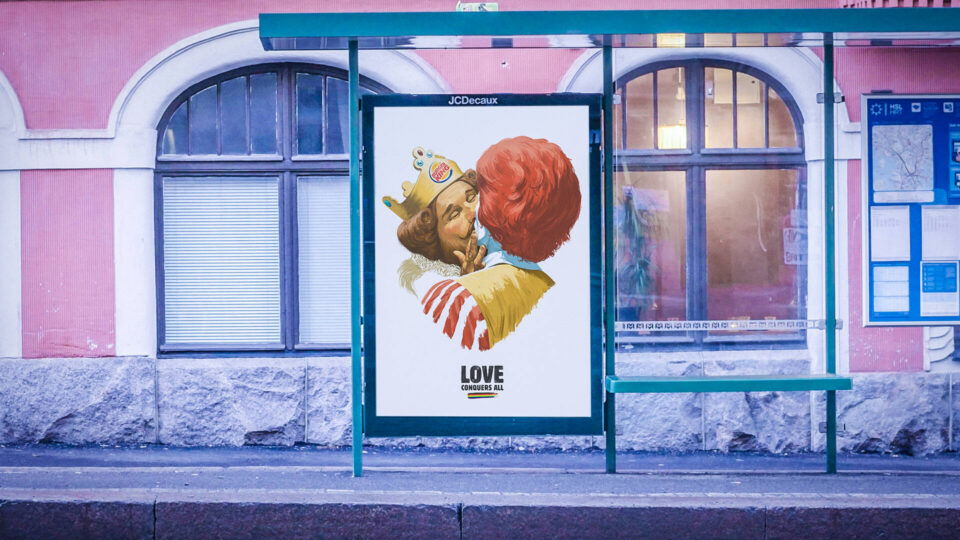
At the center of the campaign was a painted artwork showing Burger King’s mascot kissing its longtime rival, Ronald McDonald. The image was displayed on billboards, in print advertisements, and inside Burger King restaurants across Finland.
Burger King Finland’s brand manager Kaisa Kasila framed it as a celebration of love in all its forms, acknowledging that the brand’s competitive banter with McDonald’s always came from a place of respect. The image was provocative enough to travel organically across global media, earning Burger King disproportionate earned reach for what was a regional campaign.
Astonishingly, Burger King did not run any pride month campaign or pride campaign in 2025. From ‘Love conquers all’ to the year 2022 controversy where the brand sold a Pride burger that’s either two tops or two bottoms; Burger King stopped shining under the rainbow.
Dove: Pride in every wash
Created by Arco for Dove Caribe in Puerto Rico, the campaign launched in June 2021. It was built around a simple observation: when Dove soap lathers, its bubbles naturally create a rainbow spectrum of colors.
To highlight this phenomenon, the team used macro photography, showing that the product itself carries Pride in every wash.
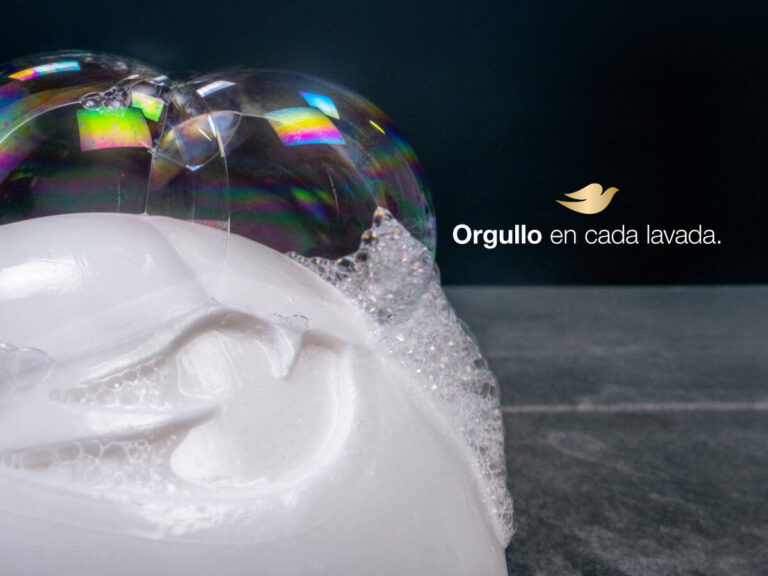
The campaign went beyond visual. Dove Caribe used it to argue that diversity should be celebrated throughout the year, not only during the Pride Month.
That message is what helped the campaign stand out. Instead of releasing a limited-edition rainbow-themed product, Dove focused on something that already existed within its product experience.
In doing so, the brand offered a subtle critique of performative activism. An everyday moment was transformed into a year-round statement of inclusion.
Dove has been launching campaigns for years, celebrating pride, motivating teenagers, and breaking beauty standards. It is one of the few brands that still uphold creative storylines mixed with new trends.
Virgin: Mardi Gras
Virgin’s Mardi Gras campaign, created by agency Cummins and published in Australia in 2008, was a print campaign tied to the Sydney Gay and Lesbian Mardi Gras.
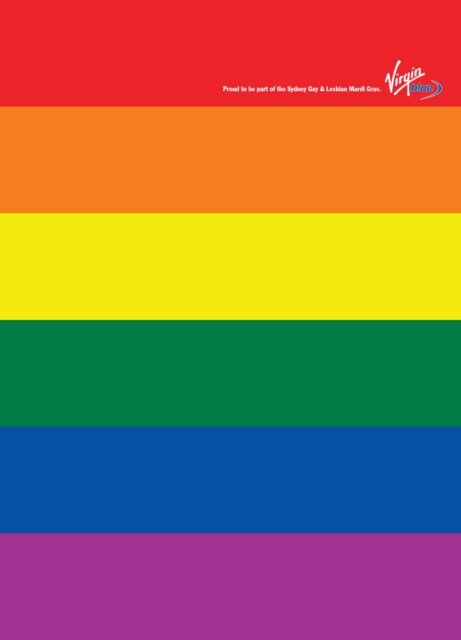
Virgin leaned into what it already knew how to do — irreverence, boldness, and a refusal to take itself too seriously — and applied that brand personality directly to Pride. The airline’s positioning as the anti-establishment, fun-first carrier made the association feel organic rather than opportunistic.
This early campaign eventually grew into a full-fledged Pride Flight program. Virgin Australia operated dedicated flights from Brisbane and Melbourne to Sydney featuring drag performances. The Mardi Gras campaign is a rare example of a brand Pride moment that evolved into an institution rather than a one-cycle execution.
Mercedes: Chosen Family
Produced by editorial house Uppercut and directed by Jason Evans for agency The Mixx, “Chosen Family” featured people from different ethnicities, genders, and sexual orientations, coming together as a family. The campaign explored the idea that family is not always defined by blood, but often by the people who stand beside us.
Mercedes framed the film with the line: “Every destination is a moment, and you are the driver. We are the vehicle you choose to take you there.”
The campaign resonated because it did not ask viewers to celebrate the brand. Instead, it invited them to see themselves in the stories being told. The theme of chosen family also built on Mercedes’ broader history of LGBTQ+ advertising.
It drew from a reality familiar to many queer people, who often create strong networks of friends and community after experiencing rejection from biological relatives.
For a luxury automotive brand, the emotional tone felt notably human.
Pride campaigns, a moment for creative celebrations
The campaigns listed above were not accidents. They worked because the brands behind them understood that Pride is not a content calendar checkbox. It is a creative brief that demands honesty. Here is what marketers can learn from them:
Specificity beats spectacle
Gen Z and Gen Alpha are the most brand-literate generations to have ever existed. They grew up watching companies swap logos to rainbow palettes in June and swap them back in July. They have a name for it. What they respond to is not grand gestures but specific, grounded creative work that speaks to a real experience.
The insight is already inside your brand
Dove did not manufacture a new product. Animal Planet did not hire celebrity talent. The creative truth was already present — inside the product, inside the brand’s natural authority. Before asking what to create, ask what your brand already stands for and how that belief genuinely intersects with LGBTQ+ lives.
Ask the harder question
The question is never “what should we post in June?” It is: what does our brand actually stand for, and how does that connect to the lived experiences of LGBTQ+ communities specifically? If the answer is thin, the campaign will feel thin.
Break audience silos
Pride campaigns are not niche marketing. They are cultural storytelling that speaks to allies, families, colleagues, and communities far beyond the LGBTQ+ audience. Brands that treat Pride as a segment miss the broader brand-building opportunity entirely.
Solidarity with substance
In a media environment where audiences do the fact-checking, performative support does not survive long. The brands that earn trust are the ones willing to back their creative with consistent values — not just in June, but across the year.
The window is not closed
The opportunity to participate meaningfully still exists. But it belongs to brands willing to earn it through authentic creative work rather than simply marking it on the calendar. Those are the campaigns worth writing about ten years from now.
Cut to the chase
Looking back at Pride Month campaigns from legacy brands raises an important question for marketers and brands today: Are they still willing to take risks?