

Why Discount Pricing No Longer Guarantees Brand Loyalty
The festive season has become a familiar battleground for brands competing for consumer attention. Black Friday, Cyber Monday, Thanksgiving, and Christmas bring a predictable surge in promotions, coupon codes, and limited-time offers.
But in an economy where consumers are becoming increasingly selective about spending, brands cannot keep relying on discounts to secure customer loyalty. There is no guarantee that a consumer who plans to buy an IKEA desk just for discounts in 2026 will come back for another purchase.
A lower price can encourage a purchase. It can also convince a shopper to abandon a preferred brand when a competitor offers a better deal. The distinction matters because a transaction driven by savings does not necessarily translate into a lasting relationship.
The challenge for marketers is no longer simply to offer a better deal. It is to give customers a reason to return when the discount disappears. So, what marketer experts can do to bring value in the festive season while utilizing discount pricing?
The relationship between brand loyalty and discounts
Discount pricing has long been an important tool for customer acquisition and retention. Seasonal promotions reduce the perceived financial risk of trying a product, encourage consumers to make planned purchases, and provide an incentive to shop during a particular period.
However, the relationship between discounts and brand loyalty is more complicated than it appears.
This distinction is becoming increasingly relevant. A 2025 study by the University at Buffalo School of Management examined how US consumers evaluate price, loyalty, and product quality.
Dinesh K. Gauri, the school’s marketing professor and director of its Center for Marketing Analysis, explained the relationship between consumer behavior and perceived value:
“What we’re seeing isn’t simple bargain hunting. Shoppers weigh prices against experience. They want value, and they want trust.”
The research, based on a nationally representative sample of 2,011 US consumers, found that a 20 percent discount was a meaningful price point in its examination of shopper loyalty.
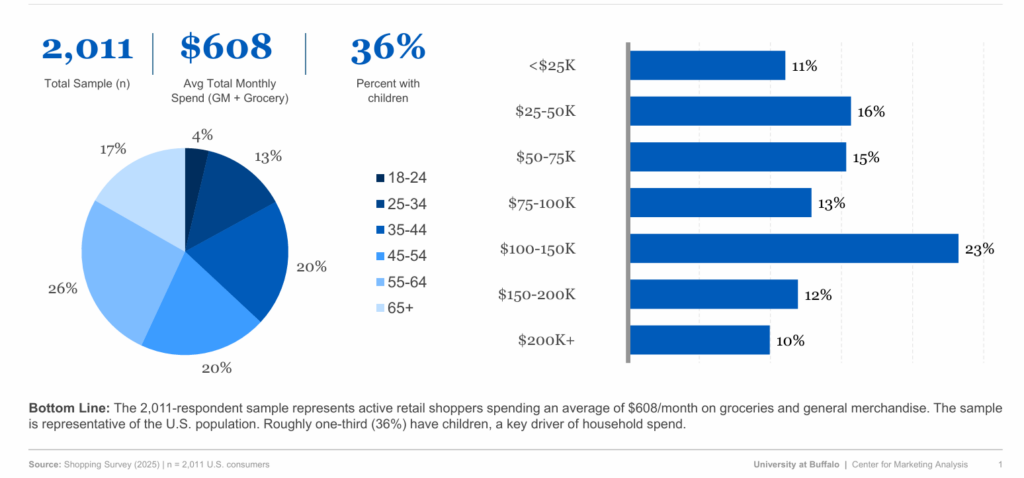
The findings suggest that consumers are not simply looking for the lowest possible price. They are evaluating whether the price they pay is justified by the experience they receive.
A customer might repeatedly purchase from a brand because its products are consistently discounted. Yet this behavior does not necessarily reflect an emotional connection or a preference for the brand itself. The customer may simply be loyal to the savings.
Discounts encourage transactions, not always loyalty
The problem with discount-led loyalty is that it can condition customers to wait for the next promotion.
When brands repeatedly lower prices, consumers may begin associating the product’s value with its discounted price rather than its original price. This creates a difficult situation for marketers. Full-price purchases become harder to secure, while promotional campaigns become increasingly necessary to maintain sales.
The customer relationship then becomes dependent on incentives.
A discount can bring a customer into a store or encourage a first purchase. But it cannot independently establish trust, satisfaction, or preference.
Deloitte’s November 2025 research on holiday shopping found that nearly two-thirds of surveyed US consumers would consider switching brands if they felt their preferred options were too expensive.
The study also identified quality, service, and trust as powerful non-price drivers of perceived value.
This creates a challenge for marketers. A customer may initially choose a brand because of its festive promotion, but the product and shopping experience must justify the decision.
Otherwise, the brand has paid to acquire a customer who may disappear as soon as another retailer offers a lower price.
The US festive season and the changing role of discounts
The US holiday shopping season remains one of the most important periods for retailers. Thanksgiving, Black Friday, Cyber Monday, and Christmas create a concentrated period of consumer spending, making promotional pricing an essential part of retail strategy.
However, recent research suggests that consumers are becoming more deliberate about how they spend.
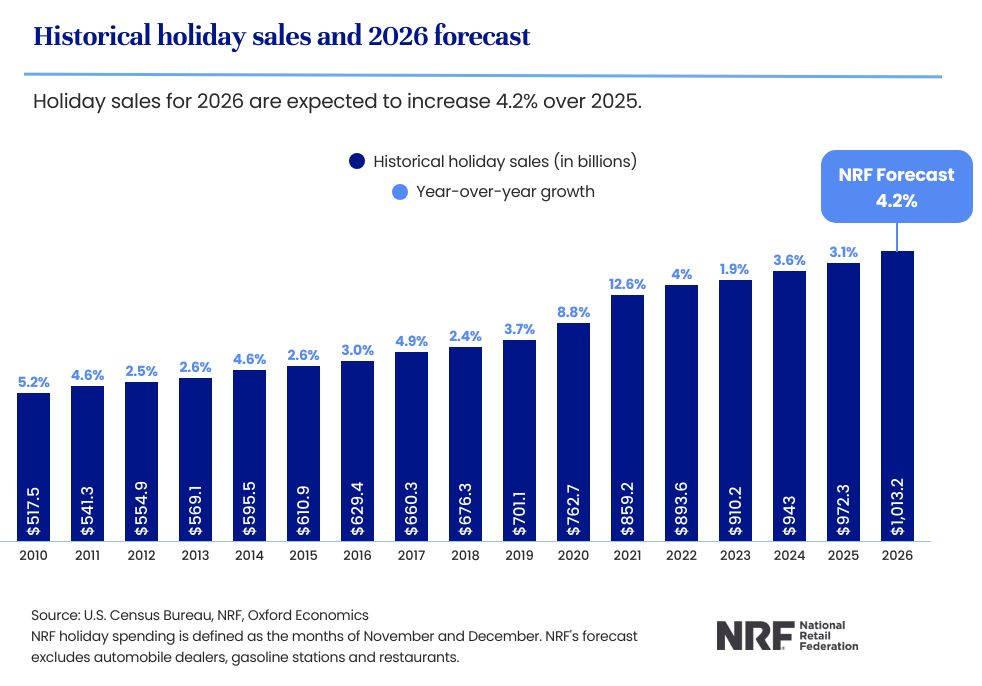
According to the National Retail Federation’s October 2026 forecast, US holiday retail sales during November and December are expected to grow 4.2 percent year over year, reaching $1.013 trillion.
NRF President and CEO Matthew Shay said:
“This year’s forecast reflects our confidence that consumers will prioritize the holiday season even as they remain mindful of their budgets.”
The forecast indicates that consumers continue to prioritize festive spending, even as economic pressures influence their purchasing decisions.
The NRF’s 2026 holiday shopping research also found that 56 percent of shoppers consider sales and discounts when deciding which retailers to visit. However, the quality of merchandise followed closely at 51 percent, while merchandise selection reached 46 percent.
These findings are particularly relevant for marketers.
Discounts remain the most frequently cited factor in retailer selection, but consumers are also evaluating product quality and assortment. A brand that competes exclusively on price may overlook other factors influencing the purchasing decision.
The opportunity is not to abandon promotions. It is to recognize that price is only one component of value.
What drives customer loyalty during the festive season?
Customer loyalty is not established by a single interaction. It develops through repeated experiences that reinforce a consumer’s decision to choose a particular brand.
During the festive season, product quality, convenience, trust, and emotional relevance become particularly important.
Deloitte’s 2025 holiday shopping research found that consumers planned to reduce their holiday spending by 10 percent, on average. Yet shoppers were not simply looking for cheaper products. They wanted more value for every dollar spent.
Stephen Rogers, managing director of Deloitte’s Consumer Industry Center, highlighted the importance of non-price factors such as quality, service, and trust in shaping how consumers define value.
This is where brands need to move beyond the conventional understanding of loyalty.
A consumer purchasing a gift is not simply looking for the cheapest product. They may be looking for something reliable, meaningful, or suitable for a particular person.
A brand that delivers these expectations can create a more memorable experience than one that merely offers a lower price.
Trust is especially important. Consumers need confidence that the product will arrive on time, match its description, and meet their expectations. A frustrating checkout process or delayed delivery can undermine the relationship, regardless of how attractive the discount was.
How can brands compete on value instead of price?
Competing on value requires brands to communicate why their products deserve consideration beyond their promotional price.
- One approach is to emphasize product quality and longevity.
Instead of presenting a product as an inexpensive purchase, brands can demonstrate how its durability, performance, or functionality makes it worth the investment.
2. Another lies in simplifying the shopping experience.
Reliable delivery, flexible returns, accessible customer support, and clear product information can make a brand more attractive without requiring a price reduction.
3. Third is personalization, which can also contribute to perceived value.
Brands can use customer preferences and purchase histories to recommend relevant products, provide useful gift suggestions, and offer benefits that reflect individual needs.
The objective is not to eliminate promotions. It is to make them more relevant.
Deloitte’s January 2026 research on loyalty programs reinforces this direction. The firm’s analysis found that consumers ranked overall value as the leading motivation for joining loyalty programs, followed by attractive ongoing benefits and immediate sign-up incentives.
The findings suggest that the initial reward can attract customers, but the broader value of the program determines whether it remains relevant.
Best ways to build brand loyalty during the festive season
Brands need to approach festive loyalty as a relationship-building exercise rather than a temporary sales campaign.
- They should reward repeat purchases without making customers dependent on constant discounts. Loyalty programs can offer early access to seasonal collections, exclusive products, complimentary services, or personalized rewards.
- Brands should make shopping experience more dependable. Clear delivery timelines, convenient returns, and responsive customer support can reduce the uncertainty associated with holiday shopping.
- They should create emotional relevance through their festive campaigns. Holiday marketing naturally provides opportunities to connect products with gifting, family traditions, shared experiences, and personal celebrations. These connections should feel authentic rather than manufactured.
- Brands should recognize existing customers. A personalized message, a relevant recommendation, or an exclusive benefit can make a returning customer feel valued beyond their purchasing power.
Finally, marketers need to measure loyalty beyond seasonal sales figures.
- Conversion rates and promotional revenue are useful indicators, but they do not independently reveal whether customers intend to return. Repeat purchase rates, retention, customer lifetime value, and full-price purchasing behavior can provide a more meaningful picture of whether a campaign is strengthening the relationship.
Cut to the chase
Discount pricing remains a powerful tool in the US festive shopping season. But the ability to attract a customer through a discount is different from the ability to retain one. Product quality, trust, convenience, personalized experiences, and meaningful rewards can create a stronger foundation for customer loyalty.