
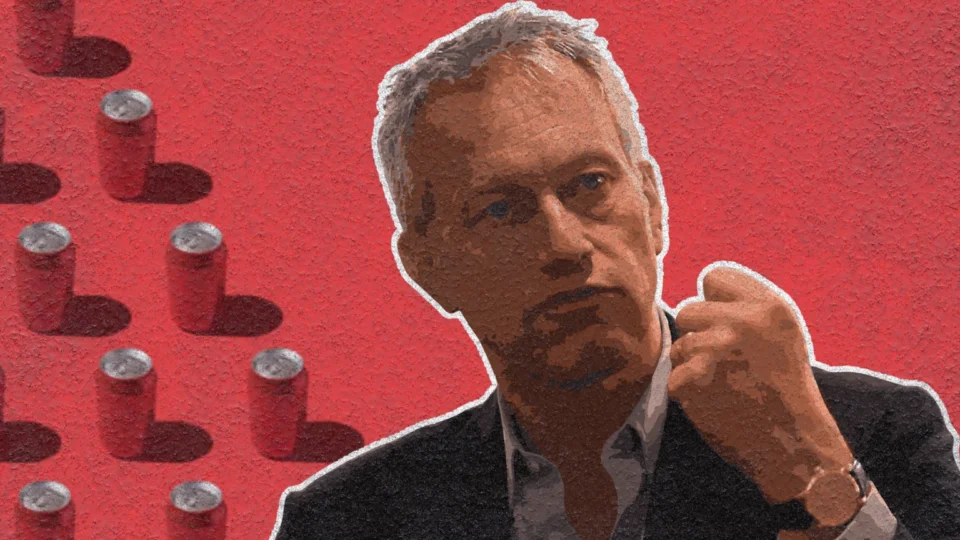
James Quincey Leadership Style: Rebuilding Coca-Cola’s Marketing Operating System
When James Quincey became CEO of The Coca-Cola Company in 2017, the brand was already one of the most recognizable names in the world. Yet recognition alone was no longer enough in the ever-changing digital ecosystem. Consumer preferences were shifting, the beverage market was fragmenting, and marketing ecosystems were becoming more complex than ever.
Quincey’s leadership response to the shift was quiet, yet powerful. He rebuilt the marketing operating system of Coca-Cola.
By simplifying the portfolio, redefining brand architecture, strengthening global creative platforms, and integrating data with storytelling, Quincey reshaped how Coca-Cola connects with consumers.
Ad Pulse explores James Quincey’s leadership style, which offers a compelling case study of marketing as a strategic engine of business growth.
Leadership that starts with focus
Quincey’s leadership philosophy revolves around one core discipline: focusing on the decisions that matter most. In a recent conversation at London Business School, he explained that leadership is about prioritization and judgment.
“This role requires a certain degree of discipline,” he noted, emphasizing that leaders must decide “what to drive and how you spend your time.”
For a company operating across hundreds of markets, that discipline translated into strategic clarity. Rather than allowing Coca-Cola to expand endlessly across fragmented brands and campaigns, Quincey pushed the organization to focus on fewer, stronger ideas that could scale globally.
This principle became the foundation for the company’s marketing transformation.
Portfolio simplification cut through the noise
One of Quincey’s earliest and most significant moves was portfolio simplification. For years, Coca-Cola has accumulated hundreds of beverage brands across markets, creating complexity in marketing investments and brand positioning.
Under Quincey’s leadership, the company discontinued nearly 200 underperforming brands, roughly half of its portfolio at the time.
To name a few, Delaware Punch, Honest Tea, and Zico Coconut Water were shut down.
The objective was to concentrate on marketing resources around brands with the strongest growth potential and cultural relevance.
By reducing brand clutter, Coca-Cola could invest more heavily in core brands and build stronger global narratives. It also allowed marketing teams to shift from managing countless small brands to focusing on fewer, more impactful platforms.
This move reflected a key aspect of James Quincey’s leadership style, making difficult strategic decisions to restore clarity and momentum.
Reinforcing the “one brand” architecture
Another pillar of Quincey’s marketing transformation was reinforcing Coca-Cola’s One Brand architecture.
Historically, variants such as Diet Coke, Coca-Cola Zero Sugar, and classic Coca-Cola often ran separate marketing campaigns. Under the One Brand framework, these products are presented as variations of a single master brand rather than standalone identities.
The advantage is both emotional and strategic. Instead of dividing consumer attention across multiple sub-brands, Coca-Cola reinforces the equity of the core brand while allowing consumers to choose their preferred version.
Quincey often emphasizes the product’s universality.
In the London Business School interview, he noted that despite cultural differences around the world, people share similar aspirations and experiences, explaining that “fundamental human aspirations and values are not that different around the world.”
Global creative platforms instead of fragmented campaigns
Another hallmark of Quincey’s leadership has been the shift from fragmented regional campaigns to fewer, larger global creative platforms.
Historically, Coca-Cola’s marketing often relied on locally developed campaigns that varied widely from market to market. While this approach allowed cultural customization, it also led to duplication of efforts and diluted brand storytelling.
Perhaps the most defining campaign platform of the Quincey era.
The Real Magic platform launched in 2021 to reposition Coca-Cola for digital-native audiences while preserving its emotional brand heritage.
One of the flagship ads, “One Coke Away From Each Other,” blended gaming culture with Coca-Cola’s long-standing theme of connection.
The modern strategy prioritizes “fewer, bigger” integrated campaigns, supported by shared assets, global creative concepts, and coordinated media planning.
Campaigns can still adapt to local cultures, but the core creative idea remains consistent worldwide. This model dramatically improves efficiency and brand coherence while maintaining the cultural relevance that Coca-Cola has always relied on.
Data and creativity for hybrid marketing
Quincey’s transformation also pushed Coca-Cola deeper into data-driven marketing.
The company increasingly uses consumer insights, technology, and analytics to refine everything from product innovation to advertising. Granular data helps identify emerging consumption trends, preferred flavors, packaging formats, and marketing channels.
At the same time, Quincey has been careful not to replace creativity with algorithms. Instead, data acts as a guide for storytelling rather than a substitute for it.
This balance between analytics and creativity reflects the hybrid nature of modern marketing leadership. Brands must understand consumers at a granular level while still creating emotional narratives that resonate globally.
As Quincey has explained in discussions on marketing strategy, the ultimate goal remains business growth: “In the end, you’re doing marketing to support, sustain and grow the business.”
Culture-driven marketing
Perhaps the most distinctive feature of Quincey’s marketing philosophy is his emphasis on cultural relevance.
Rather than relying solely on traditional advertising channels, Coca-Cola increasingly engages with cultural ecosystems—music, gaming, sports, and digital communities. These initiatives allow the brand to remain present in everyday experiences rather than appearing only in commercial messages.
The company’s marketing now reflects Quincey’s broader belief that brands are shaped by relationships with communities, not just products.
The brand is not just what you make and do but how you engage with people.
James Quincey during his conversation in the London Business School
This perspective reframes marketing as participation in culture rather than a one-way communication channel.
From beverage company to brand system
Taken together, these changes reveal a deeper shift in how Coca-Cola operates.
Under Quincey, the company has evolved from a traditional beverage manufacturer into something closer to a brand portfolio system. Each beverage still matters, but the strategic focus lies in building enduring relationships between brands and consumers.
That system is built on a few guiding principles:
- fewer but stronger brands
- globally scalable campaigns
- consumer-centric innovation
- data-informed marketing
- cultural storytelling
This integrated approach allows Coca-Cola to operate as both a global brand and a locally relevant product in thousands of markets.
The leadership lesson
Ultimately, the story of James Quincey leadership style is not just about beverages or advertising. It is about how leaders reshape organizations by redefining the systems behind them.
Quincey’s transformation of Coca-Cola demonstrates that marketing leadership today requires more than creativity. It demands strategic discipline, operational clarity, and an understanding of culture as a competitive advantage.
Cut to the chase
By rebuilding Coca-Cola’s marketing operating system, James Quincey ensured that one of the world’s oldest consumer brands could continue speaking to new generations.