

Are Brands Serious About Sustainability in 2026? Brand Sustainability Reality Exposes the Gaps
For the past decade, sustainability has become one of the most powerful narratives in brand marketing. Companies have pledged to become carbon neutral, eliminate plastic waste, and build circular supply chains. ESG reports have grown thicker every year, filled with charts, roadmaps, and bold commitments stretching toward 2030.
But as the climate deadline approaches, a different story is emerging.
According to the European Commission’s review of environmental marketing claims, around 40 percent of green claims made by companies lacked supporting evidence, while over half were vague or potentially misleading.
The gap between what brands say about sustainability and what they actually achieve has become one of the defining credibility problems of modern corporate communications.
Let’s deep dive into the growing skepticism looming over brands and what happened last year.
The flood of sustainability promises
Many of the world’s largest brands have publicly committed to ambitious sustainability targets.
However, the data is raising more questions over these ambitious targets and results.
- 94% of investors believe corporate sustainability reports contain unsupported claims.
- 85% of investors say greenwashing is getting worse.
- High-severity greenwashing incidents have increased by around 30% recently.
Investigations, regulatory crackdowns, and independent research increasingly show that many sustainability claims are either exaggerated, unsupported, or strategically framed.
These numbers are making investors lose patience.
Companies like Nike, Unilever, The Coca-Cola Company, and Shell have published long-term goals that include net-zero emissions, reduced plastic use, and renewable energy transitions.
These commitments are typically framed around milestone years—2030, 2040, or 2050—giving companies ample time to demonstrate progress.
When sustainability marketing crosses the line
Regulators are increasingly stepping in when sustainability claims overstep the evidence.
In the United Kingdom, advertising authorities banned campaigns from brands including Nike, Superdry, and Lacoste after determining their environmental claims could mislead consumers.
Regulators concluded that the advertisements did not provide sufficient context about the overall environmental impact of the companies’ production processes.
These actions are part of a broader global crackdown on greenwashing. Regulators in Europe and the United States are tightening rules requiring brands to provide clear evidence for environmental claims made in advertising and product labeling.
The new scrutiny reflects a simple reality: sustainability claims are no longer treated as brand storytelling. They are increasingly viewed as verifiable statements that must withstand regulatory and public examination.
Coca-Cola and the plastic paradox
One of the most frequently cited examples of sustainability contradictions involves The Coca-Cola Company.
Through its “World Without Waste” initiative, the beverage giant has promoted recycling campaigns encouraging consumers to return bottles and reduce plastic waste. The company has also pledged to make 100 percent of its packaging recyclable and increase the use of recycled materials.
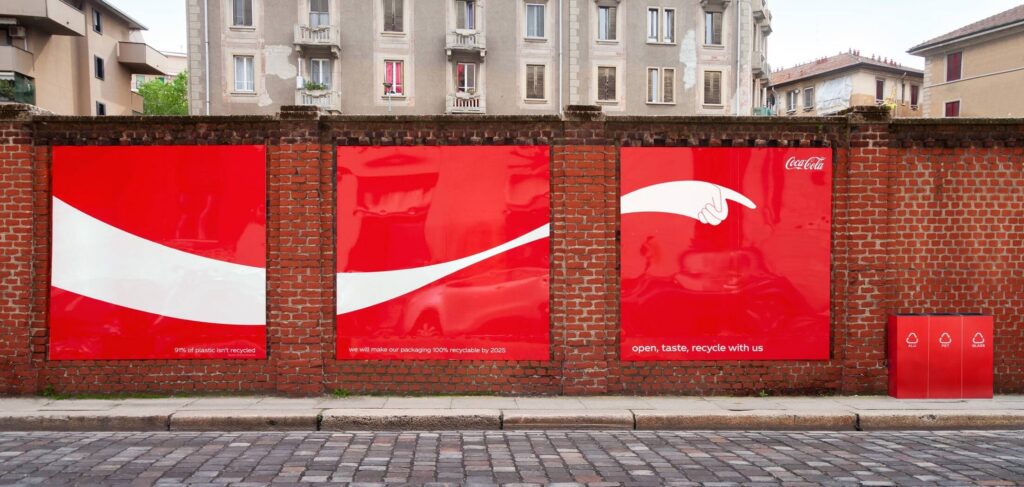
However, environmental organizations argue that these efforts do not address the scale of Coca-Cola’s plastic production. Research by environmental groups estimates that the company’s plastic use could reach 9.1 billion pounds annually by 2030, roughly 20 percent above current levels.
Critics also point out that Coca-Cola previously committed to expanding reusable packaging but later shifted its focus toward recycled plastic content rather than reducing the total volume of single-use packaging.
This shift illustrates a broader criticism of corporate sustainability strategies: recycling initiatives may reduce waste, but they do not necessarily reduce the amount of plastic entering the system in the first place.
Airlines and environmental advertising
The aviation sector has also faced scrutiny over sustainability messaging.
Low-cost airline Ryanair was previously reprimanded by the UK Advertising Standards Authority after promoting itself as “Europe’s lowest emissions airline.” Regulators concluded that the claim was misleading because the company had not adequately substantiated the comparison against other airlines.
While Ryanair argued that its newer aircraft fleet produced fewer emissions per passenger than many competitors, regulators determined that the advertisement failed to provide sufficient evidence or context for the claim.
The case demonstrated how sustainability messaging in aviation often highlights relative efficiency improvements without addressing the broader climate impact of air travel.
Oil giants and climate advertising
The energy industry has long relied on sustainability messaging to communicate its transition toward cleaner energy.
Shell has promoted advertising campaigns highlighting investments in renewable energy and electric vehicle charging networks. Yet regulators in the United Kingdom ruled that some of these advertisements were misleading because they did not adequately disclose that the majority of Shell’s business still involves fossil fuels.
Environmental advocates argue that highlighting renewable projects without acknowledging the scale of ongoing oil and gas production creates a distorted impression of the company’s environmental impact.
Such cases illustrate how sustainability messaging can emphasize small but visible environmental initiatives while downplaying the much larger emissions generated by core operations.
Unilever’s unseriousness over ESG pledges
Even companies known for socially conscious branding have faced scrutiny. Dove, an Unilever company, is one of the most popular brands for its purpose-driven marketing.
A year ago, Ad Pulse extensively reported on Greenpeace’s ‘Dove ad’ and Unilever’s backtracking over ESG goals.
The FMCG giant updated its ESG roadmap, moving goalposts and extending timelines for several key pledges, particularly around plastic usage.
Environmental critics note that many personal care brands, including Dove, continue to rely heavily on single-use plastic packaging, contributing to the broader plastic waste problem in the cosmetics industry.
Pablo Costa, Unilever’s global head of packaging, openly admitted in an April 30 statement that the company “fell short against some of our most ambitious goals.”
The case illustrates another common criticism of sustainability marketing. Brands often promote incremental improvements while ignoring the underlying production challenges.
Why brands keep making big sustainability claims
Despite growing scrutiny, sustainability messaging remains a central pillar of modern brand communication.
There are several reasons for this.
First, consumer awareness of climate change and environmental degradation has increased dramatically. Surveys consistently show that many consumers prefer to buy from brands perceived as environmentally responsible.
Second, investors are increasingly incorporating ESG metrics into investment decisions. Global ESG-focused funds now control trillions of dollars in assets, encouraging companies to position themselves as sustainability leaders.
Third, governments and regulators are introducing stricter climate policies. Companies that appear proactive about sustainability may gain reputational advantages as regulatory pressure grows.
The result is a strong incentive for brands to communicate sustainability progress aggressively, even when operational change moves more slowly than marketing narratives.
Cut to the chase
As the 2030 brand sustainability deadlines approach, the next phase of corporate environmental commitments will likely be shaped by accountability.
Regulators are tightening rules on green advertising; investors are demanding more transparent reporting, and consumers are becoming more skeptical of vague environmental claims.