
Who Defines Lululemon Now? A Boardroom Battle Over Brand Direction
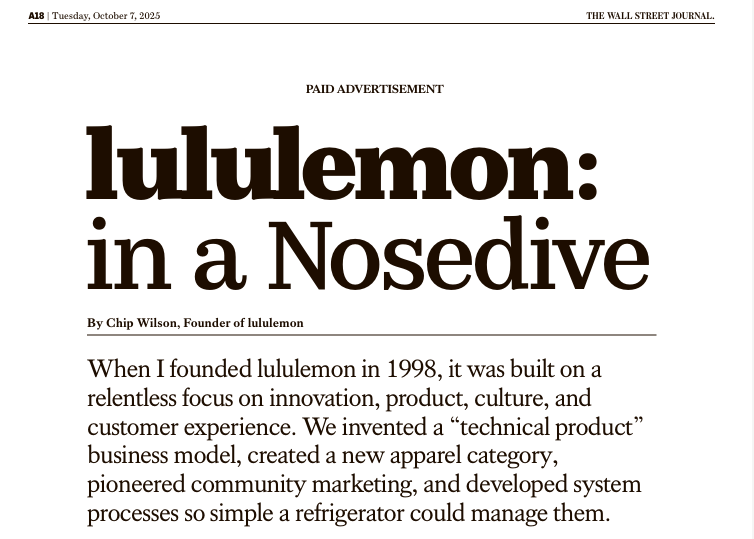
Lululemon has been in a pickle since Chip Wilson, the founder, jumped the fences and publicly vented against the brand’s policies in a Wall Street Journal ad. Lululemon experienced a challenging period from 2024 to 2025.
However, Lululemon didn’t lose its footing because athleisure fell out of fashion or because consumers suddenly balked at premium pricing. The brand’s current turbulence runs deeper. Lululemon was founded as a cult brand, and cults don’t scale cleanly.
That tension is now playing out in public. Growth has slowed. Strategic bets have been misfired. As the company navigates its next chapter, founder Chip Wilson has re-emerged—not as a steward of the brand’s future, but as a reminder of why its past is no longer viable.
A cult brand by design
In its early years, Lululemon wasn’t trying to be for everyone. Wilson designed the brand as a blend of self-help philosophies (such as the Landmark Forum), a strong community focus (utilizing yoga teachers), high-quality products, and an exclusive feel. It evolved into a powerful brand narrative, resulting in devoted customers who became brand evangelists with a rigid definition of what wellness meant.
Then, controversies entered the room.
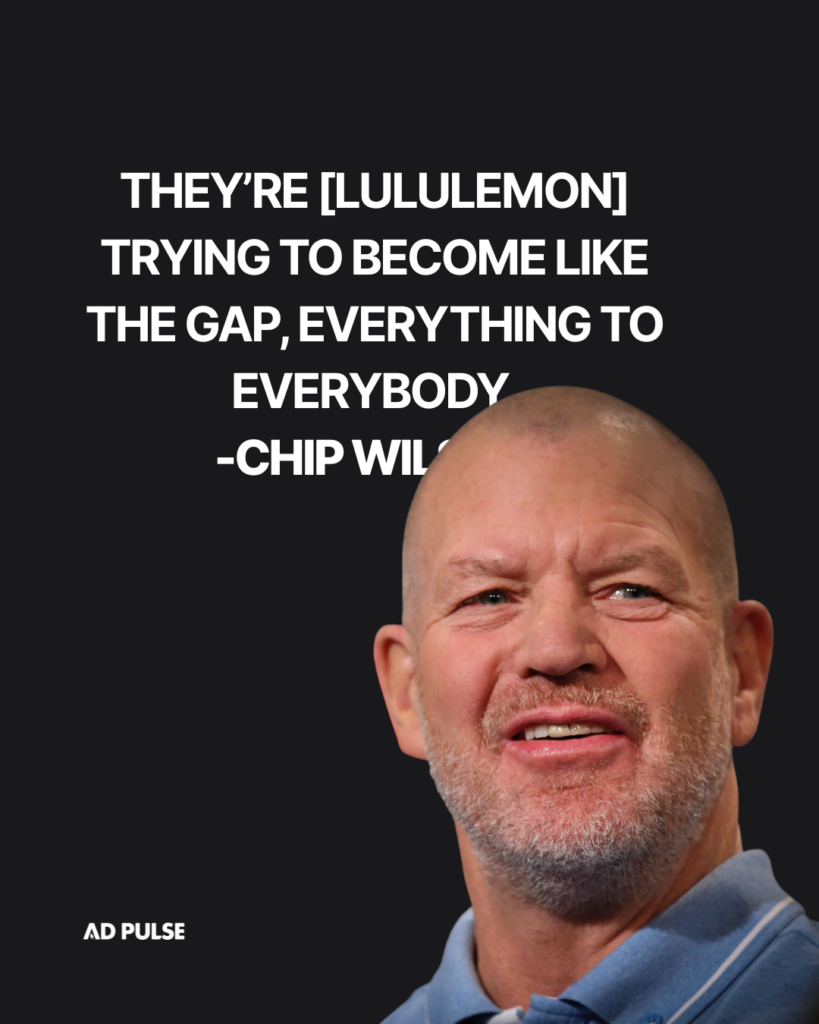
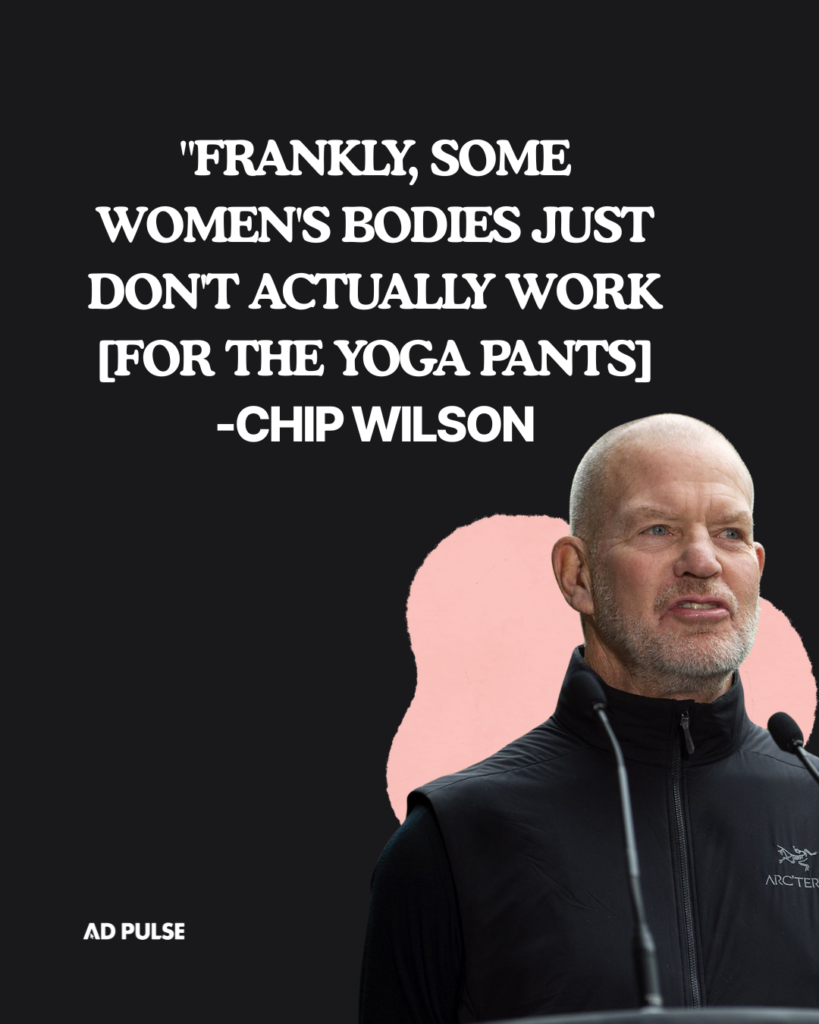
Wilson’s public comments on body types, women, and inclusion weren’t isolated gaffes. In 2013, he resigned from the company board’s chairman for his ‘some women’ comment.
He was consistent in his worldview, which treated belonging as something to be earned, not something to be extended.
At the time, that approach worked. Cult brands thrive on gatekeeping. They create intensity, loyalty, and a sense of identity. In the early 2000s, when conversations around representation and inclusivity were far less prominent in consumer culture, Lululemon’s narrow positioning helped it stand out in a crowded retail landscape.
But what builds a cult also limits it. The same rigidity that fuels early devotion becomes a liability when markets, expectations, and demographics shift.
Wilson’s vision wasn’t just controversial—it was structurally incapable of surviving in a modern, global retail environment.
In today’s market, where consumers expect brands to reflect diversity, adaptability, and cultural awareness, a founder-led ideology of this kind often fails to scale. It fractures.
The un-culting of Lululemon
When Calvin McDonald stepped in as CEO, his mandate was clear: grow the business beyond its niche roots. That meant doing what cult brands fear most — loosening the boundaries.
Under McDonald’s leadership, Lululemon expanded into more than 30 countries, transforming itself from a North America–centric yoga label into a global athleisure player. China emerged as the company’s second-largest market after the US, underscoring how effectively the brand translated its premium positioning for international audiences.
This wasn’t a brand dilution for the sake of growth. It was a survival move. A brand designed around exclusivity cannot remain small forever without stagnating.
Operationally, the strategy worked. Retail footprint grew. Revenue has expanded. The brand became less insular and more accessible. But accessibility brings its own risks—especially when the underlying identity hasn’t been thoroughly reworked.
Mirror, Disney, and other missteps
Not all of McDonald’s strategic moves landed. In 2020, Lululemon acquired Mirror, a home fitness hardware startup, for $500 million. Two years later, the business was essentially shuttered—hardware sales ceased, and operations were absorbed into a content deal with Peloton.
The decision triggered layoffs and inventory write-downs, including a roughly $23.7 million inventory obsolescence charge related to the Mirror unit.
The acquisition of the smart exercise device, Mirror, exposed the challenges of entering the connected fitness market at the wrong moment.
Then came partnerships, such as product collaborations tied to Disney and NFL franchises. Wilson publicly blamed these decisions for contributing to a $10 billion wipeout in market capitalization, though critics argue this number conflates multiple factors.
The Disney collaboration raised questions about brand adjacency and audience overlap.
Situational resistance in the time of growth
These were symptoms. Expansion without a clear, evolved brand identity can lead to a ‘anything-goes‘ mentality, resulting in licensing deals that feel out of character and products that dilute the essence of what once made the brand aspirational.
At the same time, external pressures mounted. Post-pandemic demand became normalized. Athleisure turned ubiquitous rather than aspirational.
The financial reality of Lululemon in 2025 was rough, despite a good number.
- Revenue grew modestly — about 7% to around $2.6 billion in the quarter ending Nov. 2, 2025 — but international markets drove the uptick entirely.
- Gross margin contracted sharply, down nearly 290 basis points, due to tariffs and markdowns.
- Inventory levels and working capital strains have popped up in earnings calls, highlighting mismatches between product and demand.
- The company’s stock has fallen sharply, down roughly 50–60% from its peak valuation — wiping out tens of billions in market value.
McDonald’s has acknowledged missteps, particularly around product and demand forecasting. But it would be reductive to frame Lululemon’s slowdown as a CEO problem. This is what happens when growth outpaces the evolution of identity.
The founder’s politics in a moment of weakness
As the brand navigates this uncertainty, Wilson has attempted to reassert influence, reportedly lobbying to place leadership aligned with his vision back at the helm. The timing is telling.
Founder re-entry efforts rarely surface during periods of strength. They emerge when performance softens, when doubt creeps in, and when nostalgia feels like a strategic move. Wilson’s push hints at reclaiming ideological control over a brand that has deliberately moved away from him.
But the irony is hard to miss. The very worldview that shaped Lululemon’s early success is also what makes a return to founder-led thinking untenable today.
His criticism may occasionally overlap with real operational issues, but he is the least credible messenger for a brand trying to operate in a more inclusive, global marketplace.
The real lesson for modern brands
Lululemon’s story is more of a cautionary tale about timing and transition rather than abandoning exclusivity or chasing growth too aggressively. Kodak is one of the brands that failed to capitalize on the trend in the early 2000s. Now, it has made a comeback.
Cult brands can win early. They create meaning fast. However, when they scale, they must intentionally evolve their values as they expand their footprint.
CEOs can professionalize operations, open new markets, and drive revenue. What they can’t do alone is rewrite cultural DNA that was never designed to stretch. That requires structural change, not nostalgia or internal politics.
Lululemon now stands at a crossroads. Its challenge isn’t choosing between Chip Wilson and another ‘Wall Street guy.’ It’s deciding whether it can fully outgrow the limits of its past without being pulled back by it.
Cut to the chase
Lululemon’s declining trend has amplified in the market as Calvin McDonald is set to leave his CEO position in January 2026. The internal politics and Chip Wilson’s continuous push within the company system make the brand’s future unpredictable.