Inside the NBPA’s Athlete Marketing Strategy: “Players Are the Culture”
The NBPA’s Keisha Wright explains why athlete marketing is moving beyond endorsements toward co-creation, ownership, and long-term partnerships.
For most of sports marketing history, the athlete’s job was simple: show up, say the line, sell the product. The National Basketball Players Association (NBPA) is breaking down the model and betting an entire commercial infrastructure on it.
NBPA unveiled PLYRS UNTD, a new commercial brand that transforms the collective influence of NBA players into products, partnerships, and global business opportunities.
It also made an intentionally creative choice. Rather than launching the initiative through a conventional sports marketing campaign, the NBPA partnered with Project 3, Kendrick Lamar’s creative agency.
We sat with NBPA and gained interesting insights from Keisha Wright, SVP of Partnerships at NBPA, on PLYRS UNTD, the Kendrick Lamar–produced “Own the Game” campaign, and why brands are trading celebrity visibility for creative ownership.
Mirroring Kendrick Lamar’s playbook moves
Project 3 represents creative ownership. Kendrick Lamar has built his career by maintaining control over his storytelling, businesses, and relationships with audiences instead of simply licensing his celebrity.
According to Keisha Wright, Senior Vice President of Partnerships at the NBPA, that philosophy closely aligns with what PLYRS UNTD is trying to build for NBA players.
That philosophy reflects a broader change happening across sports, entertainment, and the creator economy. Audiences are increasingly skeptical of polished endorsements that feel transactional.
“To cut through typical sports marketing noise, the future of athlete partnerships must be rooted in authentic, narrative-led storytelling,” Wright says. “We partnered with Project 3 because they inherently understand the complexities of modern athletes.
At the same time, creators, musicians, and athletes are seeking greater ownership over the businesses they help build. The value is no longer just in lending a recognizable face to a campaign.
Kendrick Lamar has already mastered this exact model in music and film, maintaining creative ownership, building independent companies, and engaging directly with fans.
By mirroring that deeply artistic approach, PLYRS UNTD moves beyond basic celebrity visibility to build an authentic, player-driven brand that truly matches the global cultural footprint of our athletes.”
The NBPA’s answer to that shift is PLYRS UNTD.
Beyond endorsements
The platform launches under the tagline “Own the Game,” a phrase that deliberately refrains from the relationship between athletes and brands.
For Wright, ownership extends far beyond financial participation.
“‘Own the Game’ is a shift from a transactional mindset to a collaborative one,” she explains. “We are challenging brands to build with players, not simply brief them. Players create the very culture brands want to be a part of, and they intuitively understand what their highly engaged, niche audiences want.”
Instead of treating athletes as campaign assets, PLYRS UNTD positions them as collaborators capable of shaping products, experiences, and creative direction.
“Through PLYRS UNTD, athletes now have the platform, physical spaces, and digital infrastructure to turn those insights into meaningful, mutually beneficial partnerships, independent of the league and teams.”
PLYRS UNTD attempts to build infrastructure that enables players to participate much earlier in the creative and commercial process.
From promotion to participation
The changing expectations of brands are helping accelerate that evolution.
According to Wright, brands increasingly want something deeper.
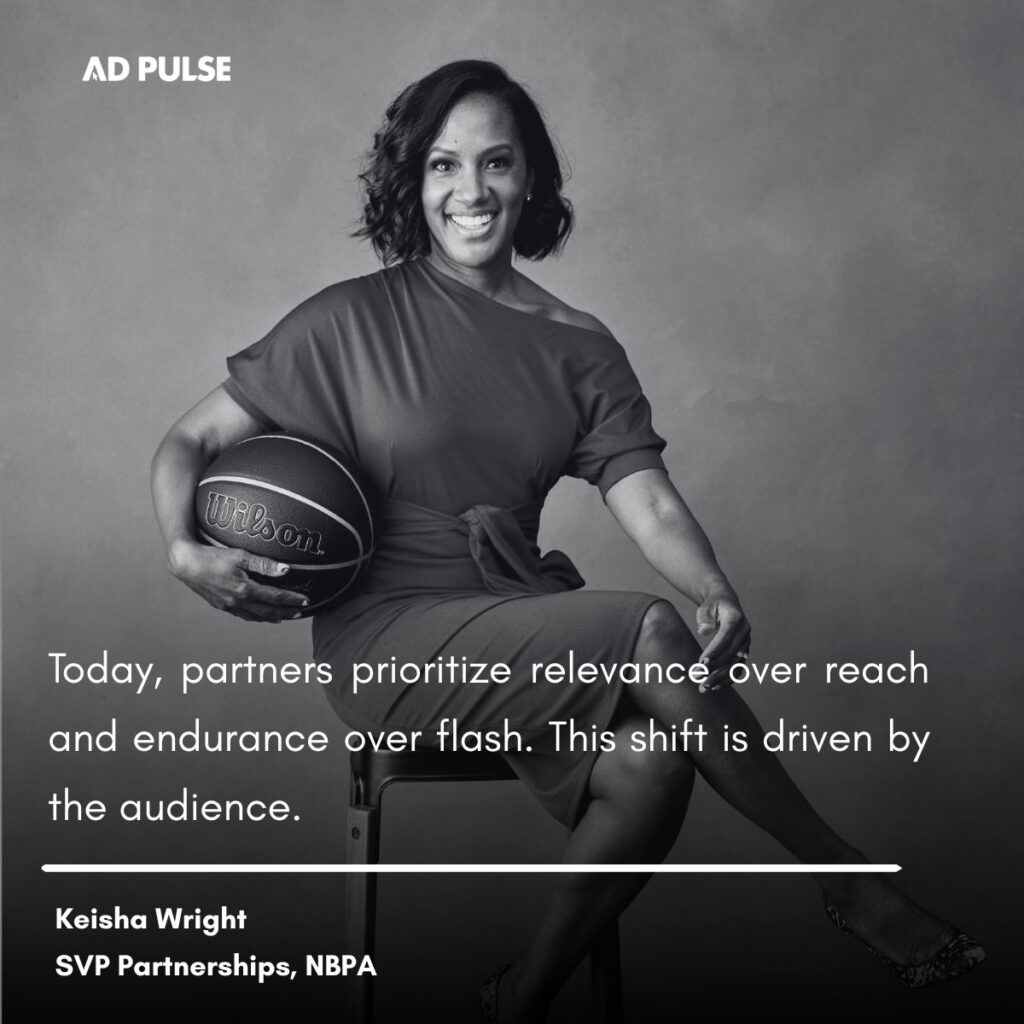
“Today, partners prioritize relevance over reach and endurance over flash. This shift is driven by the audience. Fans demand transparency and can instantly spot when an athlete is just reading a provided script instead of sharing a genuine idea.”
That demand is pushing brands toward co-creation rather than sponsorship.
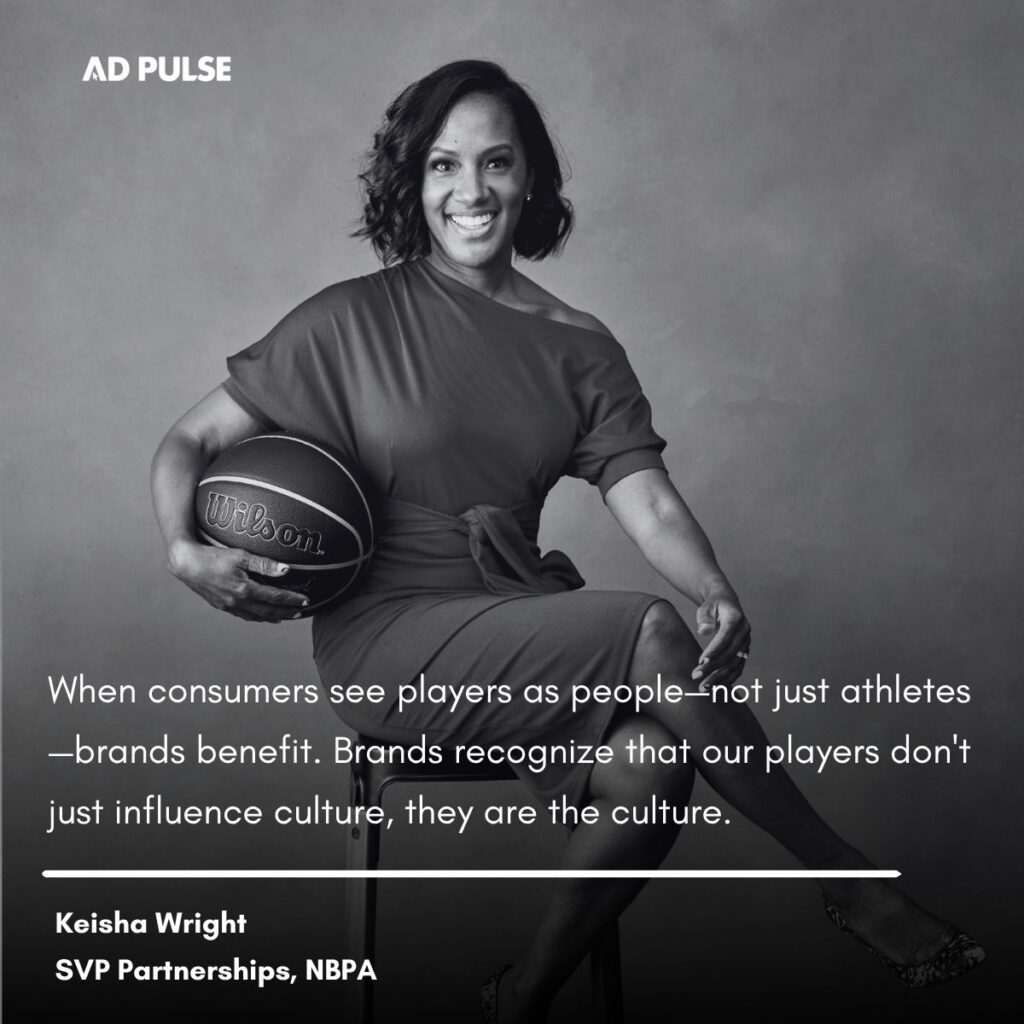
“Brands recognize that our players don’t just influence culture, they are the culture. By moving away from transactional endorsements and toward authentic co-creation, brands can tap into the exact authenticity the modern market craves.”
For marketers, that changes the role athletes play inside campaigns. They become creative partners instead of media placements.
Building the infrastructure for ownership
To support that transition, the NBPA is investing beyond licensing deals.
Wright points to initiatives like PLYRS HOUSE, first introduced during NBA All-Star Weekend, as examples of how the organization wants players to build their own businesses, communities, and intellectual property.
“With the launch of PLYRS UNTD, we built a dedicated, direct-to-consumer brand that allows us to operate as the enterprise itself. Instead of just passing endorsement briefs, we are giving players the infrastructure to be the architects of their own initiatives.”
The concept goes beyond branded appearances.
“During All-Star Weekend, we launched PLYRS HOUSE, a premium, co-created space where players built their own podcasts, events, and activations in a shared space. We are replacing transactional, scripted endorsements with authentic collaborations.”
The NBPA has also developed a lifestyle imagery library that gives brands access to content showing players beyond the basketball court.
“When consumers see players as people, not just athletes, brands benefit,” Wright says. “Proprietary research shows lifestyle imagery drives stronger perceptions of premium positioning, values alignment, and differentiation, helping create the kind of affinity that lasts long after the campaign ends.”
Scaling athlete influence
While athlete entrepreneurship has become increasingly common, Wright argues that PLYRS UNTD is designed to complement, rather than replace, those individual ventures.
“PLYRS UNTD introduces a groundbreaking model, but it won’t replace individual ventures or landmark endorsements. It coexists with them.”
Its advantage lies on a collective scale.
“By pooling the NIL rights of over 500 players, PLYRS UNTD turns individual reach into massive collective leverage, creating enterprise-level opportunities that some individual athletes may not be able to secure alone.”
For the broader NBA player community, that creates opportunities beyond traditional sponsorship income.
“This direct-to-fan infrastructure bypasses the traditional middleman, allowing players to scale their own intellectual property and capture long-term equity that standard endorsement deals simply don’t offer.”
The result is a model where commercial value is no longer measured solely by endorsement fees, but by ownership, collaboration, and long-term participation in the businesses players help create.
Cut to the chase
For marketers, NBPA athlete marketing represents an equally significant shift. As creators, musicians, and athletes increasingly expect a seat at the decision-making table, campaigns built around one-off celebrity visibility may gradually give way to partnerships rooted in shared ownership, authentic storytelling, and lasting cultural relevance.