
Bluesky Monetization: Can the Platform Build a Sustainable Business?
Social media platforms have spent decades proving one thing: attracting attention is easier than monetizing it. Bluesky may be the latest platform to capture momentum, drawing users from X, creators seeking healthier communities, journalists looking for meaningful conversations, and developers interested in decentralization.
But while user growth has put Bluesky in the spotlight, its biggest challenge is still ahead building a sustainable business without becoming the very type of platform its users wanted to leave behind.
What many social media challengers have not done, Bluesky has done; it attracted millions of users and built a brand. According to reports, Bluesky grew from roughly 10 million users late 2024 to more than 40 million users by late 2025, according to a TechCrunch report.
The story doesn’t stop there, though.
The bigger question is whether Bluesky can build a sustainable business. Social media history is filled with platforms that attracted passionate communities but struggled to generate meaningful revenue. Without a viable business model, even the most engaged platform faces an uncertain future. Therefore, without a current revenue stream, every social media platform is vulnerable to future extinction.
So, is Bluesky able to create revenue, or will it become just another new-age place of refuge based strictly on ideology or morals?
The challenge every social platform eventually faces
Developing a social network requires substantial investment in servers, moderation systems, engineering teams, security infrastructure, and product development. Venture capital can only support growth for so long before investors want a clear path to generating revenue.
The most common solution for social media is advertising. For example, Meta generates revenue through targeted advertising; TikTok combines advertising and commerce opportunities; YouTube uses advertising, subscription revenue, and creator partnerships for revenue generation.
These monetization models work because they convert user attention into revenue.
In Bluesky’s situation, it has built its platform upon the AT Protocol to enhance user control over their identity, feed, and online experience. Rather than locking users into one single ecosystem, AT Protocol was created to promote portability and openness.
While this approach has helped Bluesky grow its user base, it has also forced the platform to think of ways to monetize differently.
Why Bluesky cannot simply copy the Meta playbook
Due to a weariness of extremely algorithm-heavy feeds and unending advertisements, many users on Bluesky made the decision to join because it is the type of platform that has the ability to allow users to build community, have great conversations, and choose their own feeds instead of having one large feed produced based solely on the centralized algorithm.
Because of these options, advertisers face challenges in creating traditional advertising models. Traditional social media advertising uses:
- Specific targeted audience
- Detailed behavior profiles
- Centralized content distribution system
- Consistent recommendation system
The Bluesky structure makes it much more difficult for advertisers to create the same types of advantages with the above methods.
However, this does not mean that advertising cannot take place, it simply means that the way advertising is done will likely have to be redesigned to fit in with the values of the platform.
Bluesky CEO Jay Graber has previously stated that if advertising were to be introduced on the platform, it would likely be structured to fit the values of the platform and not to mimic the formats of existing social media advertising. There are some options being looked at for advertising such as search-based advertising and context-based placements.
The balance will need to be that whatever method of advertising is used provides revenue to the company while simultaneously ensuring the user experience that attracted users to the platform will remain as strong as before.
For marketers, Bluesky presents both an opportunity and a challenge. Its growing user base and highly engaged communities are attractive, but its advertising ecosystem remains far less mature than Meta, TikTok, or LinkedIn.
Until Bluesky develops more sophisticated ad products, many brands are likely to view it as an experimental channel rather than a core media investment.
Subscription revenue may be the most natural fit
Subscriptions do not necessarily present the same obstacles to monetization as advertising and provide an obvious path to monetization.
Bluesky has already noted that premium features are part of its long-term approach to generating revenue. Some potential examples could include things like upgraded profiles, custom domains, services related to verification, and additional capabilities associated with an account.
Unlike advertising, subscriptions allow for each platform to be more aligned with the interests of its users. When a platform shares a vested interest with its users in terms of how much value they find in the platform and how many additional capabilities they would pay for, the platform can succeed.
These are just several modern-era Internet companies doing it. For example:
Discord: Discord’s premium offering, Nitro, adds value to the core product without negatively impacting the user experience.
Notion: Notion’s acquisition strategy uses a freemium model designed to convert more power users and/or businesses into premium users by offering additional capabilities.

Substack: Unlike traditional advertising, Substack generates revenue by helping creators monetize their audience(s).
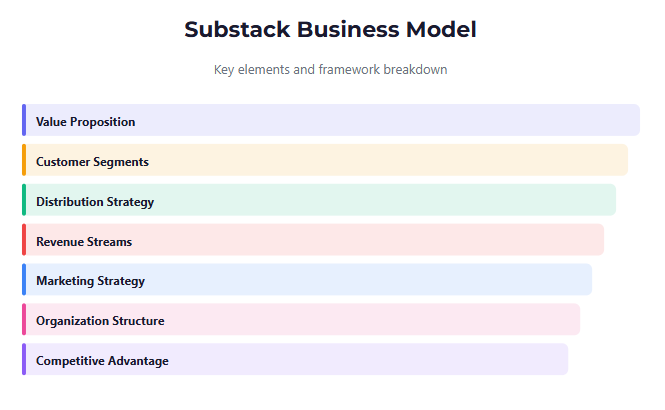
All three of these companies illustrate an emerging trend: users are becoming increasingly willing to pay for products that provide intrinsic value.
The challenge for Bluesky, therefore, is scaling its business. Premium subscription services generally only attract a small percentage of users on a platform. Therefore, Bluesky must build features of sufficient value to incentivize enough users to pay for premium subscriptions.
The creator economy could be Bluesky’s biggest opportunity
Creators are increasingly building businesses beyond social media through newsletters, memberships, sponsorships, courses, consulting, and digital products. Instead of relying on platform payouts, they are focused on owning their audiences and revenue streams.
This trend could benefit Bluesky. Unlike many platforms that keep users within their ecosystems, Bluesky allows creators to direct audiences to newsletters, websites, and other owned channels. That makes it less of a monetization destination and more of a relationship-building platform.
With the creator economy expected to exceed $480 billion by 2027, audience ownership is becoming a priority for creators. Creator economy investor Li Jin has noted that creators increasingly value direct communication and monetization relationships with their audiences—a trend that aligns closely with Bluesky’s emphasis on portability and creator control.
What Reddit, Discord, and Substack can teach Bluesky
Advertising isn’t the only way to generate revenue on today’s digital platforms.
For example, Discord successfully launched a subscription business via its Nitro product, while Substack generates income by helping creators monetize paid newsletters. Similarly, Reddit is able to generate revenue through a combination of paid advertising, premium features, and licensing of data for commercial purposes.
What these platforms have in common is that they monetize utility rather than attention. Discord charges for enhanced functionality, Substack earns by helping creators monetize audiences, and Reddit has diversified its revenue beyond advertising. For Bluesky, that distinction matters because many of its users joined specifically to escape engagement-driven social media models.
A diversified revenue strategy may ultimately prove more sustainable than relying solely on advertising.
The bigger opportunity may be infrastructure, not social networking
Additionally, Bluesky is not just building a social network; it is also developing the technology required for one.
Through the AT Protocol, developers can build applications, moderation tools, and other services on top of Bluesky’s network. If decentralized social media continues to gain traction, the most valuable company may not be the one with the most users—it may be the one providing the infrastructure. That creates opportunities for Bluesky to generate revenue through developer tools, identity services, enterprise offerings, and ecosystem partnerships.
In the long run, not only will Bluesky be able to generate revenues from its users, but it will also be able to generate revenues from a wide range of other entities that will create an ecosystem around the technology that Bluesky develops.
Can Bluesky actually monetize?
Will Bluesky be able to generate revenue? Yes, but likely in a different way than traditional advertising.
The company will rely on subscriptions, services for creators, tools for developers, services for enterprises, and advertising experiences that are carefully engineered and designed.
Unlike other social media platforms that are trying to duplicate the legacy of socio-business models, Bluesky’s greatest opportunity will be to continue delivering value to users, while generating revenue as a result. If this can be achieved, Bluesky could serve as a guide for the new generation of ultimate social media platforms.
Cut to the chase
Bluesky doesn’t need to become the next Meta to succeed. It simply needs to prove that a social platform can generate sustainable revenue without sacrificing user trust or community value. If it succeeds, Bluesky could redefine what a sustainable social media business looks like.
FAQ’s
Yes. Subscriptions, creator tools, and developer services could drive revenue.
Indirectly. Creators can direct audiences to newsletters, memberships, and other paid channels.
Building creator-focused services and monetizing its AT Protocol ecosystem.