
Engagement Is Tanking Everywhere—But It’s Not Your Content. Here’s the Real Tea
Let’s be honest in 2025, we are going through an ugly break up with social media algorithms. One day you get 200 comments on a Reel; the next day, you look at your posts and see three likes and a “sympathy save” from your bestie. It’s easy to take this personally, but here’s the deal: the reason why this is happening is because the algorithm itself has changed. Your followers are not backing out on you or becoming bored with your content. What’s really going on is that the social media algorithm changes in 2025 have altered how feeds work, and all accounts are experiencing similar drops in engagement.
You aren’t alone, as similar drops in engagement are being experienced across the board. The average engagement on Instagram dropped to just 0.45% in the middle of 2025, per the 2025 benchmark report. So, no, your content didn’t just stop getting views—all accounts are experiencing the same drop in engagement.
But what’s the real hack? Grab your matcha; here’s the real tea!
Algorithms are not ranking feeds anymore—they are reading your mind
Do you remember when platforms rewarded liking, commenting, and sharing? How cute. Now instead, it is a different metric altogether:
“Will THIS user care about THIS post at THIS time?”
That sums up the 2025 algorithm in one simple line.
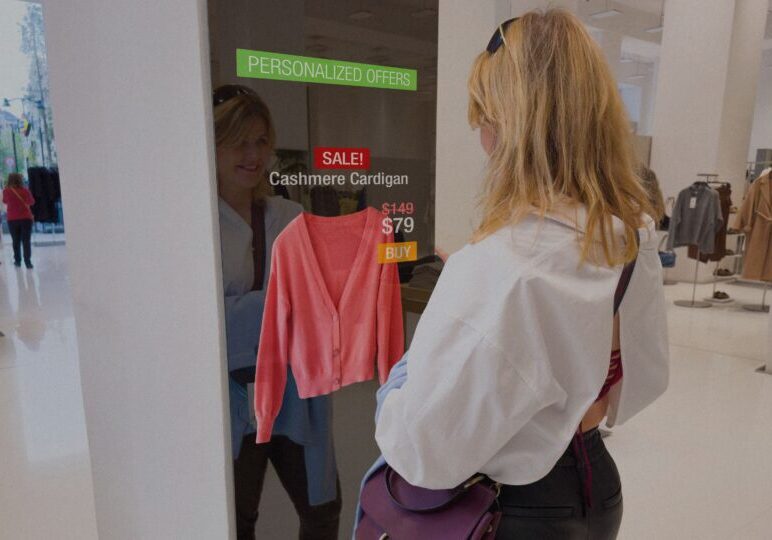
Due to the advances in AI, the personalized feeds of all users are unique fingerprints. For instance, a post you made may be absolutely relevant to Person A at 9:04 am, yet completely irrelevant to Person B at 9:06 am.
This means if your reaches are irregularities, it is not a function of chaos; the algorithms are simply generating custom feeds for each user just as if a barista was preparing 60 separate orders of coffee simultaneously.
User control = Creator chaos
In 2024, platforms listened to their users and said, “We hear you! You want to have more control!” and thought, “Let’s remix THINGS.” Now, we have:
- Feeding you “Tuned”
- Buttons to show me more/less of this
- Prioritizing Topics
- Following Tabs sorted by AI
- Recommendation Blocking
- All great for users, but not so much for creators.
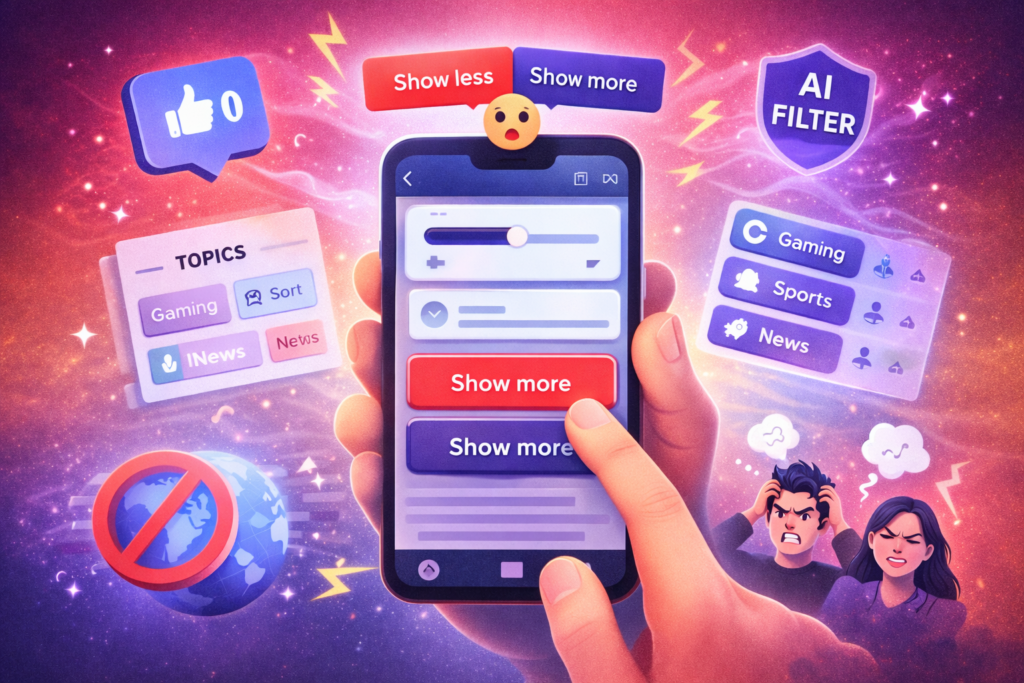
So, what this means for you is that your followers are likely to choose different types of feeds: some want news, some want comedy, some want long-form content, and others want only the people they know best. And what are you doing? You’re competing for attention in a buffet of people ordering different plates. The predictable side effect of this is an engagement slowdown.
Micro-virality is the future of virality (Sorry, mass creators)
In 2025, instead of mass virality, content begins to “ripple” throughout specific niches and fandoms, creating smaller communities that interact with content according to their individual preferences.
Your post may go “viral” within a fandom, a niche community, a hobby cluster, a location-based group, a trend pocket, or an aesthetic subculture, but it is unlikely to go “viral” across the entire platform, like it did in the early TikTok days.
To illustrate this change: Before = One huge tidal wave (Viral Tsunami) Now = Lots of small, very focused whirlpools (Niche Community Reactions)
If you create content without considering the needs/restraints/characteristics of the specific tribe, it will be unlikely to make it very far. Not because it’s not good, but rather because it lacks the specificity needed to elicit a response from a micro-community.
Analytic “engagement metrics” are no longer useful start using “invisible signals” to improve your content in 2026
So how about Likes? Adorable; Comments? Of course, Saves? Amazing!
However, if you want to create really good posts for the Instagram feed of 2025, then look at these things:
- The watch percentage.
- Time between repeat visits.
- Did the person visit your profile?
- Did they choose to follow you after watching the video?
- Did they send it privately to someone else?
- Did they re-watch the first three seconds?
- Did the person stop scrolling even for a millisecond?
These are the “micro-signals” that are now the ‘currency’ for an Instagram algorithm. Even though creators only measure the ‘visible’ engagement (from likes, comments, and shares), they tend to believe they are not performing well. The ‘invisible’ metrics usually do a lot of the “heavy lifting.”
Regulation + safety filters are quietly killing reach
The impact of regulations and safety filters that are in place to protect certain younger audiences is a concern going forward into 2025 because so many people will be affected by them in terms of engagement loss.
There is so much attention on the use of AI labeling content, the moderation of news, and even “risky topic” visibility filters plus shadow compliance systems that many posts simply get suppressed prior to their ability to gain momentum.
It isn’t that you are being punished, but rather, the platforms are protecting themselves from legal ramifications, and your post is merely collateral.
Okay but….what we need do now?
Take a breath. Engagement isn’t dead—the rules just changed. The algorithm didn’t turn against you; it just started speaking a new language. And once you learn that language, your content starts surfacing again.
Here’s the fast, no-filler playbook for 2025—the moves that actually shift the needle:
Capture attention immediately: At a time when attention and interest are even more difficult to capture, it is vital for marketers to keep their audience’s attention in the opening second. To convey to the platform that someone may find their content engaging, marketers should use strong hooks that break the norm through patterns, visual surprises, and unexpected text.
Speak to a targeted group rather than the entire Internet: When content is broad, many people do not connect with it. When content is narrow and has a specific vibe or community’s significance, the platform knows who to show the content to, and therefore, they will engage.
Focus on all metrics that matter: The days of likes being king are long gone. Content that retains viewers’ attention (long watch times), causes replays, taps to view marketers’ profiles, and saves are far more important than likes. The algorithm considers when viewers’ content causes them to stop, rewind, and/or explore that content relevant.
Use micro calls to action to encourage desired action: Many marketers do not know about these little guys. Micro prompts or nudges drive big signals: “Save for later,” “Comment one word,” “Send this to a friend,” and “Follow for tomorrow’s part.” Small actions are what the algorithm reacts to and amplifies.
Don’t count on a single platform to continue to love you: Algorithms in 2025 can be moody. For marketers to build a sustainable, healthy, balanced growth strategy, they must use multiple platforms to protect their reach and distribute their risk.
Cross-posting is a great way to build a strategy where, if one post does not perform to the marketer’s satisfaction, it will not have a significant effect on their overall monthly performance.
The Real Tea: It’s not your content. It’s the new math!
Your engagement hasn’t decreased because you forgot how to create. Your engagement has decreased because the way social media algorithms work has changed.
The algorithm is unemotional; it has no opinion on your level of creativity, taste, or skill. It simply wants to know: “Will this keep this user on this app for at least one minute?” Instead of fighting against the algorithm, try to change those small activities that create a signal for the algorithm saying, “Yes! This creator is important!
When that happens, your content will not only survive in 2025, but it will thrive.
Cut to the chase
Engagement isn’t dead—it’s just reacting to the new algorithm. Hook viewers in the first two seconds, speak to a niche, and create posts people want to save and rewatch. Want to boost your 2025 performance? Share one underperforming post and I’ll help you fix it.