

Retail Media Networks: The New Ad Game Brands Can’t Afford to Ignore
A company can invest millions in online advertising, generate significant website traffic, and achieve impressive engagement, yet still struggle to answer one important question: Did those advertisements convince anyone to buy?
This is one of the largest problems that modern advertisers have to face, particularly in retail media networks. A customer uses numerous platforms – from search engines to social networks and from retailer websites to mobile applications and even physical stores – when completing a purchase. Monitoring the whole process and determining how marketing efforts contributed to the final buying decision is getting harder. This is where retail media networks are becoming increasingly important for brands.
Retail media networks (RMNs) are changing this by bringing advertising closer to the point of purchase. Using retailers’ first-party data, brands can reach relevant shoppers and connect advertising exposure with sales.
With U.S. commerce media spending forecast to grow by 12.1% in 2026, according to the Interactive Advertising Bureau (IAB), retail media is becoming an increasingly important advertising channel.
But how do these networks work, and how can brands measure their actual impact on sales? Let’s explore.
What is a retail media network?
A retail media network is an advertising platform operated by a retailer that uses its first-party customer data to help brands promote products across its digital and physical channels.
Basically, retailers utilize their customer relationships, data, and available advertising slots to create marketing solutions.
For example, if consumers look for skin-care products on Amazon, they will see the sponsored product listings either above or to the side of the search results. Those ads have been purchased by brands that wish to communicate with customers already searching for products similar to theirs.
Retail media advertising can be found in multiple locations:
- On-site advertising: Sponsored listings, search ads, banners, and video slots on retailer websites and applications.
- Off-site advertising: Display, social media, and connected TV advertising that’s delivered outside the retailer’s platforms with the help of its audiences.
- In-store advertising: Digital screens, check-out displays, product demonstrations, and any other promotional placements that take place inside actual stores.
In contrast to traditional digital advertising, retail media networks create advertising opportunities based on the information retailers collect as part of the shopping experience. This enables brands to connect with consumers based on their real purchasing habits and preferences.
How do retail media networks work?
Retail media networks combine three crucial components: advertising inventory owned by retailers, customer data gathered directly from first-party data providers, and sales measurement.
The entire process usually includes several steps:
- Gather shopping insights: The retailer sifts through various histories of purchases made and information related to product searches, browsing activities, loyalty programs, and desired shopping preferences.
- Create desirable audiences: Currently, the knowledge gained is used for construction of groups of people which will make up such groups as those who often buy groceries, people who love beauty products, and customers who prefer many electronic devices.
- Provide relevant advertising: Brands draw ads on those audience members via their websites, several applications, and other selling platforms.
- Evaluate data on advertising campaigns: Retailers relate sales interactions with their transaction data that gives them information on clicks obtained number of sales and advertising costs.
Imagine a cleaning products manufacturer launching a new detergent product. It can do advertising on the retail store search results page, target customers frequently buying cleaning products, and promote the product with the help of digital displays.
Then, the retailer will provide data on how many customers clicked the ad, bought the detergent, and helped sales take place.
It helps create a much more connected advertising process as it allows brands to see what happens with their ads after people interact with them.
Top retail media networks brands should know
Retail media is no longer limited to e-commerce platforms. Now grocery chains, department stores, and delivery services are developing their advertising systems.
Some of the top retail media channels include:
- Amazon Ads: Offers sponsored products, display ads, and streaming video advertisements powered by shopping insights.
- Walmart Connect: Allows brands to reach shoppers through Walmart’s website, mobile app, and physical stores.
- Target Roundel: Helps brands advertise to Target customers across online and offline channels.
- Kroger Precision Marketing: Uses grocery shopping and loyalty data to help CPG brands reach relevant customers.
- Instacart Ads: Offers sponsored product listings and display advertisements to grocery shoppers.
- Albertsons Media Collective: Provides digital and in-store advertising opportunities supported by grocery shopping insights.
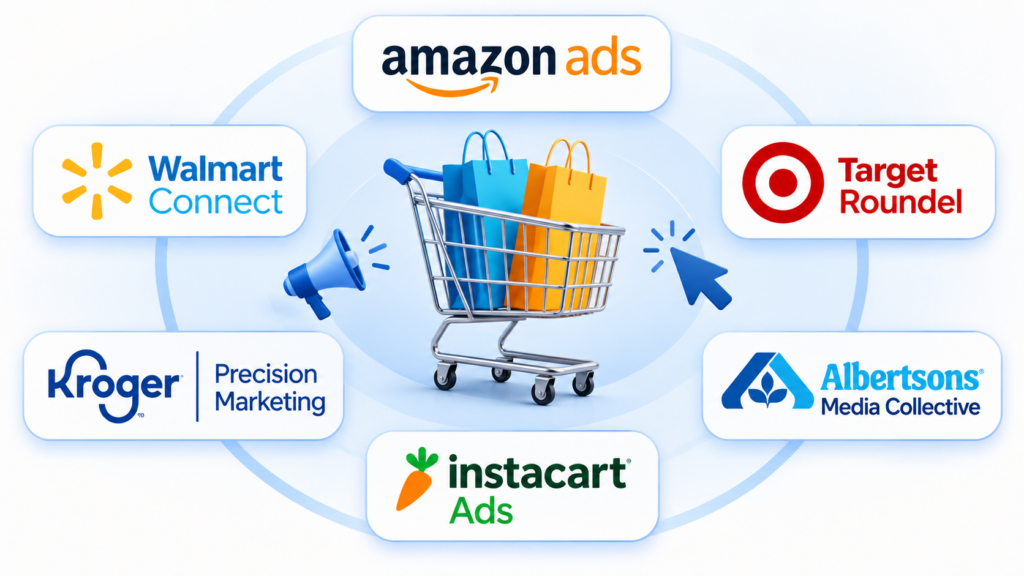
The platforms allow brands to advertise to different target audiences in different ways with different levels of analytics.
According to a Modern Retail survey, 89% of marketers used Amazon for their advertising, followed by Walmart Connect – 47% and Target Roundel–32%.
How do retail media networks use first-party data?
Retail outlets obtain first-party information by collecting data regarding product views, purchase history, loyalty programs, and browsing patterns of customers. Analyzing this data will help brands reach consumers that match their interests and buying patterns.
For instance, a skincare brand would be able to target consumers who buy moisturizers often while beverage manufacturers would reach the people who buy beverages regularly. Retailers share aggregated insights with the brands instead of personal information so that brands can advertise more efficiently while taking into account the privacy of customers.
How do brands measure retail media performance?
Retail media analytics helps brands understand whether campaigns generate clicks, conversions, and sales.
Here are the important metrics advertisers should monitor:
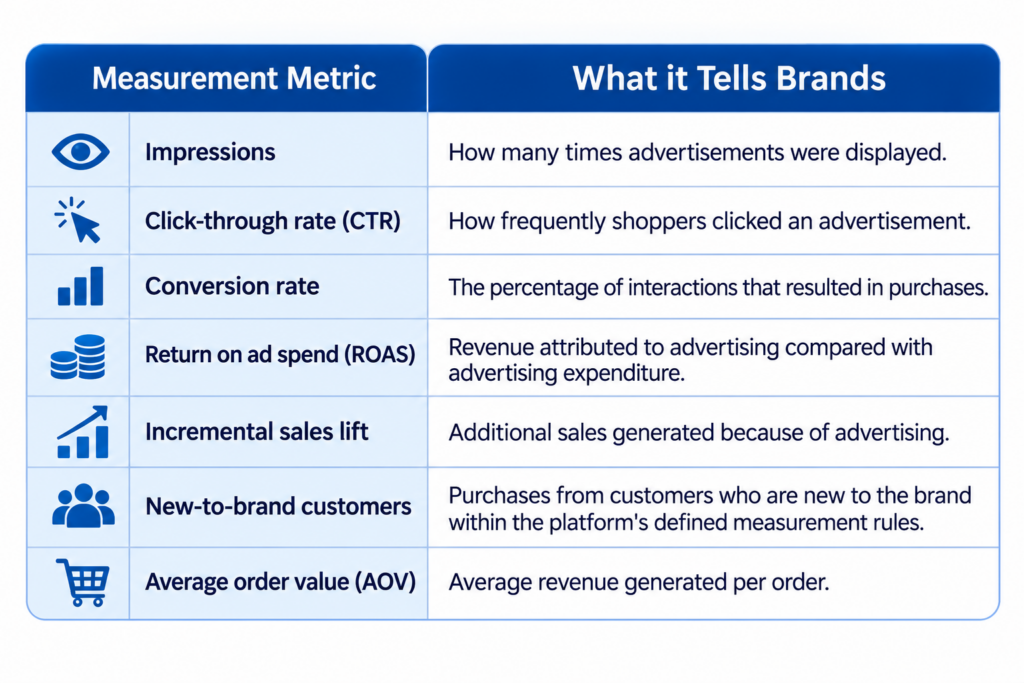
Brands should evaluate multiple metrics because high engagement or ROAS does not always mean advertising generated additional sales.
What is retail media attribution?
Retail media attribution means linking advertising interactions to customer purchases. Closed-loop attribution helps retailers in relating ad exposure and clicks with the transaction data.
Nevertheless, attributed sales don’t necessarily mean that the advertising caused the buying. Incrementality measurement indicates the existence of additional sales generated by ad campaigns via exposed vs. non-exposed audience testing techniques.
Incrementality measurement examines whether advertising generated additional purchases that would not otherwise have happened. Advertisers can use exposed and unexposed audience groups, geographic holdout tests, and other experiments to estimate this impact.
Evan Hovorka, Vice President of Product and Innovation at Albertsons Media Collective, highlighted the importance of attribution timing in a conversation with EMARKETER. Explaining its approach, he said: “If you saw it on the 14th and bought it on the 13th, we don’t get credit.”
The point is simple: measurement needs clear rules about when an advertisement can receive credit for a purchase.
Understanding retail media ROAS and analytics
Retail media ROAS is one of the most frequently used indicators for evaluating advertising profitability.
The formula is:
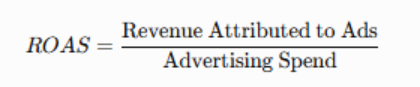
For example, if a brand spends $10,000 on a retail media campaign and generates $40,000 in attributed sales, its ROAS is 4x.
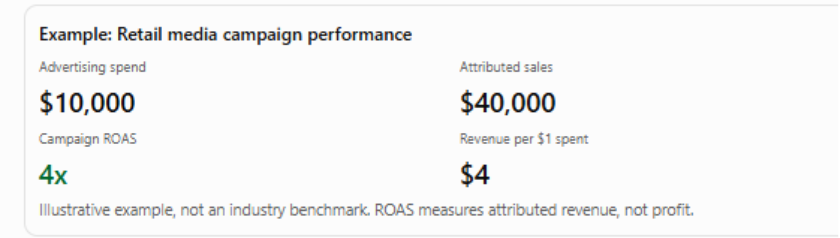
It is not possible to analyze an advertising campaign only from ROAS. It would be best to take profit margins, discounts, expenses, and additional sales into account.
Retail media analytics enables brands to find top-performing goods, audiences, and media placements. However, one should be careful when comparing networks because attribution of windows and reporting differ between them.
According to experts from IAB, it is essential to combine marketing mix modelling with insights on purchases to get correct results regarding commerce media.
Recent retail media developments: What’s changing in 2026?
Retail media networks are growing and figuring out how to become more advanced forms of advertising systems.
A significant aspect of this growth is seen in the development of artificial intelligence, social media, streaming and point-of-sale advertising integrations.
Retail Media Report Card from MARGINed Commerce indicates that several networks have stepped up their advertising capabilities:
- Kroger Precision Marketing has added TikTok and YouTube to its offerings as well as self-service stores for brands.
- Walmart Connect has enhanced its offerings by including Snapchat and other experiential advertising options.
- Roundel introduced some improvements in real-time reporting as well as dynamic creative optimization.
- Petco Spot Media started measuring sales lifts and incremental ROAS through exposed versus unexposed testing.
These developments demonstrate the shift of retail media towards more sophisticated multichannel advertising and performance measurement technologies.
For brands, it means that they can now move beyond just listing their products or advertising on retailers’ sites.
How can brands choose the right retail media network?
The process of selecting a retail media network should start with determining where the intended consumer base tends to buy products.
For example, a brand that sells daily household items may benefit from using the service of Kroger Precision Marketing or Instacart Ads while a business selling electronic devices can use the services of Amazon Ads or Best Buy Ads.
There are several factors the advertisers should take into consideration before making an ad purchase, such as:
1. Relevance to the target audience: Is the platform able to reach consumers who are truly interested in the products on offer?
2. Data access: Does the retailer give market insights and purchase data of its customers?
3. Measurement capacity: Is the platform able to provide conversion metrics, revenue attribution totals, and sales records?
4. Ad formats: Are ads placed in the form of sponsored listings, on display, on the internet or installed in stores?
5. Transparency in reporting: Are the aspects of measurement, attribution processes, and conversion metrics dated and easily available to the advertiser?
In addition to making thorough research brands should also run their campaigns on various networks to observe and compare their performance before the final investment.
The future of retail media networks
Retail media networks are reshaping dynamics in the retail, advertising, and customer spheres. Through retail media networks, brands can access crucial first-party data regarding shopping behavior, while companies get new sources of ad income.
Still, growth in retail media depends on more than targeting the right audience and achieving high ROAS. Advertisers increasingly want reporting that is transparent, attribution they can trust, and quantitative proof that their campaigns do yield results.
As artificial intelligence, connected TV, social media, and digital experiences in stores get interconnected, retail media advertising will increase at every stage of their customers’ journey.
In the end, brands that succeed will not only be those that invest more money into retail media platforms. They will also be companies that understand customer behavior, use appropriate networks, and assess how much advertising brings in sales.
Cut to the chase
Retail media networks allow brands to contact consumers with high purchasing potential through the utilization of data from retailers. Nevertheless, true success relies on appropriate measurement, definition of incremental sales and a clear attribution model.
FAQ’s
A retail media network is an advertising platform operated by a retailer that allows brands to promote products using the retailer’s first-party customer data across digital and physical channels.
Retail media networks use shopper data to create audience segments, deliver targeted advertisements, and measure campaign performance through clicks, conversions, and sales.
Some leading retail media networks include Amazon Ads, Walmart Connect, Target Roundel, Kroger Precision Marketing, Instacart Ads, and Albertsons Media Collective.
Brands monitor metrics such as impressions, click-through rates, conversion rates, return on ad spend (ROAS), incremental sales lift, and average order value.
At a Glance
- Retail media networks connect advertising with shopping: They allow brands to reach consumers closer to the point of purchase through retailer-owned channels.
- First-party data improves targeting: Retailers use purchase histories, browsing behavior, and loyalty information to help brands reach relevant shoppers.
- Measurement goes beyond clicks: Metrics such as conversions, incremental sales, and ROAS help evaluate retail media campaign performance.
- Attribution provides better insights: Closed-loop attribution connects advertising interactions with purchases, while incrementality testing helps identify genuinely additional sales.
- Choosing the right platform matters: Brands should compare audience relevance, data access, advertising formats, and measurement capabilities before investing in retail media networks.