

What is Changing in the Brand-Consumer Relationship in the AI Era
For decades, brands have enjoyed a one-sided power play over brand-consumer relationships. Brands invest in advertising, product quality, consumer experience, and loyalty programs to establish familiarity and connections in their consumer base.
Familiarity encouraged repeat purchases, while emotional connections helped brands establish long-term consumer advocacy. However, the traditional brand-consumer relationship is undergoing a significant transformation.
Consumers now have greater access to information, wider choices, and increasingly sophisticated ways to evaluate brands. AI is accelerating this shift by changing how consumers discover, compare, and purchase products.
Brands must understand what makes them relevant when consumers can reconsider their choices at any moment. The relationship is becoming less dependent on brand-controlled messaging and more dependent on consumer expectations, trust, and perceived value.
We are raising a pertinent question. What makes a brand worth staying with when consumers have more control over the relationship? In this article, we will find the answer.
Brand loyalty is not permanent for consumers
A simple definition of traditional brand loyalty was often understood through repeated purchases, familiarity, and consumer preference. Brands sought to establish consistent experiences that encouraged consumers to return.
However, consumer-brand relationships have never been entirely static. A Theory of Change in Consumer–Brand Relationships published in the Journal of Consumer Research in 2021 examined how consumers actively shape their relationships with brands over time.
Claudio Alvarez, Danielle J. Brick, and Susan Fournier studied 26 consumers and found that consumers can maintain, transform, or terminate relationships through what they describe as relationship work.
This research established that change in brand-consumer relationships does not remain unchanged. Consumers continuously evaluate whether a brand still fits their needs, expectations, and personal identities.
Ogilvy’s 2026 Brand Devotion framework builds on this contemporary challenge. The agency describes consumers as increasingly unbound by traditional brand loyalty, seeking brands that meaningfully belong in their lives rather than simply offering transactions.
The implication for marketers is straightforward.
Brand loyalty is not a permanent achievement. It is a relationship that requires continuous relevance.
How AI is changing consumer behavior
AI is continuously taking up space in the consumer decision-making process by influencing how people discover products, evaluate alternatives, and make purchasing decisions.
Consumers can ask AI tools to compare products, summarize reviews, identify alternatives, or recommend options based on their preferences. Instead of navigating multiple websites, they may receive a condensed set of recommendations that influence their final decision.
This creates a new challenge for brand relevance. A brand might have strong awareness and an established reputation but still be overlooked if it does not appear in the information consumers receive through AI-assisted discovery.
Google’s David Edelman argued in an October 2026 article that AI is changing how brands are perceived, describing a future in which brand identity is increasingly shaped by what AI systems communicate about businesses and how AI-enabled experiences serve customers.
However, AI does not automatically make consumers more loyal or less loyal.
For marketers, the challenge is to understand how AI changes consumer expectations. Consumers increasingly expect relevant information, convenient experiences, and recommendations that help them make informed choices.
AI can make discovering a brand easier. But it can also make comparing that brand with competitors considerably easier.
Why consumer satisfaction no longer guarantees brand loyalty
Consumer satisfaction remains important to brand relationships. However, satisfaction alone does not necessarily establish loyalty, emotional commitment, or advocacy.
A consumer might be satisfied with a product but switch to another brand because of better pricing, convenience, availability, or a more relevant experience. Another consumer may repeatedly purchase a product without developing any emotional connection to the brand.
The distinction between satisfaction and loyalty becomes increasingly important in an environment where consumers have access to more alternatives.
Ogilvy’s 2026 Brand Devotion research highlights this challenge. Its global research found that only 53 percent of US consumers believed their favorite brands consistently aligned with their values. Fewer consumers felt that brands helped them grow, connect with others, or fit into their cultural world.
These findings suggest that functional performance alone may not be sufficient to sustain meaningful consumer relationships.
The availability of alternatives also changes how consumers evaluate their choices. When consumers can easily compare products, a satisfactory experience may not prevent them from exploring other options.
However, switching does not always indicate dissatisfaction. Consumers may simply discover something that better fits their changing needs.
This distinction matters because brands can misinterpret repeat purchases as evidence of genuine loyalty. Consumers may return because of convenience, habit, or limited alternatives rather than emotional commitment.
The relationship between consumer satisfaction and brand loyalty is therefore more complex than marketers traditionally assume. Satisfaction can encourage retention, but lasting loyalty requires a stronger reason to stay.
Challenging position between brand relevance and consumer trust
The changing brand-consumer relationship extends beyond purchasing decisions. Consumers increasingly evaluate whether brands align with their values, identities, communities, and expectations.
Brand relevance is no longer determined solely by product quality or advertising visibility. Consumers also consider how brands behave, communicate, and contribute to their lives.
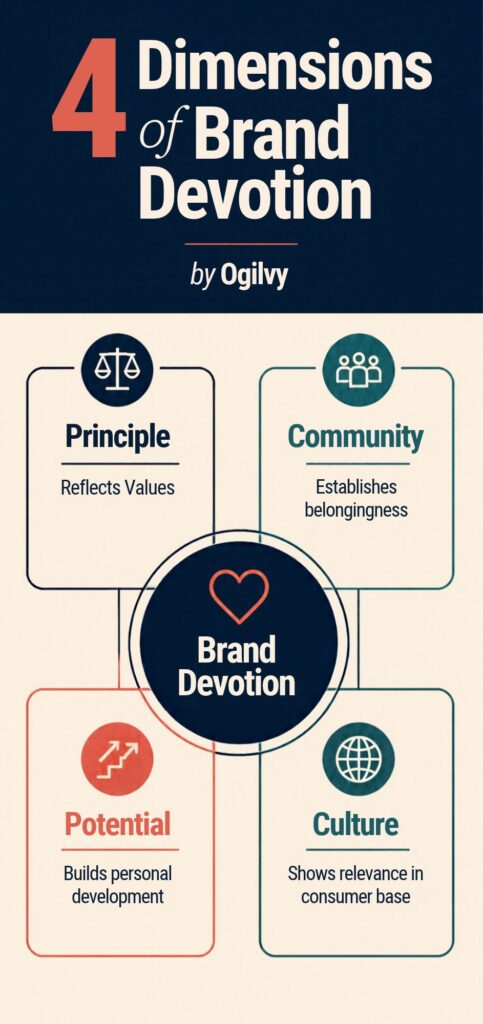
Ogilvy’s Brand Devotion framework identifies four dimensions that help brands establish meaningful relationships:
- Principle – Reflects Values
- Community – Establishes belongingness
- Potential – Builds personal development
- Culture – Shows relevance in consumer base
The framework highlights an important shift. Consumers do not necessarily want brands to define their identities. They want brands that support their existing aspirations, preferences, and evolving lifestyles.
AI introduces another tension into this relationship. Personalization can improve customer experience by making recommendations and interactions more relevant. However, excessive personalization can also make consumers uncomfortable, particularly when they do not understand how their information is being used.
Consumer trust becomes central to this challenge.
Brands cannot assume that consumers will automatically trust AI-generated recommendations, automated interactions, or personalized advertising. Trust depends on whether these experiences feel useful, transparent, and consistent with the brand’s promises.
Brand advocacy faces a similar challenge. Consumers may recommend brands because they deliver meaningful value, reflect shared values, or create experiences worth discussing. But advocacy cannot be manufactured through personalization alone.
The stronger opportunity lies in creating relationships that consumers genuinely want to maintain.
What the future of brand-consumer relationships looks like
The future of brand-consumer relationships will depend on how effectively marketers respond to changing consumer expectations. AI may improve personalization, but it cannot independently establish trust, emotional connection, or long-term loyalty.
Brands must reconsider how they measure relationship strength. Transaction frequency and customer retention remain useful indicators, but they do not fully explain why consumers stay, advocate, reconsider, or leave.
Marketers need to examine the motivations behind consumer behavior. A consumer who repeatedly purchases a product because it is convenient has a different relationship with the brand than someone who actively recommends it to others.
AI can help marketers identify patterns in consumer preferences and improve customer experience. However, these capabilities must support a broader understanding of consumer needs rather than simply encourage more transactions.
The academic research by Alvarez, Brick, and Fournier offers a useful perspective here. Their work emphasizes that consumers actively navigate tensions within brand relationships. These relationships can evolve through transformation, remain stable, or deteriorate into conflict.
Marketers’ pivotal role
Marketers must recognize that consumer relationships are continuously evolving.
Brands should focus on delivering consistent value, maintaining transparent communication, and creating experiences that remain relevant as consumer expectations change. They must also understand that consumers can develop meaningful relationships with brands without becoming permanently committed to them.
The objective should not be to eliminate consumer choices. It should be to give consumers compelling reasons to choose the brand again.
Cut to the chase
AI is changing how consumers discover, evaluate, and interact with brands. However, the deeper transformation concerns consumer agency. Consequently, brands cannot rely solely on historical loyalty, familiarity, or promotional incentives to maintain relationships. Henceforth, brand-consumer relationships have shifted, and marketers need to acknowledge reconsider their strategies.