

Meta’s New Anti-Scam Announcement Has a Structural Blind Spot
A couple of months ago, I wrote about how Meta was running what the industry called a scam economy. The profits from fraudulent ads made the company’s 10 percent profit while performing just enough enforcement to keep regulators at bay.
The piece argued that advertisers, not lawmakers, were the real force that could compel Meta to make meaningful change.
Then, in March 2026, Meta announced a new suite of anti-scam tools. It includes AI-powered impersonation detection, WhatsApp device-linking warnings, suspicious friend request alerts, and expanded scam detection on Messenger.
The announcement came dressed in urgency, bold takedown numbers, law enforcement partnerships, and a heartfelt commitment to protecting people.
So, did Meta prove everyone wrong? Not exactly. But the answer requires a closer look.
What are the new Meta’s anti-scam tools?
Let’s have a look at the tools first. Some of them are genuinely meaningful.
The WhatsApp device-linking warning addresses a real and growing threat. Scammers have been tricking users into scanning QR codes that quietly hand over access to their accounts. The new behavioral signal alerts are proactive, not reactive, and fix. That’s a meaningful distinction.
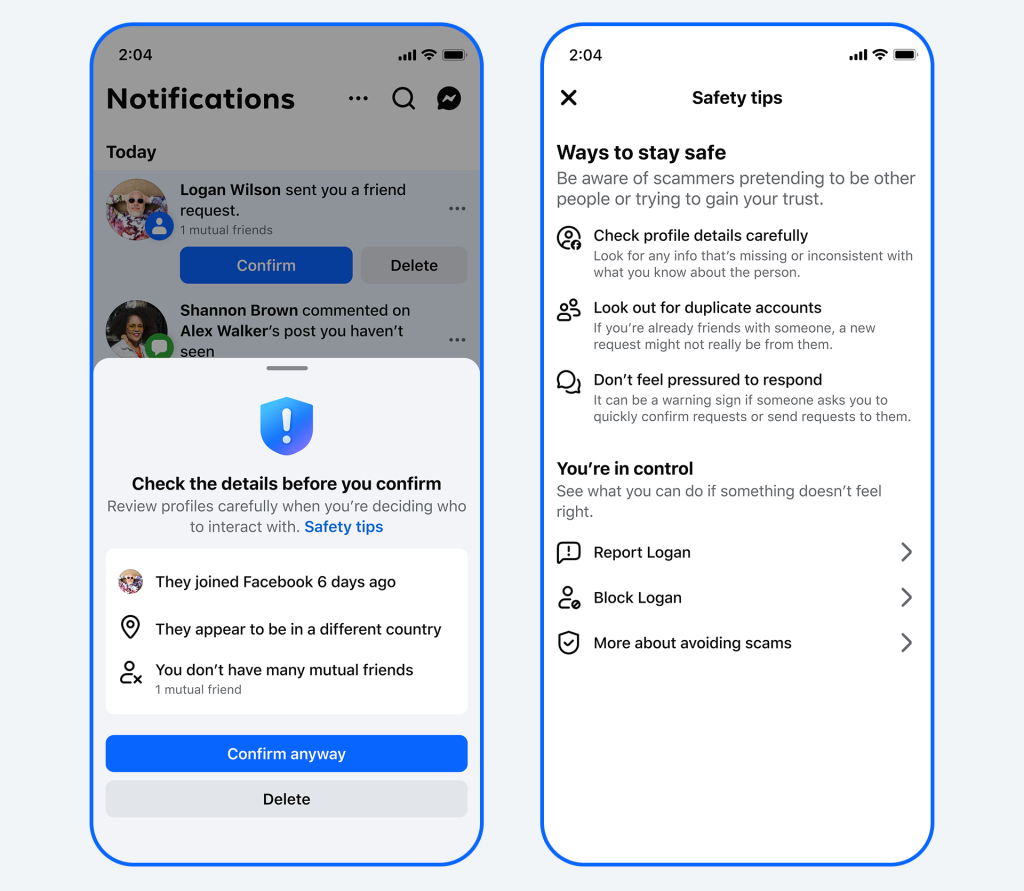
The expanded Messenger scam detection is also more sophisticated than its predecessor. Rather than relying solely on keyword matching, Meta says it now analyzes behavioral patterns. After that, it flags suspicious job offers and prompts users to share recent messages for an AI scam review.
The system then suggests concrete actions: block, report, or get more context. It is not perfect, but it moves beyond the checkbox approach.
On the enforcement side, the numbers are genuinely large. Meta says it removed over 159 million scam ads in 2025, 92 percent before anyone reported them. In India specifically, it banned more than 12.1 million pieces of ad content for fraud and deceptive practices.
It also participated in a global law enforcement operation that disabled over 150,000 accounts linked to Southeast Asian scam networks.
These are major developments. But here is where the story gets complicated.
The problem that Meta has not addressed
In my earlier piece, I identified what I believe is the structural engine of Meta’s scam problem: the Expanded inventory tier. For those unfamiliar, Meta’s ad placement system operates across three settings: Expanded, Moderate, and Safe. Expanded is set as the default for most advertisers.
Expanded means ads can appear next to a wide range of content, including edgy, emotionally charged, or borderline material that stops just short of violating policy. It is the “anything for scale” setting. It also happens to be where scam-adjacent content flourishes — low-scrutiny placements, fast delivery, and cheap CPMs. Expanded is, in many ways, the soil in which scam ads grow.

Meta’s announcement does not mention expanded inventory once.
Not in the context of brand safety reform. Not as a category subject to additional verification requirements. Not even an area of ongoing review.
The advertiser verification expansion Meta announced, targeting 90 percent of ad revenue by the end of 2026, up from 70 percent today, is about verifying who is placing ads, not where those ads end up. That is a meaningful distinction that the headline numbers tend to obscure.
Verifying an advertiser’s identity does not tell you whether their ad will run next to a crypto scam post or a fake celebrity endorsement. Those are inventory decisions, governed by placement settings that Meta still defaults to Expanded.
Transparency that isn’t transparent
Meta’s public Ad Library is frequently cited as evidence of platform transparency. And technically, it is open. Anyone can look up ads running on the platform.
But transparency as a display feature is different from transparency as an accountability mechanism. Reuters reported in late 2025 that, under pressure to address scam ads, Meta reduced ad discoverability in the library rather than removing the ads themselves. They made the scams harder to find, not harder to run.
Meta’s new announcement does not address the Ad Library’s structural limitations. It does not introduce third-party verification for brand safety claims. It does not offer advertisers clearer reporting on where exactly their ads appeared relative to flagged content.
The enforcement stats Meta cites, impressive as they are, are self-reported. That is a trust problem for any advertiser trying to make data-driven decisions about brand adjacency.
What has changed, and what has not
To be clear about where things stand: Meta has improved its consumer-facing protection toolkit in meaningful ways. The WhatsApp and Messenger updates represent genuine product investment. The law enforcement partnerships show that Meta is willing to work outside its own ecosystem when the reputational pressure is high enough.
What has not changed is the commercial architecture that makes scam ads profitable in the first place.
Meta’s ad system still prioritizes scale and speed. Expanded inventory still unlocks the widest content pool and the cheapest CPMs. Most advertisers still launch campaigns and forget about them. They never actively select Moderate or Safe settings because the defaults work well enough on the performance dashboard. And Meta still has no real competitive pressure forcing it to make brand safety easier or more transparent than it currently is.
The core tension I raised in my original piece has not been resolved. Meta is still a platform that profits from a category of ad spend; it is also, simultaneously, attempting to eliminate. The 10 percent scam revenue figure from that Reuters audit has not been formally disputed. The senators who cited it have not received a structural answer.
What advertisers should take from this
If you are a brand advertiser on Meta, the March announcement should not change your approach to brand safety settings. The verification expansion is primarily about ad identity, not placement quality. The AI scam detection tools protect consumers, not your brand adjacency.
The levers that matter for advertisers remain the same ones I outlined before:
- Actively opting out of Expanded inventory
- Demanding third-party brand safety verification
- Questioning AI-only optimization when it lacks transparency
- Holding Meta accountable when performance dashboards obscure context
Meta’s announcement is evidence of progress at the platform enforcement layer. It is not evidence of structural reform at the advertising infrastructure layer. Those are two separate problems and conflating them is how brands end up with scam-adjacent placements while believing they have done their due diligence.
Cut to the chase
Meta’s new anti-scam tools are real, and some of them are genuinely better than what came before.
But the structural argument holds: Meta has announced consumer protections while leaving the advertiser-side architecture largely intact. The Expanded default has not changed. Self-reported enforcement metrics have not been replaced by third-party audits.
The revenue incentive contradiction has not been resolved by behavioral alerts on WhatsApp.