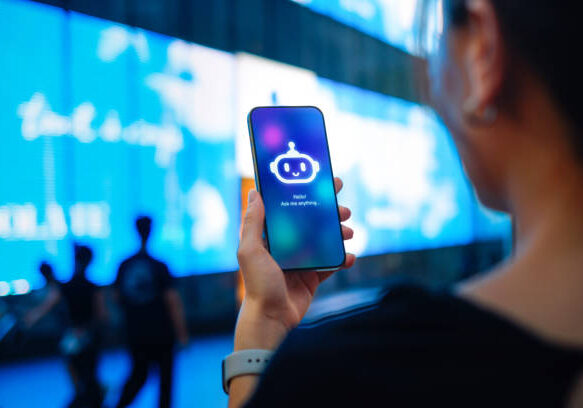

From Ads to Daily Life: How AI Is Rewriting Lifestyle Marketing
In 2025, AI in digital marketing became a normal, regular integral cog of the process, irrespective of the industries.
However, Lifestyle marketing is in a different league than others. It has always been about selling aspiration over utility; the vibe, the identity, the “this is me” feeling.
Add AI into that equation, and the game changes. This is about AI enabling brands to become part of how people live, think, choose, and express themselves.
It supercharges that ambition by turning mass assumptions into real-time, individual insights; reactive campaigns into predictive experiences; and audience segmentation into dynamic, contextually relevant insights. Let’s explore the impact of AI in lifestyle marketing in 2026.
What “lifestyle marketing with AI” really means
Lifestyle marketing historically focused on cultural alignment — aligning products to the way consumers live, think, and choose. AI flips this dynamic by adding real-time personalization and prediction at scale. With advanced AI, brands can now:
- Tailor experiences at the individual level — not just segments — based on real behavior and preferences, not assumptions.
- Adapt content dynamically to context: device, location, time of day, and even mood signals.
- Predict future behavior before a customer consciously expresses a need.
- Infuse brand interactions into moments of decision — throughout daily routines rather than random ad placements.
Think of it this way: traditional lifestyle marketing tells a story. AI-enabled lifestyle marketing becomes part of the narrative.
This shift explains why 88% of marketers today are using AI tools as part of their daily workflow, with 93% noting that AI accelerates content production, freeing up teams to focus more on strategic positioning and emotional resonance.
The three AI forces changing the game
If you boil the AI-lifestyle intersection down to core drivers, it looks like this:
i. Hyper-Personalization that feels personal
Consumers now expect relevance — not generic ads. According to multiple industry benchmarks:
- 96% of shoppers say personalized brand messages influence their purchase decisions. Forbes
- 73% of business leaders believe AI will redefine personalization strategies.
- AI-powered personalization can increase engagement by nearly 89% compared to generic campaigns.
This isn’t cute marketing; it’s measurable performance. Brands that lean into AI-delivered experiences outperform rivals on engagement, loyalty, and revenue.
ii. Predictive intelligence, not just responsive marketing
AI doesn’t just react, it anticipates. Predictive analytics powered by machine learning can forecast preferences and trends before they fully emerge. Real-world AI has already shown:
- Purchase prediction accuracy hits 78% for existing customers in effective implementations.
This isn’t speculative — predictive AI is now feeding into customer interaction design, loyalty programs, product recommendations, and retention strategies across industries. It’s lifestyle marketing that thinks ahead.
iii. Dynamic Creative & Expression
Generative AI isn’t a draft tool anymore — it’s a creative engine that can scale storytelling across formats: text, visuals, video, and interactive experiences. In some comparative experiments, AI-generated content has even matched or exceeded human creative influence in persuasive appeal. arXiv
Brands are now tailoring creative voice, tone, style, messaging, and visuals not just to audience segments, but to situational contexts in real time.
Hard numbers that back the trend
Let’s bring the hype down to cold, hard data — because strategy without numbers is just opinion.
Adoption & ROI:
- Nearly 93% of marketers say AI tools accelerate content workflows.
- 73% target AI-driven personalization budgets, yielding 35% conversion lifts.
- AI-enabled customer retention and engagement strategies can improve retention rates by as much as 46%.
Consumer Behavior:
- 91% of consumers prefer brands that recognize and remember them. LinkedIn
- AI-based personalization dramatically improves customer satisfaction — with some brands seeing up to a 39% jump. LinkedIn
Efficiency Gains:
- AI reduces routine marketing tasks, giving teams more strategic bandwidth. In some deployments, routine automation frees up 1–5 hours per week per marketer on average.
The tension brands must navigate
AI-powered lifestyle marketing is powerful, but it isn’t without friction. Two challenges, privacy and ethics, deserve strategic focus.
Consumers want personalization — but not at the cost of surveillance. 81% of consumers are concerned about how companies use their data.
This means: ethical AI use and explicit consent are not optional anymore. Transparency and data governance need to be baked into customer experiences, not tacked on later.
AI systems can inherit biases from their training data. Left uncorrected, this can lead to messaging that misrepresents audiences or reinforces stereotypes. Responsible AI use now includes bias mitigation protocols — not because it’s woke, but because it affects brand credibility and customer loyalty.
What marketers should focus on heading into 2026
Here’s where most teams still get it wrong — and where winners will separate themselves.
Prioritize Context Over Content
Too many brands still think content is king. Reality: context is kingmaker. AI helps deliver the right message in the right moment to the right person. That’s where influence actually becomes lifestyle impact.
First-Party Data with AI
Third-party cookies are gone. AI that runs on permissioned, first-party data isn’t just more ethical — it’s more accurate and sustainable.
Integrated experience design beats isolated campaigns
The brands that will dominate are those that use AI to connect dots across channels and touchpoints — not just amplify single campaigns.
Creative partners, human and machine
AI isn’t replacing human insight; it’s magnifying it. The best outputs emerge from strategic human prompts and AI generation working together, creativity guided by intention, rather than automation for its own sake.
Cut to the chase
Lifestyle marketing with AI in 2026 and beyond won’t be about doing more AI stuff faster. It will be about doing smarter experiences that feel personal, predictive, and respectful of the consumer’s life and preferences.