

Digital Ad Fraud in 2026: How AI Is Draining Advertising Budgets
Imagine spending thousands on a digital advertising campaign, celebrating rising click-through rates, and reporting impressive engagement to your team. But when you examine the results, sales remain flat, leads go cold, and customer acquisition costs keep climbing. The problem may not be your creative strategy or targeting. Your campaign could be paying to reach an audience that doesn’t exist.
This is the growing challenge of digital advertising fraud. As AI makes it easier to generate content, automate online activity, and imitate human behavior, advertising fraud is becoming increasingly sophisticated. Fake websites can attract advertising budgets, bots can simulate engagement, and compromised apps can generate clicks without users even knowing it.
For marketers in 2026, the challenge is no longer simply generating traffic. It’s determining whether that traffic represents genuine customer interest. Let’s take a closer look.
What is Ad fraud in digital marketing?
Ad fraud is the deliberate manipulation of digital advertising activity to generate revenue or inflate metrics without creating any genuine advertising value. Ad fraud can affect search ads, social media ads, display ad campaigns, mobile apps, video ads, and programmatic ad buying.
Fraudsters exploit the advertising ecosystem by causing advertisers to pay for fake impressions, clicks, app installs, leads, or conversions. Some of the methods used include using automated bots, creating misleading websites, hacking devices, or employing real people to fake advertising interactions.
It is important to distinguish deliberate ad fraud from the broader concept of invalid traffic (IVT). Invalid traffic includes activity that does not reflect genuine user interest and may result from malicious bots, accidental clicks, or deceptive placements.
Google provides details on how it addresses invalid traffic and the fraud-protection methods it uses, such as machine learning and automated filtering.
In July 2026, a Branch survey of 455 marketing executives found that respondents estimated losing 27% of their advertising spend to fraud annually, highlighting the growing cost of digital advertising fraud.
What is click fraud in digital marketing?
Click fraud occurs when ads are clicked by someone with no interest in the item being promoted. This is particularly detrimental to PPC campaigns where money is spent every time someone clicks an ad.
Local businesses using Google Ads to attract new clients may face click fraud damage. A fraudster may click the ads repeatedly until most of the daily budget is consumed. At times, bot networks are involved in such fraud, generating thousands of clicks from various devices and geographic locations.
Common forms of PPC click fraud include:
- Automated fraud: This involves the use of bots clicking on ads continuously.
- Competitor click fraud: This form of fraud consists of clicks done by an individual on ads of competing businesses to drain their advertising budgets.
- Publisher click fraud: This fraud occurs when publishers or other incentivized individuals, who are being paid for the clicks, generate fake clicks aimed at increasing the revenues from online ads.
- Clickjacking: Clickjacking is when a deceptive element on the web page causes users to click advertisements unwillingly.
Unusual click patterns do not automatically indicate fraud. Shared IP addresses, campaign changes, accidental clicks, and seasonal demand can also cause fluctuations. Marketers should examine multiple signals before concluding that click fraud has occurred.
How does AI enable advertising fraud?
AI is making advertising fraud easier to scale by reducing the effort required to create fake content, automate interactions, and imitate legitimate user activity.
1. Bots using AI mimic real users: Usually, bots engage in the same type of activity, which is relatively easy to detect. More advanced automation changes browsing behavior, rotates identities, and performs actions that make them appear human.
2. Generative AI building fake advertising websites: Fraudsters can employ AI to create large amounts of text, headlines, videos, and landing pages. Those websites can be used for search engine traffic or programmatic advertising, creating bad revenue potential through poor inventory.
3. AI automates fraud processes: An operation that used to require much manual effort can now be automated, from creating website content to working with multiple domains and adapting advertising campaigns. Fraudsters can quickly test their efforts and switch to other tactics at any time.
In July 2026, Adam Landis, Branch’s head of strategic growth, warned that new fraud methods would emerge as AI created additional vulnerabilities. He offered marketers a clear principle: “The AI can’t fake revenue to your bottom line.”
4. Artificial Intelligence provides new opportunities for manipulation: The fraud does not come only in the form of clicks. Automated actions can perform installations, video views, leads, and conversion events. If an advertising campaign optimizes for easily obtainable substitute parameters instead of the real business metrics, the fraudsters will have more options for manipulating the system.
AI can help detect fraudulent activity, but effective protection depends on identifying suspicious behavior before it distorts campaign performance.
What are the types of digital advertising fraud?
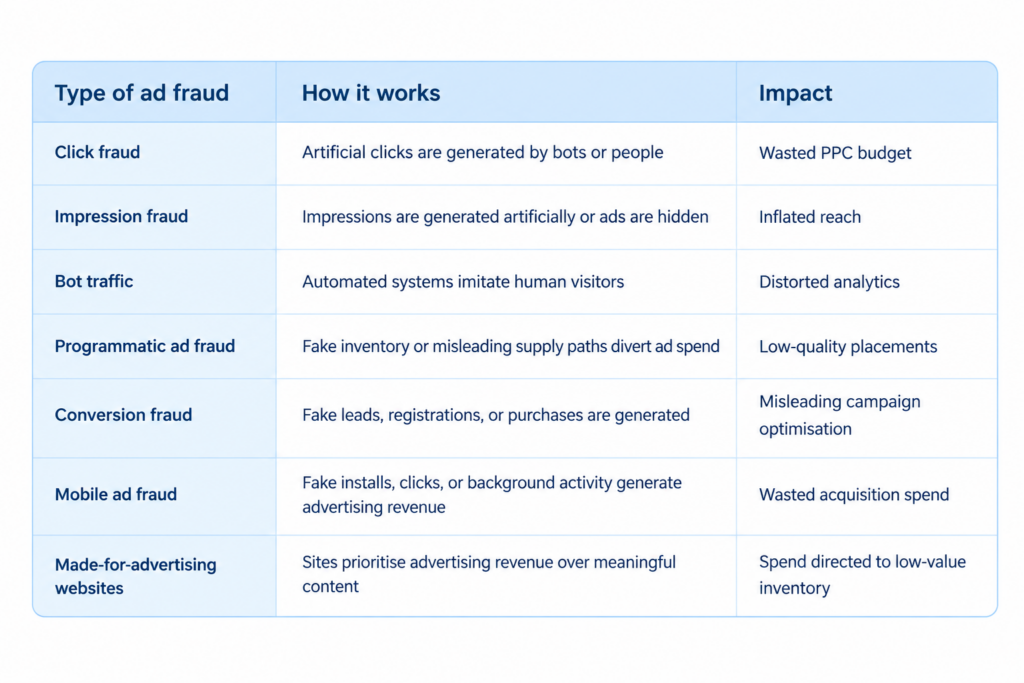
These types of fraud can overlap. For example, a single operation may use automated traffic to generate clicks across low-quality websites, making artificial activity appear like successful engagement.
Real-world examples of AI ad fraud in 2026
- AI-generated websites: In March 2026, DoubleVerify researchers uncovered a network of more than 200 AI-generated, made-for-advertising websites, highlighting how generative AI can scale low-quality advertising inventory.

- Mobile ad fraud: In August 2026, Integral Ad Science’s Papyrus investigation highlighted fraudulent activity involving reading apps that generated background website visits and clicks across hundreds of domains.

- Rising invalid traffic: Pixalate reported a 25% invalid traffic rate for US desktop and mobile web programmatic advertising in Q1 2026, underlining the need for stronger traffic-quality monitoring.
IVT Benchmarks in Programmatic Advertising in North America
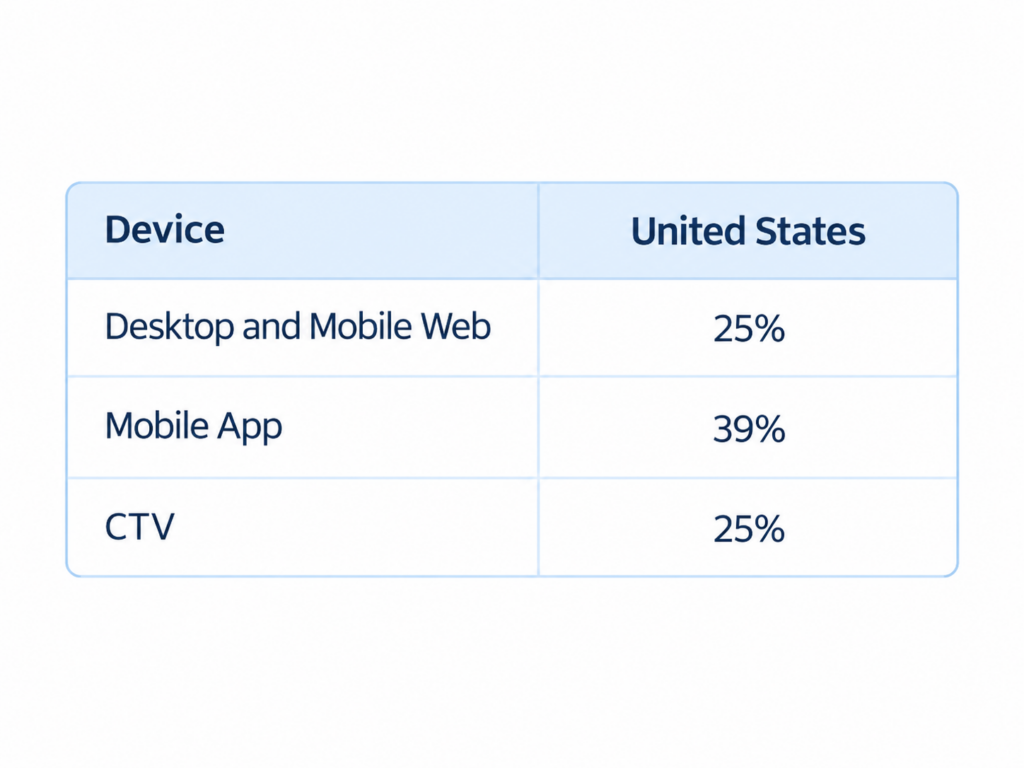
These cases highlight how advertising fraud can emerge across websites, mobile apps, and programmatic inventory, making independent traffic-quality monitoring increasingly important.
How can marketers detect Ad Fraud?
Effective ad fraud detection combines platform reports, behavioral analysis, independent verification, and conversion-quality monitoring. Marketers should watch for the following warning signs:
- Unusual spikes in clicks: There are many clicks but no matching increase of qualified traffic or conversion.
- Poor engagement quality: Sessions exhibit strange behavior, navigation paths, and little effective engagement.
- Geographical mismatches: Traffic is not coming from the right locations as per campaign specification.
- Suspicious conversion trends: A campaign may bring a lot of leads but either the contact does not deliver any valid information about them or they do not pass through the sales funnel.
- Strange results of publishers: Some placements may create many clicks, all of which produce poor results afterward.
These indicators should trigger further investigation, not automatic conclusions. A short session or shared IP address alone is insufficient to confirm fraud.
How to prevent digital advertising fraud in 2026
Detection identifies suspicious activity, while prevention reduces the opportunities for fraud through stronger controls across the advertising process.
1. Improve transparency in programmatic supply. Ensure that only reliable partners handle programs, check the lists of publishers, look at paths of supply, and remove sites that receive low-quality traffic from using ads.txt and app-ads.txt in verification.
2. Focus on meaningful outcomes. Don’t measure campaign success solely by impressions, clicks, or low-cost leads. Track qualified leads, completed purchases, customer acquisition costs, and revenue to understand whether your advertising is delivering real value. Landis’s 2026 warning reinforces the importance of looking beyond surface-level metrics.
3. Use protection from a platform and verification from an independent source. Platform filter matters, but an additional oversight can offer visibility across the ads. Make sure to have clear processes for resolving problems rather than treating every report from a platform as the whole truth.
4. Make sure that you secure the accounts being used for advertisements. Start using multi-factor authentication and do not allow too many people to view it. It is important to track any unusual modifications to your campaigns and ensure your team knows how to identify phishing emails.
5. Conduct regular audits of campaigns. Review the sources of suspicious traffic, conversion quality, performance information, and the reasons for sudden changes in campaign efficiency. Also, gather all the evidence and develop escalation procedures for the work done with agencies and partners.
The future of Ad fraud: Trust becomes a performance metric
AI is making advertising more efficient, but it is also lowering the barriers to fraud. As fake websites and automated interactions become more sophisticated, marketers can no longer assume that higher click volumes translate into better campaign performance.
The response is not to quit using automation in business. It is necessary to secure a better verification process, know where the budget goes, and connect advertisement efforts with specific business results.
Ultimately, ad fraud prevention protects more than advertising budgets; it safeguards the decisions marketers make. In 2026, successful brands will look beyond reported engagement to verify that their campaigns reach genuine audiences and deliver measurable business value.
Cut to the chase
AI is making digital advertising fraud harder to detect, from fake clicks and bot traffic to AI-generated websites that drain marketing budgets. Learn how to spot ad fraud, protect your advertising spend, and ensure your campaigns deliver genuine business results.
At a Glance
- AI is changing ad fraud: Fraudsters can create fake traffic and automate deceptive activity at greater scale.
- Clicks don’t always mean genuine interest: High click-through rates may hide fraudulent traffic or low-quality engagement.
- Fraud takes many forms: Common types include click fraud, impression fraud, bot traffic, conversion fraud, and programmatic ad fraud.
- Detection requires multiple signals: Monitor traffic patterns, geographic data, engagement, lead quality, and conversion behaviour before concluding fraud has occurred.
- Prevention starts with verification: Use platform protections, independent ad verification, authorised seller checks, account security, and business-focused performance metrics.
FAQ’s
Ad fraud is the deliberate manipulation of digital advertising activity, such as clicks, impressions, app installs, or conversions, to generate fraudulent revenue or inflate campaign performance.
AI helps fraudsters create fake websites, automate bot traffic, imitate real user behaviour, and generate fraudulent clicks, leads, and conversions at scale.
Click fraud occurs when bots, competitors, or other malicious actors generate artificial clicks on digital ads to waste advertising budgets or manipulate performance metrics.