The Devil Wears Prada 2 Launched a Marketing Ecosystem
Twenty years ago, The Devil Wears Prada hit cinemas with little brand involvement and no marketing fanfare to speak of. Fashion houses were reluctant to associate with the satire of their world.
The film went on to gross over $326 million globally and embed itself so deeply into pop culture with the cerulean sweater, Miranda’s coffee order, the iconic “That’s all”, ever since. Now, with the long-awaited sequel arriving in May 2026, brands didn’t wait for an invitation. They lined up.
The Devil Wears Prada 2 has become one of the most commercially saturated film releases of the decade, and one of the most instructive case studies in what pop-culture marketing actually looks like when it’s done with intent.
What is a pop-culture marketing moment?
Not every film, show, or cultural event qualifies. A pop-culture marketing moment is when a property crosses from entertainment into shared language. It becomes a shorthand that the entire demographics reach without needing explanation.
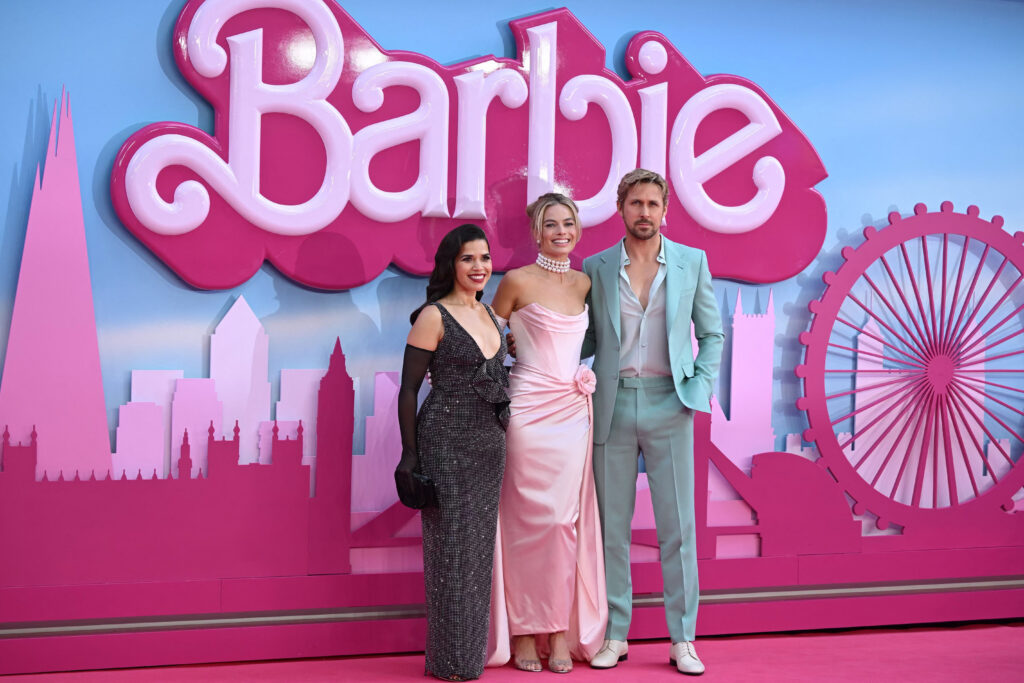
It’s what made the Barbie movie’s pink takeover of 2023 so commercially potent, and what makes DWP2 a rarer opportunity: a sequel arriving with 20 years of emotional equity already banked. For brands, this matters because it removes one of marketing’s hardest problems: getting people to care.
When a cultural property already has a devoted, cross-generational audience, brands don’t need to build emotional relevance from scratch. They can borrow it.
As Lancôme put it in a statement to BeautyMatter: “Entertainment IP has become a strategic pillar, not just a momentary amplification tool. The value lies in tapping into stories consumers already care about, leveraging emotional equity rather than building it from scratch.”
The Barbie comparison is a natural benchmark. According to Launchmetrics data cited by CNN, Barbie’s collaboration with Zara alone generated $11 million in media impact value. DWP2 arrived with comparable, arguably stronger, cultural infrastructure, and Disney knew it.
Disney built this like a fashion collection, not a promotional calendar
According to Marketing Dive, Disney’s 20th Century Studios began working on brand partnerships two full years before release.
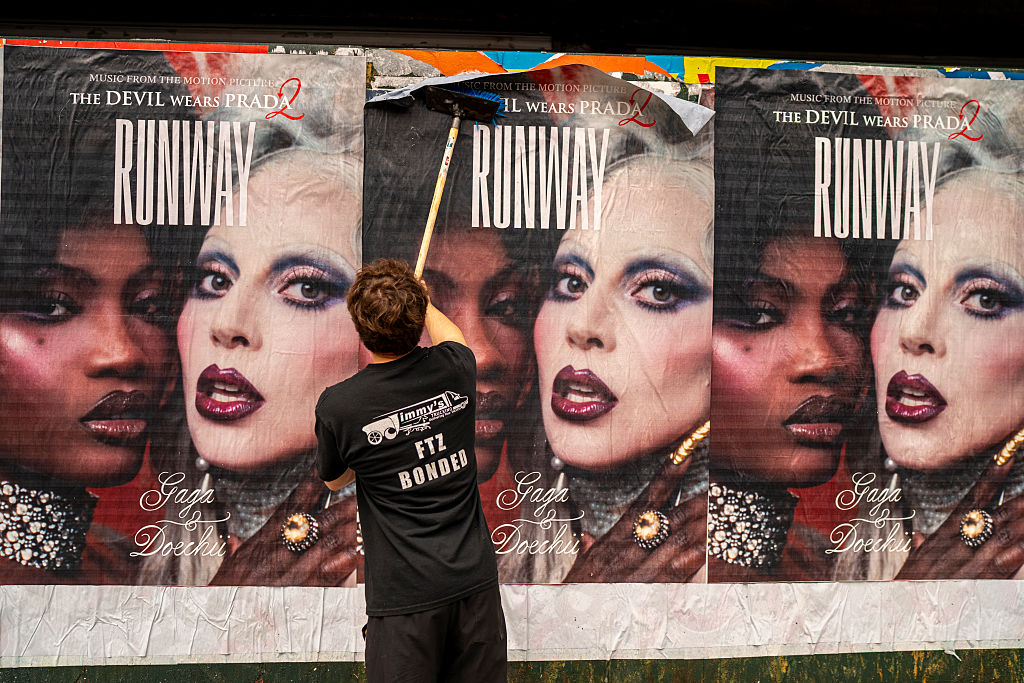
Lylle Breier, EVP of Partnerships, Promotions, Synergy and Events at Disney, told CNN that the studio’s goal was to curate a campaign that felt “like a fashion collection”, cohesive as a whole, distinctive in each part.
The result was a deliberate, tiered ecosystem. Official brand collaborations and bespoke campaigns sit alongside licensing deals, where brands pay for the right to use the film logo on their packaging.
This distinction matters. A Diet Coke commercial set inside Runway’s offices is a different category of partnership than DWP2-branded nail clippers from Tweezerman.
Both are real. Only one is strategic.
The full roster of brands associated with the film is striking in its range. Official collaborations include Diet Coke, Smartwater, Starbucks, L’Oréal Paris, Lancôme, TRESemmé, Dior, Grey Goose, Samsung, Google, Zillow, and United Airlines.
Licensing partners include Walmart, Old Navy, Target, Tangle Teezer, Lulus, and Tweezerman. More than a dozen brands across beauty, beverage, tech, fashion, and lifestyle, spanning everything from Dior to drugstore nail files.
“I totally understand why every brand wants to be a part of it, because it’s been a part of the cultural lexicon for 20 years,” Kathleen Swanson, co-head of creative for brand and entertainment at Maximum Effort — which worked on two of the branded campaigns — told Marketing Dive. “Now all of a sudden, brands can dovetail into it so nicely.”
The Coca-Cola play: A portfolio strategy, not a brand stunt
Of all the brands involved, Coca-Cola’s approach is the most instructive, the most layered. Here, the company didn’t send one brand into this cultural moment. It sent two.
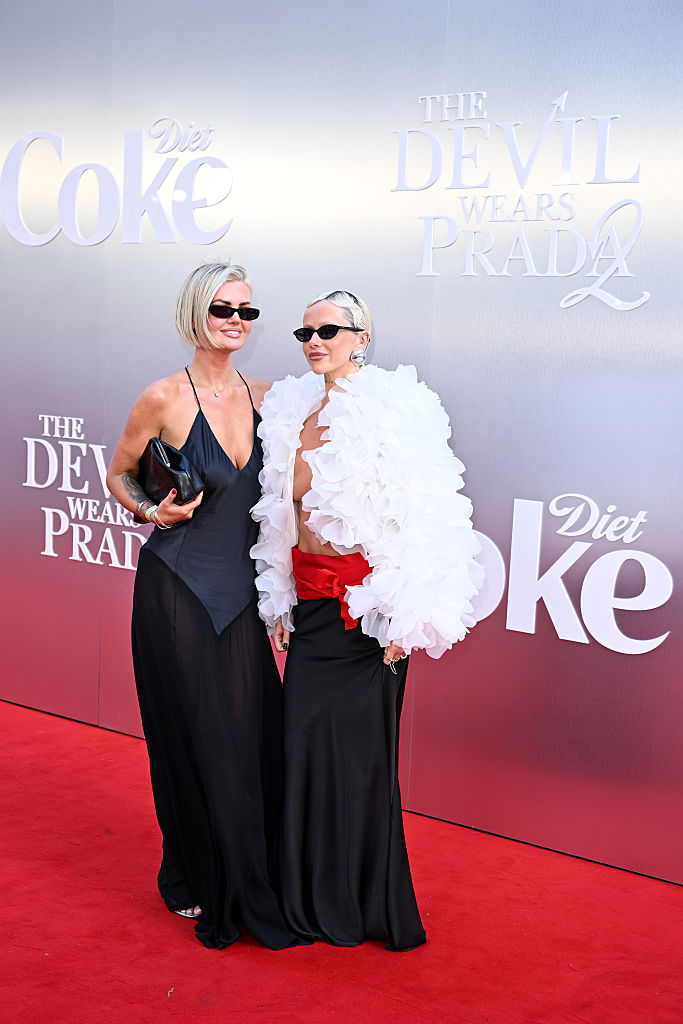
Diet Coke was activated globally across the US, UK, Mexico, Chile, Germany, Spain, and Ireland. Smartwater ran a parallel, US-focused campaign. Different creative territories, different consumer touchpoints, same film.
VP of Coca-Cola Trademark Stacy Jackson explained the logic to Variety: “If you think about your normal consumption day, you don’t drink just one product all day.” We recognize that the consumer actually takes more of a portfolio view.”
Diet Coke’s execution centered on what is now being widely discussed as one of the more creatively committed activations in recent film marketing.
Meet the Canny Pack.
Created by WPP Open X and led by Ogilvy, the campaign placed Diet Coke inside the Runway offices under “That’s All”, recreating the iconic pause when Miranda Priestly leaves the room. At its center was a fanny pack designed to hold a single Diet Coke slim can, attributed in-campaign to fictional Runway designer James Holt.
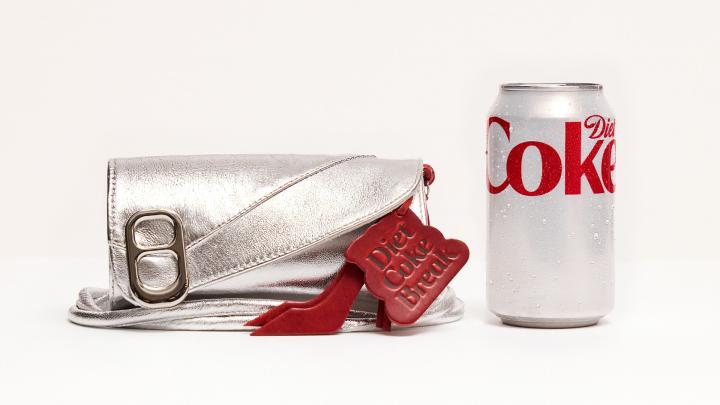
That fictional attribution is the detail that separates this from a standard film tie-in. As ALM Corp noted in its campaign breakdown, Coke made the Canny Pack feel like it belonged to the world of DWP2.
At the film’s New York premiere at Lincoln Center, models in Diet Coke silver walked the carpet carrying the bag from a branded booth. The product became part of the film’s aesthetic rather than a logo grafted onto it.
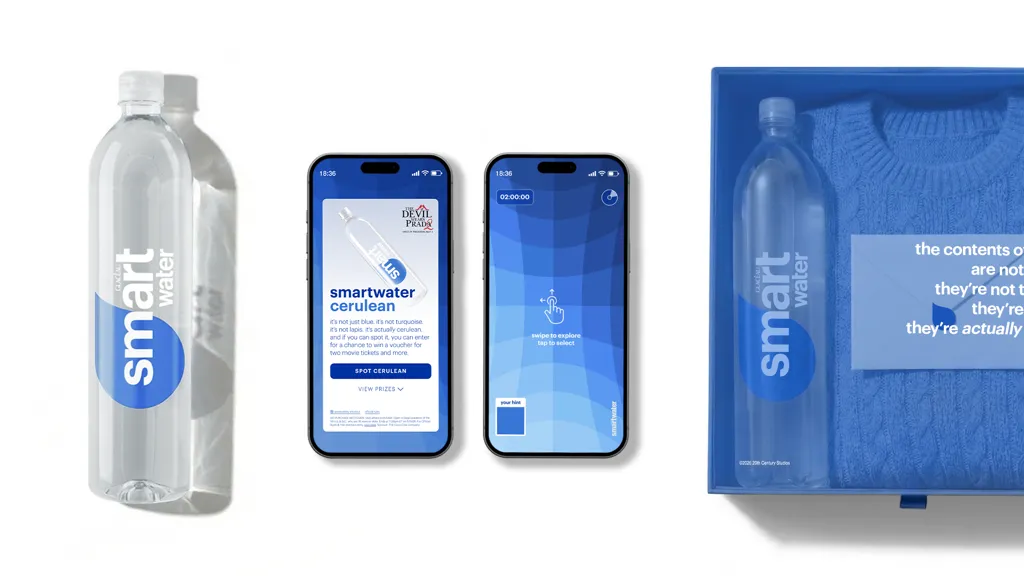
Smartwater took a different angle; nostalgia over novelty. The brand launched an interactive digital game called Smartwater Cerulean, challenging consumers to identify the exact shade of cerulean. Special-edition cerulean bottles were hidden at select Target locations with QR codes linking to the game, collapsing the distance between physical retail and digital engagement.
“The Devil Wears Prada remains a defining reference point in pop culture, resonating with the same audiences who gravitate toward Smartwater’s modern, design-minded perspective,” said Sue Lynne Cha, VP of Water and Tea Category at Coca-Cola, per the company’s press release.
The real lesson for marketers
With this many brands in the same ecosystem, oversaturation is a real risk, and some of the coverage has noted it. The question for marketers isn’t whether to participate in a cultural moment, but how to participate without being lost in it.
DWP2 opened at number one globally, pulling in approximately $233 million over its opening weekend, according to Marketing Interactive. The marketing infrastructure built around it will outlast the opening weekend numbers.
The real shift that DWP2 signals isn’t about movie tie-ins becoming more common. It’s about entertainment IP being treated as a media channel with emotional targeting already built in. Disney curated this like a fashion collection, every brand chosen for fit.
Coca-Cola committed a single creative idea across two brands and cascaded it everywhere, from TV to retail to the red carpet.
Cut to the chase
The brands that treated DWP2 as a shortcut got nail-clipper energy. The brands that were built inside the world got cultural velocity.
The smartest brands in this ecosystem learned the same lesson: you don’t announce your relevance. You earn it.