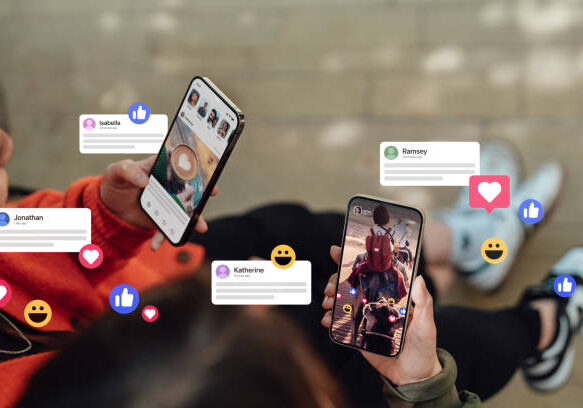

Silent, Seen, Successful: Why ‘Sound Off’ Videos Are Winning
Scroll. Pause. Then scroll again. That is today’s social media rhythm—and in the world of silent social videos, sound is often lost.
No matter if it’s short Instagram reels while on the go, LinkedIn videos in between meetings, or TikTok late at night with someone sleeping next to you, the truth is most social video gets viewed without sound.
Despite this reality, brands continue to create their content as if audio is the hero of the story.
This is the new age of silent-first content strategy where the visuals are message and not simply supporting the message. Let’s dive deeper into what this evolution really means.
The sound-off reality
Users don’t consume content the way marketers think they do. They are multitasking across different apps, viewing videos while out in public places, having a short amount of time to spend watching a video (micro-moments), and don’t turn the sound ON.
According to various studies and reports from social media platforms, most social media videos are being viewed without sound; in fact, on some social media platforms, such as Facebook and Instagram, the default for videos is to play with the sound OFF (auto playing). Therefore, if you are creating a video that relies on voiceover, dialogue, or background music to tell the video story, you will most likely lose a large number of potential viewers.
Why silent social videos are winning
Silent social videos are more than a solution—they’re an advantage.
1. Visuals Are Your First Hook. Sounds Need To Be Listened To.
In a crowded content feed, visuals are the first (and sometimes only) hook. A standout image, a literal visual hook of bold text, or a surprising, animated image will grab someone’s attention and make them stop scrolling. Audio needs effort. Visuals don’t.
2. Context Trumps Creativity
The audience isn’t sitting at home with their headphones on waiting for your ad; the audience is:
- in an office
- on a bus
- at a cafe
- in a classroom
When the default for viewing something is sound-off, creating this contingency makes your brand feel more organic than if it were created for sound-on consumption.
3. Making Your Content Accessible Is Now A Must
Silent-first content is aligned with accessibility requirements as follows:
- Individuals who are hearing impaired
- People who speak another language
- Users who operate in low-bandwidth conditions
When you emphasize visual narratives, you don’t just improve engagement—you expand your reach
The shift from audio-driven to visual-driven storytelling
Transitioning from audio-centric to image-centric narrative forms
The format most seen throughout conventional video narratives is as follows:
Audio-Visual Narrative Format
Script → Voiceover → Supporting visuals
Silent-first flips this completely:
Visual narrative → On-screen text → Optional audio layer
Visual storytelling on social media requires a complete shift in how to tell your audience what is going on visually. Instead of explaining the event visually to your audience, you will simply demonstrate it together through visual means – immediately to your audience and without needing audio support.
What makes a great silent-first video?
Not all silent videos work. The best ones are intentionally designed for sound-off consumption. Here’s what sets them apart:
- The story is told in captions: Short and succinct captions that convey the message and help transition the storyline without voiceover.
- Powerful visual hooks: Your content should grab attention immediately and stop viewers from scrolling past your visual.
- Clear, easy-to-understand narrative without dialogue: Visual images will guide your audience through your message.
- Mobile-Friendly Design: Create all your content for vertical screens and quick view consumption.
- Impact through visual imagery: Use facial expressions, colour, and motion in your images to communicate and create an emotional response with your audience without using sound.
Creating a video marketing strategy for silent viewing involves more than simply adding captions. It requires an entirely new way of thinking about the creative process.
Begin with silence rather than sound
Ask yourself, “Will this video work without sound?” If the answer is no, then start again.
1. Think About Your Content in Frames rather than Scripts:
Rather than write out long scripts, you should think about the key visual moments of your video, the text overlays and transitions between scenes. This will provide clarity to your message even without audio.
2. Design your Videos for the Specific Platforms and Campaigns rather than just for Campaigns:
Different platforms have different user behaviours (e.g., LinkedIn: professional, Instagram: visually appealing, TikTok: relatable), so you must design silent video content to fit the platform on which it’ll be displayed.
3. Test Sound-On Performance vs. Sound-Off Performance:
You may be surprised to learn that most videos perform better when they are played without audio, as they are generally easier to consume. Track view time, completion rate and engagement in order to define your strategy using user behavior.
Why silent-first content works (and how to get it right)
Silent viewing essentially means controlling the user experience; quick, private, effortless content to access while maintaining one’s environment. The sound creates friction, and removing that friction through the absence of sound helps a user consume content faster than when scrolling through their feed.
Thus, many of the leading brands produce text-based storytelling, meme-like images, quick explanation videos, and on-screen product demo videos – all of which work well without sound, and if they have sound, would amplify it further.
To be successful: Start with a visual, caption it smartly, have a hook within 3 seconds, keep it short, design for mobile systems, and keep the user experience clear without sound; sound is a bonus, not required.
Cut to the chase
Silent viewing is superior because it requires almost no effort—there is no sound or interruption, and you can enjoy it immediately. Brands that are successful in this space have created visual-first, caption-led, content that functions well when the user is listening. Hook fast, keep it clear, and treat sound as a bonus—not the backbone.
FAQ’s
Users often scroll in public or multitasking environments, making silent viewing more convenient and frictionless.
It’s a video approach designed to communicate clearly without sound, using visuals, captions, and storytelling.
By using strong visuals, clear captions, quick hooks, and mobile-first design to ensure the message works on mute.