Creator Marketing has Moved Beyond Likes and Followers. Next is Effectiveness
Cannes Lions 2026 had creator marketing as one of its loudest moments. Creators were everywhere: on panels, on shortlists, in the case studies that won gold. The industry has more or less agreed that creators belong in the media plan.
There was no denying that creators could become an integral part of media planning. From Unilever to Meta, every big brand is developing marketing strategies centered on creators. The only part left out was the effectiveness of creators in broader terms.
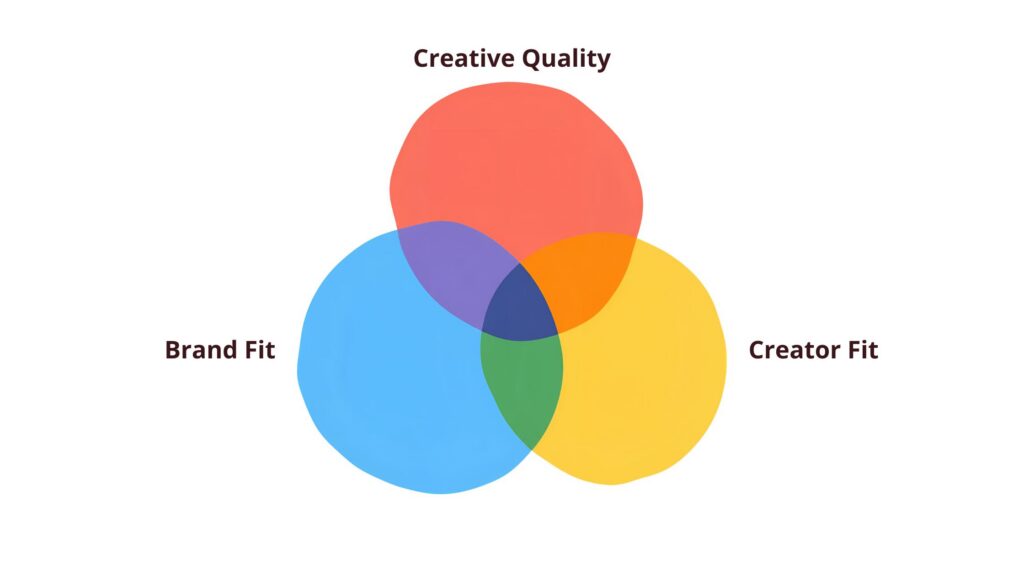
This year, they got a major trump card to highlight their measurability and metrics. System1’s new Creator Effectiveness Playbook, built with WPP Media and TikTok on a dataset of over 1,200 paid ads, points to three levers instead: Creative Quality, Creator Fame, and Brand Fit.
The report and the Cannes Lions 2026 outlook on creator marketing prompted me to talk to Vanessa Chin of System1. In this article, we will dive deep into the three major levers of creator marketing effectiveness.
At a Glance
- Engagement rate explains just 0.2% of Brand Memory Lift — it is not a reliable indicator of creator ad effectiveness.
- Brand memory is driven by three levers: Creative Quality, Creator Fame and Brand Fit.
- Creative Quality (emotion + early branding) explains brand memory nearly 5x better than the best engagement metric tested.
- Brand Fit matters more than creator size — a smaller, well-matched creator can outperform a bigger, ill-fitting one.
- When all three levers align, Brand Memory Lift climbs to nearly 4x that of the weakest-performing creator ads.
Uncomfortable ‘number’ truth behind the ‘engagement’
“The creator economy is at an inflection point,” says Vanessa Chin, SVP of Marketing at System1.
“While many brands still evaluate creators using media metrics like engagement rates, our research found that engagement has virtually no relationship with Brand Memory Lift, explaining just 0.2 percent of variation in brand awareness and ad recall outcomes.”
One can wonder upon the ‘brand memory lift.’ Brand memory lift explains whether an advertisement successfully helps consumers remember a brand later. It combines ad recall and brand awareness to evaluate long-term demand generation, rather than relying on misleading short-term metrics such as likes or comments.
Likes, views, comments, and follower count describe what happened around a post. They don’t describe whether anyone walked away remembering the brand, which is the entire point of running an ad in the first place.
It’s not as if the industry lacks reasons to take creators seriously. Separate cross-industry data cited in the same playbook, drawn from more than 200 campaigns and £133 million in creator spend, shows creator activity carrying the highest long-term sales multiplier of any channel measured, just ahead of linear TV.
The commercial case for creators is no longer in question. What’s still unresolved is how brands decide, ad by ad, which creators’ work is actually earning that return, and which is simply generating noise.
What actually predicts whether a creator ad is remembered
Our Creator Effectiveness Playbook found that the most effective creator content isn’t necessarily the content with the biggest audience or highest engagement.
Vanessa Chin, SVP of Marketing, System1
Creative quality is the biggest driver, combining strong emotional engagement with clear branding early in the ad. Creative Quality explains brand memory nearly five times as well as the strongest engagement metric System1 tested.
Creator fame is also an added factor. Apart from follower count, creator fame is about whether an audience recognizes the creator or instantly understands the world they’re stepping into.
System1’s data shows just how misleading follower count can be as shorthand: among mid-tier creators with 100,000 to 300,000 followers, audience recognition averages roughly 8.5 percent, while a handful of far smaller creators are recognized by close to a third of their followers.
Size buys reach.
It doesn’t reliably buy recognition, and recognition is what actually gives a creator an ad a head start.
Where is branding?
Early branding tells a similar story about good intentions gone missing. Across the creator ads System1 analyzed, only 61 percent included a recognizable brand cue within the first two seconds, meaning roughly four in ten creator partnerships failed to give the brand credit for the attention the creator had already earned.
Chin’s point about engagement isn’t only that it’s the wrong metric; it’s that chasing it has quietly let branding slide down the priority list.
Chin also gave the answer to why branding slid down.
“Perhaps most importantly, the brand needs to feel like a natural fit within that world,” Chin says.
That’s where the brand fit becomes relevant. Brand fit is a core metric that defines how naturally a brand or product belongs to a creator’s content or world. It evaluates whether a brand feels authentic and well-suited to an influencer’s audience rather than forced or at odds with their niche.
Brand fit matters more than creator size
“Our research found that Brand Fit is often more important than creator size, meaning a smaller creator with a strong connection to a brand can generate stronger memory effects than a larger creator where the partnership feels forced.”
It’s a quiet but significant reframe. For years, the brand brief for creators started with reach: how big is the audience, how far will this travel? Chin’s read is that the smartest marketers in the room right now are starting somewhere else entirely.
The playbook’s own case studies make the point concretely. A UK bank’s partnership with a blind creator, built around the everyday value of face-to-face banking, produced the strongest brand-fit score in the entire dataset, well ahead of partnerships with far more famous names.
A beer brand’s collaboration with a creator known specifically for being sober scored near the top on both fame and fit at once, because the pairing made sense before a single frame was shot. In both cases, the brand wasn’t the biggest name in the room. It was simply the right one.
“The most sophisticated marketers are moving beyond reach and engagement, treating creators as creative partners who can build distinctive brand memories,” she says. “This signals a shift away from simply buying audiences and toward finding creators who can authentically bring a brand to life.”
Get all three levers pulling in the same direction, Chin notes, and the payoff compounds: campaigns with strong Creative Quality, Creator Fame, and Brand Fit generate close to four times the Brand Memory Lift of the weakest-performing creator ads in System1’s dataset.
Creator’s effectiveness is a MUST
None of this is an argument against creators.
If anything, Chin’s data makes the strongest case yet for why they belong in the plan: paid creator ads consistently build more brand memory than brand-made ads, and the best of them build nearly four times as much as the weakest. The argument is against judging work with the wrong instrument.
That’s a harder shift than swapping one KPI for another. It means briefing creators on a human need before a follower count, protecting fit over fame. Judging by this year’s shortlists, the industry is ready to celebrate that kind of work.
The playbook’s real challenge to marketers is whether they’re ready to plan for it before the trophies are handed out, not after.
Cut to the chase
Creator marketing has already won its place in the media plan. The next battle is proving that the right creator, the right creative, and the right brand fit can turn attention into memory, and memory into business value.