
Tired of Trends? The Marketing Playbook Brands Are Quietly Using in 2026
If 2024 was about jumping on trends and 2025 was about automating everything, 2026 is the year marketers quietly step back and ask a dangerous question:
Is any of this actually working anymore? Because somewhere between AI-generated sameness, viral-first thinking, and “blink-and-you’ll-miss-it” campaigns, audiences didn’t just get distracted—they got exhausted.
Welcome to the era of marketing trend fatigue. And that’s exactly why the smartest brands in 2026 aren’t chasing what’s new. They’re building what lasts. This is the anti-trend marketing playbook a practical, human-centered guide to cutting through noise, restoring trust, and making marketing feel meaningful again.
Marketing trends vs anti-trends: Why the old playbook is breaking
Marketing trends come and go, but there is one constant in the marketing world today: the old playbook is breaking!
There will always be new AI tools and formats developed, new social media platforms launched, and other “must-dos” that come from agencies. What each of these trends does is to create a plethora of brands all saying the same thing (albeit in different voices)—thus creating more clutter for the consumer than ever before. The scarcity that will matter the most in 2026 will be trust, not attention.
So, by using “anti-trend” tactics, brands can rebuild the trust they have lost amid all the distractions. In 2026, attention isn’t scarce—trust is. And anti-trend strategies are how brands earn it back.
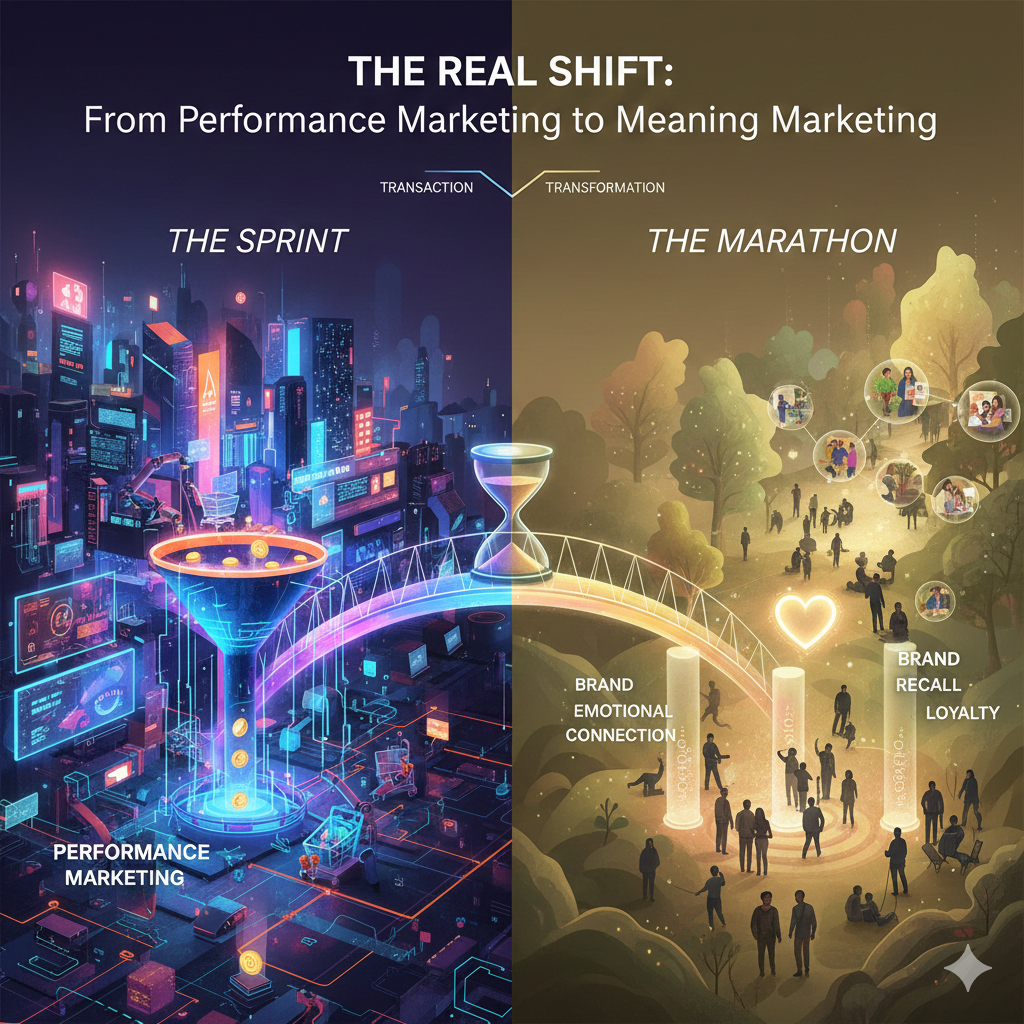
The real shift: From performance marketing to meaning marketing
Here’s the uncomfortable truth many marketers are avoiding:
Optimizing doesn’t mean memorable things.
Brands optimized for clicks, impressions, and engagement are realizing something too late—none of those guarantees-
- Brand recall
- Emotional connection
- Loyalty
The anti-trend movement isn’t anti-technology. It’s an anti-noise. At the center of this shift sit authentic storytelling, human-centered AI, and slow, intentional content.
Slow storytelling exists because people are tired of being shouted at
People are tired of being bombarded with loud advertisements. As a result, slow storytelling has emerged as a creative way for brands to combat ad fatigue, offering audiences a more thoughtful and engaging way to connect with their brand.
The concept of slow storytelling is not just a trend but rather a reaction to ad fatigue. Years of being inundated with advertisements, hearing the same recycled hooks repeatedly, and being driven by urgency have created a society conditioned to ignore anything that sounds aggressive or overly salesy. Attention is still present in our society; patience has been lost.
As Ad Pulse notes in its analysis of ad fatigue, “You cannot make someone care about your advertisement; you can only make them watch it. The loudest shouters aren’t the businesses that will prevail. They are the ones who are whispering the right thing, in the right voice, at the right moment.”
That theory explains why delayed storytelling is effective in 2026. Brands are creating storylines over time—fewer messages, clearer intent, and stories that unfold rather than interrupt—instead of striving for continuous visibility. Restraint feels human in a cacophonous market. and unforgettable.
Human-centered AI marketing: Knowing when to be quiet
Let’s clear this up: Human-centered AI marketing isn’t about replacing people. It’s about removing friction. In 2026, the smartest AI marketing playbooks follow three rules:
- AI supports thinking—it doesn’t replace it
- Automation handles repetition; humans handle judgment
- Transparency beats “AI magic.”
Human-Centered AI Market Trends
- AI for research synthesis, not final messaging
- AI for testing ideas, not defining brand voice
- AI to personalize delivery—not manufacture emotion
Audiences can sense when content is AI-first. They trust brands that are human-first, AI-assisted.
Clear messaging strategy: The most underappreciated trend
The world today is obsessed with catchy phrases and complicated messages. In a world where everyone is trying to create uncertainty and mystery around their brand, clear messaging is rebellious.
- When you clearly articulate your target audience:
- Identify exactly who you are targeting.
- Identify specifically what type of problem you are solving for them.
- Never use buzzwords unless they enhance your message.
Moving forward to 2026, brands that succeed will not be distinguished by intelligence; they will be distinguished by clarity (i.e., clarity of message and value proposition).
B2B marketing playbook: Trust is the new funnel
For B2B specifically, now more than ever, fighting back against the trends is crucial. Decision makers in 2026 are going to be:
- Researching for longer periods
- Trusting fewer brands
- Looking for clarity vs. hype.
The best B2B marketing playbook will:
- Help Educate before they Sell
- Be transparent on all the trade-offs
- Be clear on how they approach decision-making.
Trust can shorten the sales cycle more than any growth hack can.
Similarities in examples of anti-trend marketing campaigns
Compared to other, more effective forms of promotion, an anti-trend’s initial impression has less influence.
Instead of competing with the noise of trends, anti-trend campaigns leverage opposition to them to develop an effective marketing plan.
The three instances listed below were all developed in the United States and continue to influence marketers’ perspectives in 2026, primarily because they did not align with mainstream industry trends at the time.
Aerie: Real People, Not Artificial Intelligence
Aerie— “No AI, 100% Real” Aerie is publicly committed to not using AI-generated bodies or people in ads, pushing back against synthetic perfection and AI hype. Why it worked: Authenticity as a principle, not a trend.
Heineken: Real People are Better Friends Than Robots
A 2025 campaign reinforcing real human connection over AI companionship, using humor instead of tech obsession. Why it worked: Human emotion > tech novelty.
Patagonia—”Buy Less, Demand More” (2025 coverage)
Patagonia continued its long-term anti-consumption narrative, cited in 2025 trend analyses as a leading anti-trend strategy why it worked: Consistency, not campaign thinking.
Cut to the chase
Anti-trend marketing works because it resists hype and puts humans first. In 2025, brands like Aerie, Heineken, and Patagonia won by choosing authenticity, clarity, and long-term trust over AI noise and viral tactics. These campaigns didn’t shout—they stayed consistent and meaningful.
FAQs (Frequently Asked Questions)
Anti-trend marketing is a strategy that intentionally avoids chasing the latest marketing fads. Instead, it focuses on long-term trust, clear messaging, and authentic storytelling.
Audiences are experiencing marketing trend fatigue. They’re tired of constant noise, repetitive ads, and AI-generated content. Anti-trend marketing wins by being human, consistent, and meaningful.
Slow storytelling means telling deeper, more thoughtful stories over time rather than producing constant short-form content. It’s about building narratives that evolve, not interrupting audiences with one-off campaigns.
Human-centered AI supports marketing by reducing friction, improving personalization, and automating repetitive tasks — while keeping humans in control of tone, values, and storytelling.
Start by focusing on clarity and consistency. Identify one core message, tell it over time, and use AI only to enhance the human element — not replace it.