
March Marketing Rundown: 7 Must-Know Stories That Shaped the Month
The marketing industry in March 2026 saw continued structural shifts across the global market, driven by platform expansion, regulatory enforcement, and strategic brand realignments in the US, UK, and Europe.
However, the month started with global conflicts and unimaginable market trends. Overall, March reinforced a shift toward platform-controlled ecosystems, stricter regulatory environments, and increased dependence on creators and AI-driven infrastructure in advertising execution.
Let’s go through the March marketing rundown that shaped the trajectory for brands and agencies.
James Quincey Steps Down as CEO of The Coca-Cola Company
The Coca-Cola Company confirmed in March 2026 that CEO James Quincey will step down from his role, marking the end of a leadership period defined by portfolio restructuring and marketing transformation.
His decision, he explained, was influenced by the evolving business landscape and the role AI will play within it.
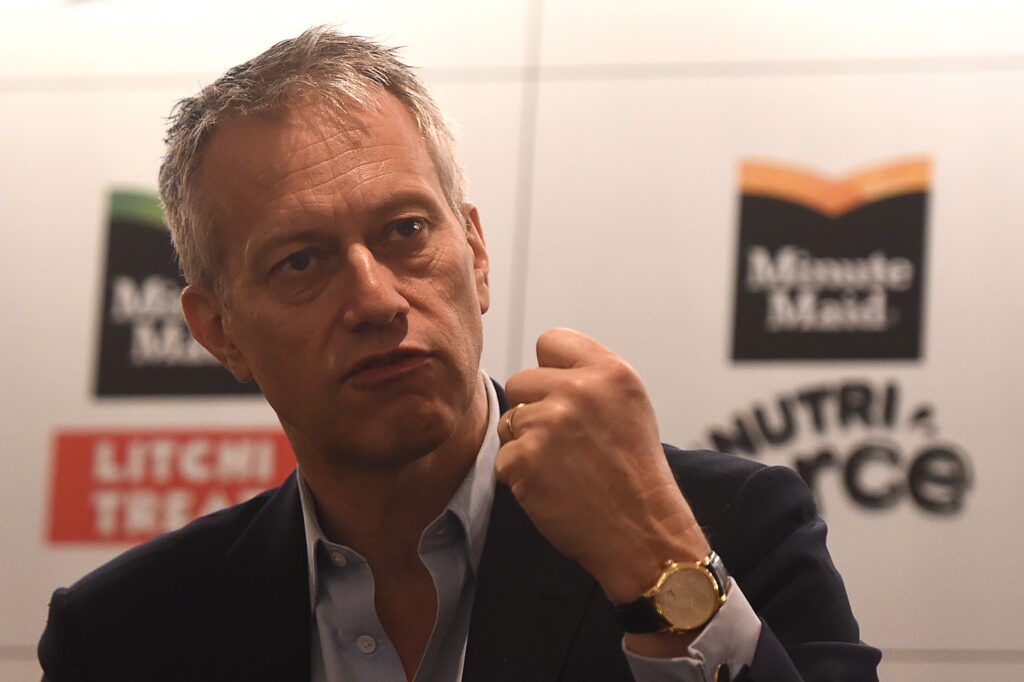
Quincey, who led the company since 2017, oversaw a shift toward premium branding, digital-first campaigns, and data-driven marketing strategies.
Under Quincey, Coca-Cola streamlined its product portfolio and increased investment in experiential and culturally relevant campaigns. The leadership transition comes at a time when global beverage brands are facing changing consumer preferences and increased competition in both traditional and digital channels.
Aerie with Pamela Anderson Launches Anti-AI Campaign
Aerie introduced a new campaign in March 2026, explicitly rejecting the use of AI-generated models in its advertising. The campaign features Pamela Anderson and builds on the brand’s long-standing “no retouching” policy.
The initiative comes amid growing industry debate over synthetic content and consumer trust. Aerie stated it will continue using AI for backend operations such as supply chain and planning, while maintaining human representation in customer-facing campaigns.
The campaign generated strong engagement on social platforms, highlighting increasing consumer sensitivity to authenticity in brand communication.
Apple Expands Ads Business with Maps Advertising Push
Apple announced plans to introduce paid search advertising within its Maps app across the United States and Canada, marking a significant expansion of its advertising business. The ads will appear within search results, allowing businesses to promote physical locations directly on the platform.
The move positions Apple more aggressively against dominant digital advertising players, particularly in local search and commerce-driven discovery.
The company stated that ad targeting will rely on on-device data processing, with no external sharing of personal data. Analysts view this as part of Apple’s broader effort to grow its services revenue amid pressure on traditional income streams.
Sora Discontinued Amid Strategic Realignment at OpenAI
OpenAI discontinued Sora, its experimental text-to-video AI model, in March 2026 as part of a broader strategic realignment.
The company indicated that resources would be redirected toward more scalable and commercially viable AI products integrated into enterprise and consumer ecosystems.
Sora had gained attention for its ability to generate high-quality video content from text prompts, with potential applications in advertising and content production.
However, challenges related to infrastructure costs, content moderation, and commercial deployment limited its rollout.
The decision reflects increasing prioritization of AI tools that deliver measurable business outcomes over experimental creative technologies.
TikTok and Tubi Expand Creator Programs with New Monetization Tools
TikTok and Tubi introduced expanded creator programs in March 2026, signaling increased investment in creator-led ecosystems. Both platforms announced new monetization features, including enhanced revenue-sharing models, branded content opportunities, and performance-based incentives.
TikTok’s updates focus on improving earnings potential for mid-tier creators, while Tubi is developing structured creator partnerships tied to its ad-supported streaming model.
The initiatives aim to attract and retain creators amid growing competition across platforms. These developments highlight the continued shift toward creator-driven advertising models, where platforms position influencers as key distribution channels for branded content and audience engagement.
Google Accelerates AI Integration into Advertising Ecosystem
Google expanded the role of AI within its advertising systems, integrating ads into AI-driven search environments, including conversational interfaces and “AI Mode.”
Advertisements from existing campaigns are now eligible to appear within these AI-generated responses, shifting control from keyword-based targeting to signal-based optimization.
The update reduces manual control for advertisers while increasing reliance on data quality, creative asset diversity, and machine learning signals.
Industry analysts note that this transition is redefining search advertising economics and forcing brands to rethink campaign structure, measurement, and creative production strategies.
Unilever Appoints SAMY to Lead Global Influencer Strategy for Food Division
Unilever confirmed in March 2026 that it has appointed social-first agency SAMY to develop and execute a global influencer marketing strategy for its food business, covering brands such as Hellmann’s and Knorr.

The mandate spans 13 markets, including the United States, United Kingdom, Germany, and France, and is designed to build a unified, scalable creator ecosystem across regions.
SAMY will use its proprietary “Maia” platform, which provides access to over 120 million influencers globally, along with performance and audience data.
The appointment aligns with Unilever’s broader shift toward a “social-first” model, where influencer marketing is treated as a primary channel for brand building and consumer engagement rather than a supplementary tactic.