Cross-Generation Marketing: Why AI Can’t Sell Everything to Everyone
Cross-generation marketing is a ‘must’ in marketing departments. With AI now a major priority, many brands claim, ‘AI can personalize itself to handle everyone’s needs.’ This belief oversimplifies the challenges.
Sundar Pichai put it bluntly this year:
“The future of AI is not about replacing humans; it’s about augmenting human capabilities.” — Sundar Pichai, 2025
AI, including Gen AI, LLMs, and agentic systems, still requires human oversight to work effectively across generations. The disconnect will be even more apparent in 2025.
AI agents don’t magically make your brand appealing to a Gen Z college kid, a Millennial parent juggling Instacart, a cynical Gen Xer, or a Boomer still wondering why AI.
Where does AI truly help, and where might it create problems? Let’s examine the myths and workflow.
What is the reality of AI in consumer marketing
Everyone uses AI, but not everyone should trust it.
Across industries, 71% of organizations now regularly use generative AI in at least one business function, with marketing and sales leading the way (McKinsey, State of AI 2025). The AI arms race is here, and agencies are scrambling to automate before competitors out-automate them.
For brands lagging in AI adoption, this represents a significant competitive threat; failure to adapt quickly could result in losing market share to more tech-savvy competitors.
But consumers are less enthusiastic than colleagues or executives about AI.
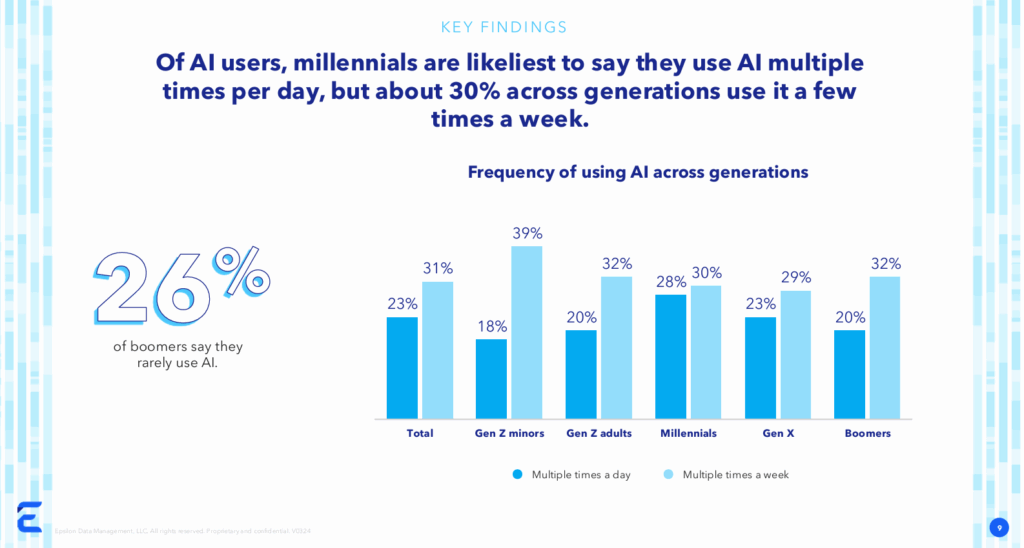
2025 Epsilon’s Cross-Generation marketing data showed that only about 30% across generations use AI a few times a week. Millennials are likely to use AI multiple times per day.
Younger cohorts shrug and scroll; boomers squint at it like it’s a used-car pitch.
Subscribe to our bi-weekly newsletter
Get the latest trends, insights, and strategies delivered straight to your inbox.
The same Epsilon finding revealed that since January 2024, 90 percent of shoppers shopped in physical stores while 88 percent shopped online.
Here’s the main point: There is only a small gap between in-store and online shopping. Despite the rise of AI agents, they have yet to drive significant increases in these numbers.
Why is cross-generation marketing needed
Different generations want different things. Avoid treating them as if they have the same preferences. Consider this across generations: Different decade, different drivers.
Gen Z
They grew up with creators, filters, and chaotic For You Pages. They’re comfortable with AI, but fear privacy and data breaches. Here’s their mantra: ‘Connected yet cautious.’ According to Epsilon, one in four Gen Z minors who don’t use AI say they aren’t sure how AI could benefit them; this is the most common reason selected among minors.
Millennials
Millennials top the chart in AI usage. They show strong adoption of digital shopping behavior but to expect AI to save time, not entertain them. Their guiding principle: ‘Efficiency over entertainment.’ This group rewards AI when it streamlines decisions but punishes it when it tries too hard to be personal.
Gen X
Gen X is the prove-it generation. They don’t hate AI; they just don’t care unless it solves a real problem Their mantra: ‘Utility first.’ They respond better to utility-driven personalization like delivery updates and price alerts than to creative or tone-heavy AI content.
Boomer
Boomers love Gen AI but are less friendly to AI Agents. They still put their trust in customer trust. Their mantra is ‘Trust over tech.’ They need reassurance, authority, and clarity, not machine-made over-friendliness. To connect with this group, consider citing endorsements from trusted institutions like AARP or Consumer Reports. Highlighting such authoritative endorsements can demonstrate AI’s alignment with their values of reliability and trust.
AI resonates best with younger audiences, serves Gen X with caution, and requires major tone adjustments for Boomers. When brands use a single AI-driven message for all age groups, they risk alienating large segments of their audience.
What should AI agents do in 2026
For effective cross-generation marketing with AI, let AI manage scalable, repetitive tasks, involve humans for areas needing judgment, and keep sensitive functions under full human control.
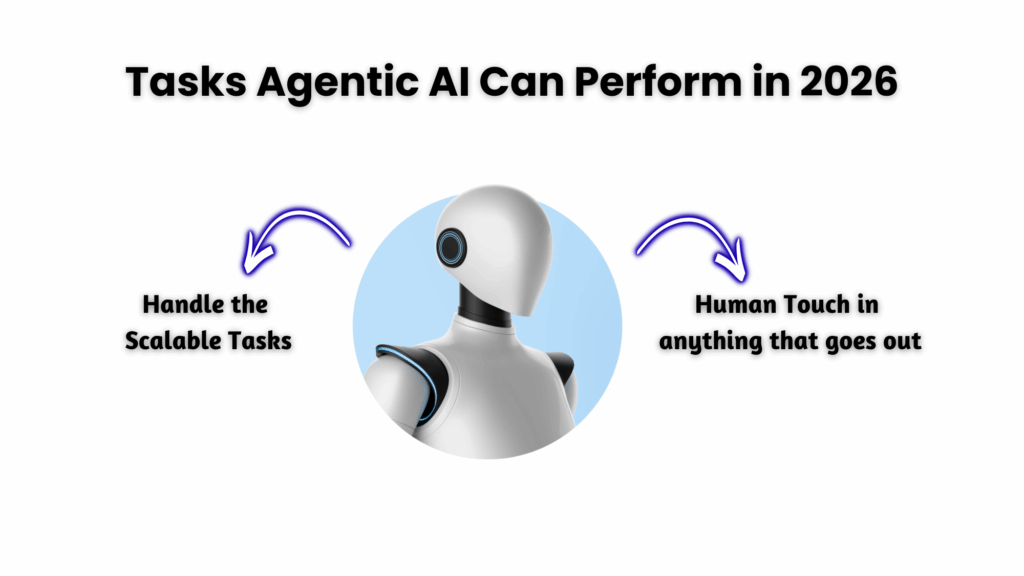
Let AI handle the scalable stuff
Bulk segmentation. Trend patterning. First-draft creative. Automated personalization. Routine tasks. You don’t need humans to work on this.
Human-in-the-loop for anything that touches meaning
Brand voice. Cultural nuances. Age-specific tension points. Sensitive categories like finance, health, and heritage brands.
Your AI can write the skeleton.
Your humans decide whether it should have skin.
Keep certain things 100% human
Crisis of communication. Emotional storytelling.
Cross-generation messaging that hinges on trust, empathy, or history.
Two quick cases of AI in marketing campaigns
The win: Nutella’s “Nutella Unica” AI-Designed Jars
Nutella’s Unica campaign is one of the strongest proof points that AI can enhance creativity without compromising emotional resonance. Ferrero used a custom generative design algorithm to create seven million unique jar labels, each with its own pattern, color composition, and identity code.
The campaign hit the sweet spot between personalization and mass production, appealing across generations. Younger buyers loved the collectability and the no two jars alike novelty, while older consumers found the designs visually premium.
The result? The entire collection sold out in a month and drove massive, earned media. Nutella didn’t use AI to replace storytelling; they used it to scale out a creative idea that still felt human. That’s why this campaign is the gold-standard win in any AI-meets-branding conversation.
The Faceplant: Coca-Cola’s 2025 AI Christmas Ad
Coca-Cola, usually the king of heart-tugging holiday storytelling, stumbled hard with its 2025 AI-generated “Holidays Are Coming” remake.
The brand leaned into advanced generative video, to reimagine the iconic red trucks and nostalgic Christmas visuals. But audiences immediately spotted the glitches. Instead of magic, viewers got machine-infused weird.
The ad felt cold, synthetic, and lacked the emotional warmth that Coke’s holiday tradition is built on. Critics called it a “soulless AI remix,” and the backlash hit fast across social feeds.
Coca-Cola’s GenAI lead, Pratik Thakar, defended the work as a blend of human creativity and AI experimentation, but consumers weren’t buying the explanation—especially older viewers who rely on consistency and brand heritage.
It’s the perfect example of AI overreach: when a brand tries automating sentiment and ends up diluting decades of emotional capital.
**Heritage rule**: Always balance technological innovation with the emotional resonance and consistency that comprise a brand’s legacy to avoid eroding long-standing consumer trust.
Cut to the chase
Cross-generation marketing in 2026 is both simple and complex. While abundant data helps, context is key. Using AI tools wisely is powerful, but brands must remember that AI is only a tool, not a replacement for personality. Agencies that forget this risk of public missteps.