Apple Memes Explained: The Psychology Behind Internet’s Favorite Joke
$999 is one of the most memorable numbers on the internet, not because of its actual value, but because it gives the impression of being inexpensive. This phenomenon, rooted in price psychology, is the intersection of culture and commerce, evolving into a fully-fledged global meme economy.
Apple Inc. is at the center of it all—not just because of the way it sets prices, but also because of the way those prices constantly provoke discussion. Apple’s price strategy now serves as a marketing tool rather than just a simple mechanism.
Whether on purpose or not, gags like “selling your kidney” and “in this economy?” have turned their price tags into cultural cues. Let’s explore now.
The introduction of the $999 meme
By releasing the iPhone X for $999, Apple created a new story alongside the device. The price alone generated headlines, as it sat directly on the psychological boundary between 3-digit and 4-digit prices.
The reaction was immediate. It was reported across major news organizations, social media users flooded Twitter/X with comments about how expensive, luxurious, and ridiculous it was — and memes relating to each of these topics spread through all major feeds within hours.
However, these memes did not just react but were also remixed.
The price psychology of $999
Pricing is a significant factor in how consumers perceive value and how they respond to price-value when using the Internet. The rationale for pricing at $999 is the concept of price charm, or a price ending in 9; there is a wealth of research in Behavioral Economics that explains this behavior.
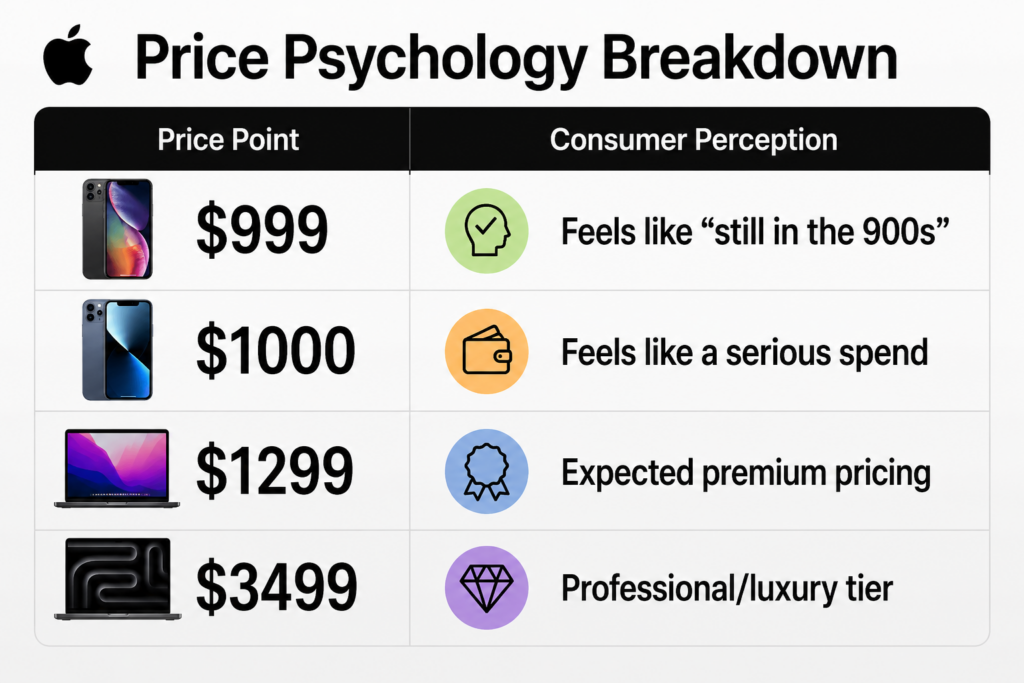
We read numbers from left to right; thus, the left-most digit ($9 in $999) has a greater influence on our decision to purchase ($999 seems much closer to $900 than $1000). This is referred to as a left-digit effect, in which the first number exerts disproportionate influence on the perception of the right-to-left number. This leads to two consequences:
1) $999 looks like no other deal, and
2) $1,000 looks like a decision.
In price psychology, research indicates that prices ending in 9 can influence consumer purchase decisions. There is a growing body of research on e-commerce that continues to show that the use of price charm can positively impact conversion rates in the range of 8-24%, depending on the consumer decision period. This is particularly true when the price level changes by a single digit, from $19.99 to $20.00.
In other words, $999 isn’t just a price—it’s a psychological trigger.
From meme template to pricing strategy
The internet thrives on the combination of relatability and absurdity, which is where pricing quirks are found. Apple meets both goals with its cost.
Online discussion boards often use comedy to illustrate the discrepancy between perceived value and actual cost in response to Apple’s upgrade and accessory prices.
As one popular online sentiment puts it:
“It’s not about worth; it’s about sending a message.”
That “message” is status, aspiration, and sometimes—pure disbelief.
Apple pricing memes as cultural currency
Memes depend heavily on repetition, and Apple sets a standard of consistency. There’s predictability with each product launch that makes for a perfect meme cycle.
- Product announcement
- Price reveal
- Internet reacts
- Memes explode
Within hours of the price being revealed, timelines are often flooded with reactions that show both hate and admiration.
This repeatability makes Apple prices a meme template similar to Drake’s “Hotline Bling” or the “Distracted Boyfriend” meme, easy to recognize and remix.
The role of irony (and aspiration)
Many pricing memes represent Apple in a way that’s not critical—you may see each. Some people view ownership of an Apple product as either:
- A status symbol
- A lifestyle choice
- A sign of refined taste
Even some critics of Apple products see them as markers of the top tier of consumers. When people joke about price, they are also expressing aspiration.
People generally state, “Wow, this price is dumb,” but also “I can understand why it costs that much.”
“In this economy?” The global meme storm
The phrase “In this economy?” is not just a joke; it is also a cultural response. The term originated during the 2008 budgetary crisis and was used to question why someone would spend money, given the state of the economy.
As the years passed, this phrase evolved into a type of meme.
For example, “X”? In this economy?”
A poll conducted in late 2026 by Reuters/Ipsos found that 82% of respondents identified inflation as one of the most important challenges they face, suggesting that consumers have a significant degree of “affordability anxiety” and will continue to feel this way when making purchasing decisions.
As a result, we can clearly see how Apple product pricing fits perfectly into this meme template, and the tension between aspiration and affordability will only intensify as consumers continue to grapple with the ramifications of the economy.
Marketing at no cost through humorous marketing techniques
The other side of the coin is that memes do NOT damage Apple— they help Apple. Viral Pricing Memes Generate:
- Increased Visibility Globally
- Strengthening Apple’s Premium Positioning
- Cultural Significance
Criticism can also raise awareness, and there are things out there that can spark people’s outrage over pricing, resulting in FREE Word of Mouth Marketing on many Websites.
Apple doesn’t have to respond—the internet will do the responding for them.
The psychological phenomenon of price anchoring
How Apple prices its products
Not only does Apple use charm pricing to market its products, but they also utilize price anchoring. By creating ultra-premium products, Apple creates a psychological reference point. As a result, other expensive items will now seem to be relatively cheap:
- $999 now seems like a regular price
- $1299 now seems like a price people would expect to pay
- $3499 now seems like a price for a “professional.”
Over time, things that once seemed bizarre will eventually become the norm—and then serve as fodder for the next joke.
The meme economy cycle
In the simplest form of the cycle:
Apple establishes a price → the internet responds → the meme goes viral → viewing & awareness of Apple builds → Apple supports their position as a premium brand → go back to first step.
Pricing becomes content, and in the information age, content is currency.
Cut to the chase
A price of $999 isn’t merely a figure; it serves as an emotional anchor, helping people perceive something as a luxury item without feeling excluded. That tension fuels memes, turning pricing into viral content and cultural conversation. In the end, Apple isn’t just selling products—it’s turning price into publicity.
FAQ’s
Because every Apple launch triggers predictable reactions—price shock, humor, and instant meme creation.
It feels cheaper than $1000 due to price psychology, making it both effective and meme-worthy.
No—if anything, they boost visibility and reinforce its premium image.