Burger King New Ad Has Written ‘Misleading’ All Over it
Burger King’s new ad, ‘It’s Only Natural,’ has raised a plethora of concerns and doubts about it. The ad feels raw, unfiltered, and strangely persuasive, featuring babies, real reactions, and refreshingly non-model-esque faces. It’s got that “authentic chaos” vibe that marketers love to romanticize.
But authenticity comes with fine print. The campaign, now running in Brazil and plastered all over Burger King’s social channels, has critics asking a simple question: Is it ethically clean or cleverly misleading? Because when you look closely, this “natural” narrative might not be as wholesome as it claims.
So, we’re doing what marketers love to avoid—reading between the greasy lines of this cute little burger ad to unpack how persuasion really works here.
Burger King new ad in a nutshell
Burger King’s new “It’s Only Natural” campaign is a baby show with a twist. The ad captures toddlers reacting, giggling, drooling, and reaching out as their parents munch on Whoppers. No actors, no heavy filters, just genuine faces, and raw reactions. The idea? To show that craving a BK burger is, well, “only natural,” even for babies.
Made by INGO The Agency, the spot leans on emotion and authenticity—real kids, real moments, zero “commercial perfection.” It’s part of Burger King’s ongoing attempt to market its food as free from artificial flavors, colors, and preservatives.
But that’s where it starts to get tricky—because calling a fast-food Whopper “natural” is like calling soda a vitamin drink. Cute or controversial? That’s the honest debate sizzling here.
Persuasion or misleading the audience
That’s one fire-grilled question. As we have dived deep into the mechanics of persuasion marketing many times in the row, it is time to recognize the misleading labels and ‘disclaimers.’
On the surface, Burger King’s “It’s Only Natural” feels harmless, wholesome. Babies reacting to burgers? That’s as human as it gets. But zoom in, and you’ll spot the persuasion sizzling underneath.
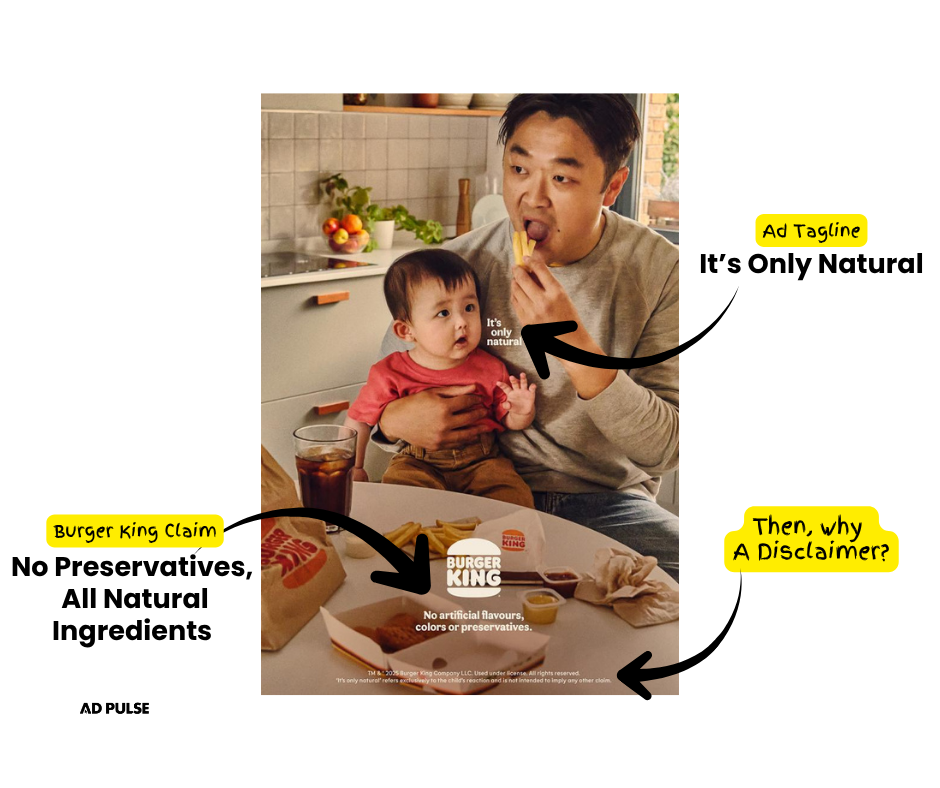
The word “natural” isn’t just an adjective here; it’s a psychological shortcut. It plants the idea that BK’s menu is somehow cleaner, purer, and healthier—even if the nutritional facts would disagree.
Now, Burger King has added a neat little disclaimer saying that “It’s Only Natural” refers exclusively to the babies’ reactions, not the food itself. Except, in the fine print, the ad flashes the familiar promise: “No preservatives, no artificial colors, no artificial flavors” in bold fonts.
Subscribe to our bi-weekly newsletter
Get the latest trends, insights, and strategies delivered straight to your inbox.

So, while the official line claims innocence, the subtext keeps flirting with the idea that their burgers are as “natural” as those adorable baby reactions.
That’s the subtle brilliance (and danger) of the ad. It doesn’t lie outright; it simply frames desire as instinct. You see a baby reaching for a burger, and your brain quietly nods— “yeah, it’s only natural.” The audience isn’t being told; they’re being nudged. It’s marketing hypnosis wrapped in innocence.
So, is it misleading? Maybe not by regulation, but by perception—absolutely. The campaign cleverly blurs the line between authenticity and appetite.
Is it only natural in the age of Cowmaxxing and Junk food ad ban
Burger King’s “It’s Only Natural” might be charming its way through Brazil, but going global will be stepping into a global minefield.
The UK’s junk food ad ban is kicking in soon, meaning from 5:30 a.m. to 9 p.m., no cheesy, salty, or sugary ads will appear on TV, and paid online promotions are off the menu too. Translation: no more burger seduction while you binge-watch your comfort show.
This means fast-food giants like Burger King can forget about serving digital temptations during primetime scrolls or binge-watch sessions.
Across the pond, the U.S. is marinating in its own cultural shift—the rise of Cowmaxxing. This diet-obsessed, protein-loaded movement glorifies “pure” food and slams fast-food culture as the enemy of health and masculinity. That crowd is allergic to anything remotely “processed,” and they’re loud about it.
The movement’s followers, often young and fiercely online, reject marketing fluff and call out every “natural” claim. Burger King’s “It’s Only Natural” ad risks becoming their next meme.
Together, these two shifts, regulation in the UK and rebellion in the U.S., expose one truth: consumers are no longer eating what ads are feeding them.
The world is slowly shifting towards proof, while persuasion plays a significant role. Buzzwords like “natural,” “real,” or “authentic” won’t work when audiences demand transparency backed by science, not storytelling. For brands, this is a wake-up call to rethink their tone, claims, and creative direction.
Cut to the chase
Burger King’s “It’s Only Natural” wanted to be heartfelt, but accidentally, they fell into chaos. This campaign might still sell a few Whoppers, for sure. But it’s also proof that marketing language now lives under a microscope. Claims and disclaimers cannot go together.