From Nice-to-Have to Must-Have: The Rise of Empathy Marketing in 2026
For years, “compassion” in marketing lived in the same drawer as words like authenticity, purpose, and community. Nice to say, easy to fake! Majorly acting like a soft filter brand pulled out during crises or calendar moments, then quietly put back.
However, today brands started to realize “compassion marketing” as part of their daily corporate culture and practices. To stay relevant and connected, brands treat their customers with respect and compassion, not only their target marketplace. But they will be successful in developing relationships with customers based on trust and loyalty.
While many competitors will continue to struggle with developing a strong sense of relevance in a marketplace that has become emotionally drained. Last year, Ad Pulse stated, “Consumers are no longer impressed by brands that perform compassion.” They expect brands to practice it consistently, even when it’s inconvenient.
This quote did not simply go out of date but set the standard for future marketing strategies. So, grab your matcha, and let’s explore why empathy-driven marketing isn’t just surviving, but winning big in 2026.
What happens when creativity meets emotional intelligence
Empathy-driven marketing isn’t about being sentimental. It’s about being emotionally intelligent at scale. Brands used to focus on what they were going to say to customers. Now, the brands that win are the ones that understand what their customers are going through. To understand your customers, you need to understand…
- Stress, Burnout and Digital Overload
- Economic Uncertainty and Value-Conscious Decisions
- Cultural Sensitivity and Emotional Context
In 2026, the empathy of a brand will look less like an emotional story with heart and more like intentionality in design, timing, and restraint. Sometimes, the most caring thing a brand can do is to keep its mouth shut.
What empathy-driven marketing looks like in 2026
These days, empathy isn’t loud or dramatic. It’s frequently subtle and deliberate.
#1. Creating real-world designs rather than perfect funnels
Empathetic brands understand that human lives don’t follow a straight line. Thus, they:
- Instead of increasing urgency, lessen friction
- Instead of pressuring conversions, provide flexible options.
- Create experiences that change depending on the time, place, and emotion.
This could be fewer alerts, more lucid messaging, or allowing consumers to choose how they interact with the company. These are decisions about empathy, not just user experience.
#2. Matching your tone to the moment
By 2026, there may be no quicker way to lose your credibility than through tone-deaf marketing. Brands that are empathetic know when:
Subscribe to our bi-weekly newsletter
Get the latest trends, insights, and strategies delivered straight to your inbox.
- You can use humor—and when humor’s not appropriate at all
- Sometimes, it’s better to be silent—rather than provide commentary
If you want to build greater trust with your audience, use a more grounded, softer voice rather than hype
As highlighted in Ad Pulse’s article, compassion does not mean being ‘nice.’ Compassion means understanding the world around you and paying attention to what’s going on in this world—beyond your brand’s “bubble.”
How empathy-driven marketing will appear in 2026
Empathetic marketing is not “soft, it actually has measurable performance benefits. Brands that have demonstrated empathy towards consumers have seen:
- Increased engagement levels (not just more customers)
- Increased levels of memory recall of their brand by customers.
- Increased customer lifetime value.
- Increased organic advocating and word-of-mouth referrals from customers.
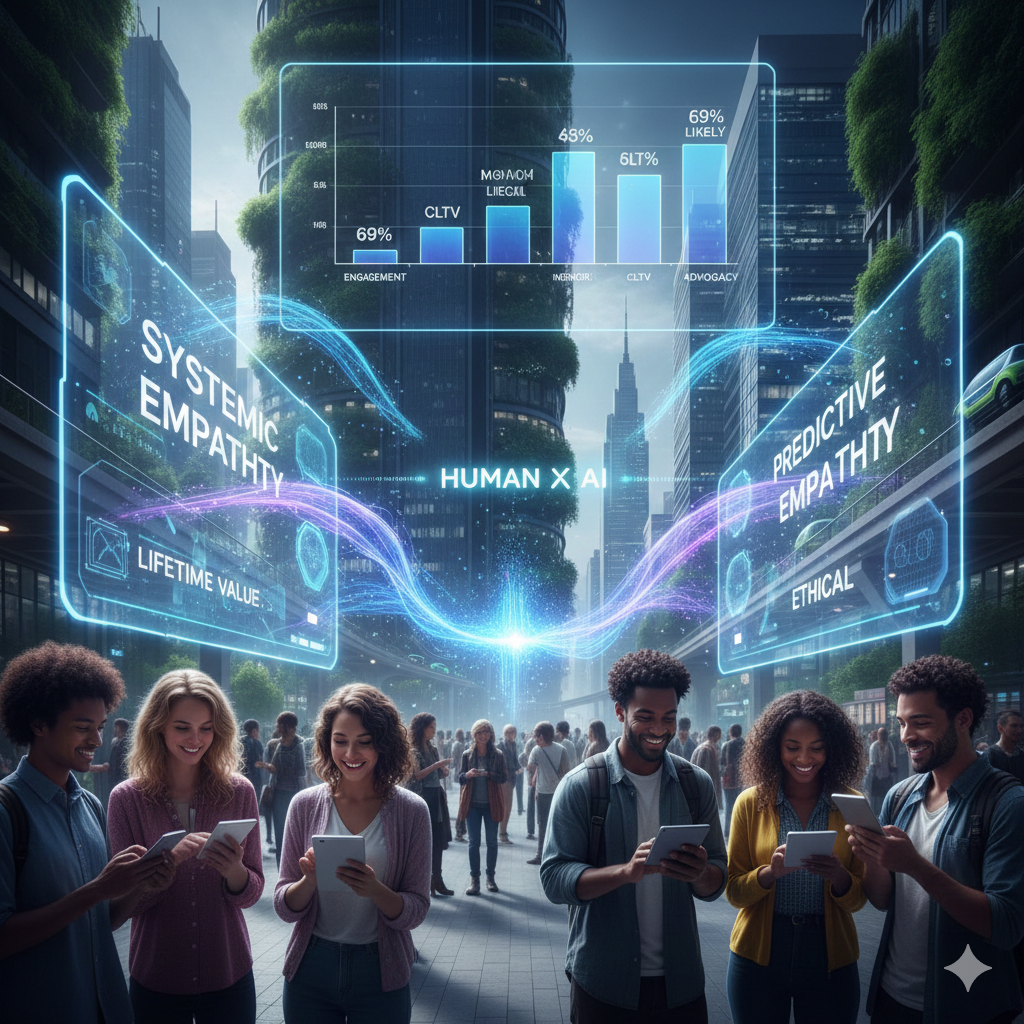
Why is this? Because being empathetic with consumers decreases their resistance to your brand. When it comes to marketing messages people receive daily, it is easier for people to remember and share a kinder message compared to all other messages.
Why AI needs empathy to actually work
In 2026, Artificial Intelligence (AI) will become part of many processes that comprise the marketing industry (e.g., creating content, targeting customers, and optimizing campaigns).
The paradox associated with this advancement in technology is that while marketing is becoming more automated through AI, it also means that human judgment will be required even more than in the past.
AI may be capable of scaling your organizations’ execution capabilities but will fall short when it comes to creating or maintaining a sense of empathy.
The top brands that are learning to leverage AI will:
- Arbitrarily Handle Repetition and Speed
- Open Up Time for Teams to Concentrate on Strategy, Ethics and Context
- Enable Teams to Make Decisions (but not replace Emotional Intelligence).
Empathy is not merely an added touch that adds to the creativity of a campaign; rather, it is the human component that stops automated marketing from being impersonal.
An empathetic approach means using empathy to know what NOT to do
Also remember that not making an empathy-based decision can be just as powerful as making one. These invisible empathy-based decisions include:
- Not turning every social issue into branded content.
- Not using emotional moments to get clicks.
- Not forcing an issue or story to fit into the brand’s marketing strategy.
While these decisions do not yield obvious metrics in the short term, they help to build trust—an element of marketing that will be increasingly rare in 2026.
Empathy is not a campaign; It’s a pattern
The time of the one-time “empathy” campaign is over. It is not enough for brands to have just one campaign that highlights their empathy or compassion.
Today, a brand’s audience is evaluating the brand’s overall presence and how it communicates, treats customers, and handles tough times. A brand’s audience will evaluate how consistently the brand values have been expressed over time.
Empathy is a cumulative attribute of a brand’s audience; it is formed through repeated actions that support the values of the brand, rather than large-scale marketing campaigns. Empathy has become a part of the way brands have acted in the past and therefore should be expressed through action rather than message.
Brands that proved empathy isn’t just a talk (2025-2026)
These brands didn’t win by being louder or trendier. They won by showing up with empathy where it mattered most: quietly, consistently, and without waiting for applause.
e.l.f. Beauty—metaphorically and literally: e.l.f. has been able to show their commitment to social responsibility through a wide variety of funding, alliances, and longevity of their social causes by illustrating that compassion can be scaled if it is designed to be performed on a daily basis rather than just used as an advertising slogan.

Dove—emotional branding by supporting a cause over a campaign: The Real Beauty initiatives by Dove have been a consistent effort to show compassion towards others while not becoming distracted by short-term trends. The consistency of the Real Beauty campaign demonstrates that compassion can be established through a sustained effort rather than through short-changed efforts.

Patagonia—empathy for the environment: By providing an empathetic approach to our fellow human beings. Patagonia has demonstrated that an empathetic approach to manufacturing products by requesting that consumers purchase fewer products through repairs, reuse, and mindful consumption allows consumers to trust that Patagonia is showing compassion by valuing the consumer over the manufacturer.
Cut to the chase
When brands began to live in empathy instead of just exhibiting it, it became a competitive advantage. The following instances demonstrate how compassion, when used with purpose, creates a genuine impact that extends beyond campaigns. If your brand took this approach, how would this appear?