The AI Creative Agency Era: How Machine + Human Teams Are Redefining Creative Work
For years, AI quietly upgraded the operational side of work—optimizing workflows, crunching numbers, and automating the boring stuff. Creativity, though? That was considered untouchable. A pure human trait. The machines were helpers, not creators. And the line between humans and technology felt permanent.
That line doesn’t exist anymore.
But over the last few years, the perception of this line has drastically changed. The creative sector of today and the future contains a mixture of human employees and machines that will work together as a team to generate and deliver creative content faster, smarter, and more effectively than ever before.
AI is not going to replace the human element of creativity; instead, it will redefine how creative professionals approach their jobs. Grab your coffee—this one’s about to mess with how you think about creativity.
Mad men to model-driven creative shift taking place
Creative agencies are built on scarcity (time, talent, and iterations). At the time, each idea was very valuable due to the cost of generating it.
AI is reversing this trend and redefining how creative agencies operate.
Creative agencies now operate with an abundance of creativity, as creativity is no longer a limited resource due to the widespread use of AI tools. How creative agencies are valued is based on the number of quality and relevant creative campaigns they create consistently across various platforms, audiences, and moments.
In the future, creative agencies will not be slower and more ‘artisanal’; instead, they will become faster, more modular, and more adaptive.
AI is what is driving this change.
The real deal behind the AI-creative agency
Let’s be clear about one thing—an AI-Creative Agency does NOT consist of a computer with many different kinds of prompts.
Subscribe to our bi-weekly newsletter
Get the latest trends, insights, and strategies delivered straight to your inbox.
The Creative Agency model consists of both machines/AI performing rapid ideation/variations of ideas/images/branded assets and moods going out at once, cross-site, and many times AT ONCE, testing out, as well as providing a speedy test after completion.
Then, on the other hand, we’re talking about humans working through the brand voice (Nuance) of each brand. Strategic vision, emotional intelligence, and creative and ethical direction—these individuals provide the ideation of a brand and every aspect of creating an emotional connection with the consumer, fostering a lifetime relationship that benefits both parties (self-interest).
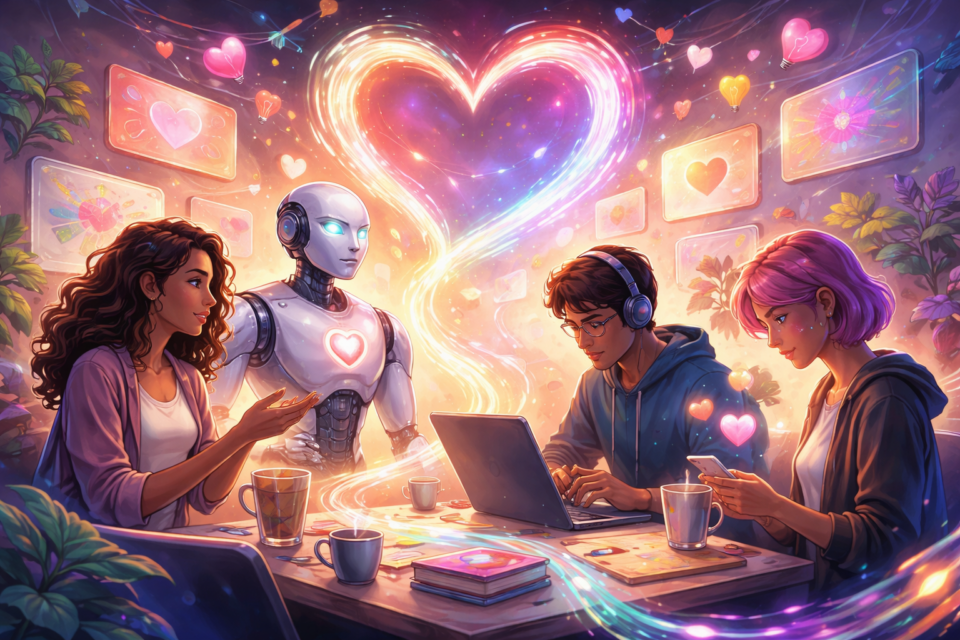
Combining the two makes it so that we do not dilute creativity; we amplify it.
Why Artificial Intelligence (AI) is becoming essential for Ad agencies
For creative advertising agencies, times are tough, to say the least. Clients are constantly asking for:
- More content
- More distribution channels
- Greater personalization of advertisements
- Faster completion of requests
- Lower prices
Ad agencies just cannot keep up with these increasing requirements using merely human effort. Hence, for ad agencies, implementing AI is no longer an option or luxury but is essential for their survival.
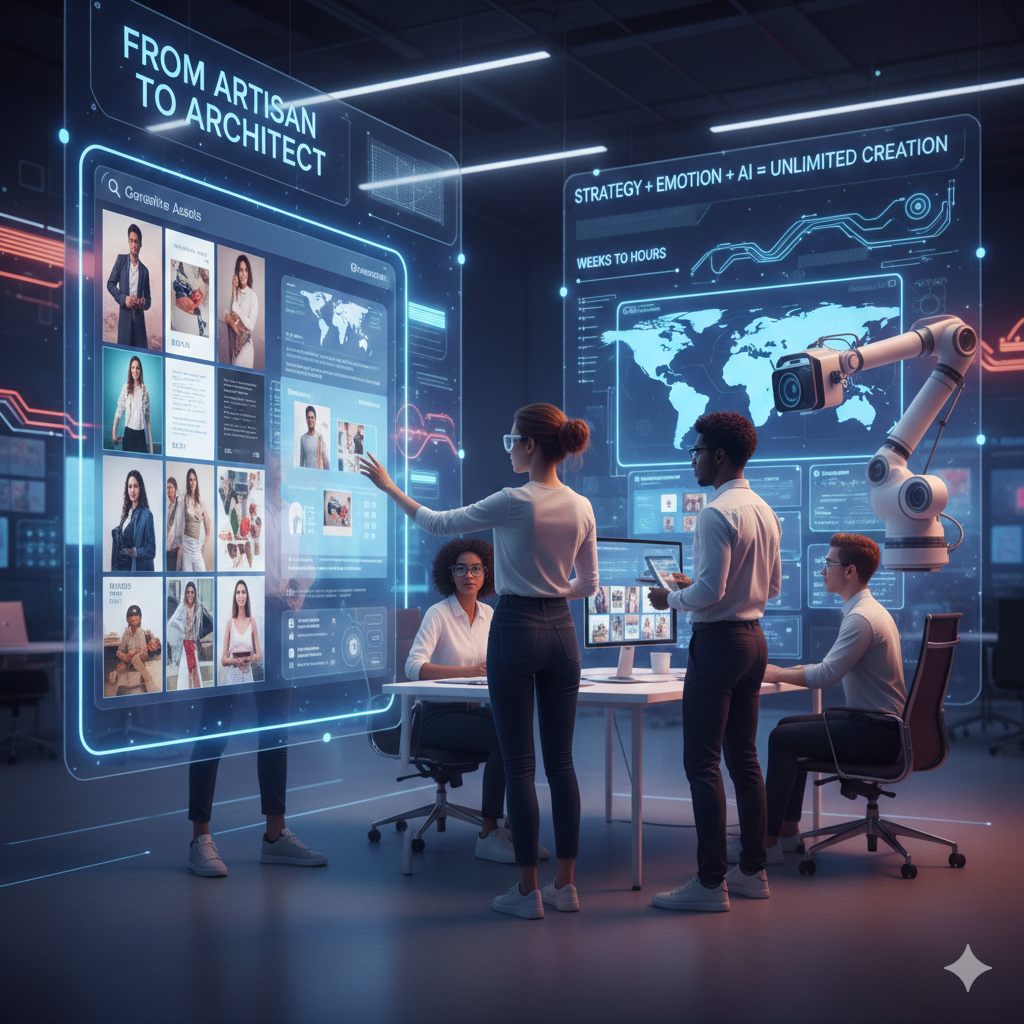
Using AI will provide ad agencies with:
- Increased productivity (10 times more original creative ideas); reducing employee burnout
- The ability to evaluate and test their direct marketing by measuring the success before production expenses are incurred
- Using AI will allow agencies to be more targeted in the production of their advertisements.
By leveraging the power of AI to remove the heavy lifting (eg, time taken), creative ad agencies will be able to offer better service to their clients and protect their most valuable asset, their creative human talent, from burnout and overwhelm.
Increased capacity of creativity due to AI (without losing creativity)
AI’s most concerning fear is that AI will make creative content repetitive, generic, and boring. While this is a valid concern, it does not fully capture the problem with AI. The problem does not lie with AI; rather, it lies in the way that we use it. When agencies use AI as a tool to solely “produce content,” their creativity is hindered.
On the other hand, when agencies leverage AI to scale their direction, rather than their decisions, creativity flourishes.
Innovative agencies leverage the capabilities of AI to:
- Produce Options rather than a specific answer
- Increase the rate at which new ideas can be generated, rather than replacing one’s thought process
- Increase the number of projects that can be worked on at the same time; however, vision remains in the hands of the agency’s leadership.
In this framework, AI serves as an intern who never sleeps, allowing creative professionals to focus their attention on developing large-scale projects.
The evolution of teams that create together
Today’s most effective team dynamics for creating do not consist of only human or AI participants. They are hybrid teams that combine both human and machine resources through effective collaboration.
For example, a copywriter may utilize AI technology to:
- Investigate different tonal options
- Edit and revise information utilizing human instinct
- Generate culturally relevant content
Conversely, a designer may use AI technology to:
- Identify visual ideas and reference points
- Select, edit, and refine visual designs based on aesthetic preferences
- Create designs that have a sense of intention rather than being produced automatically.
It would be a mistake to assume that this is an example of a lack of creativity. Rather, it represents an example of leveraging human creativity by utilizing the capabilities of AI technology.
The creative agencies movement: The key to growing your business
By analyzing the current trends within creative agencies, it’s clear that they no longer operate by producing results through execution; instead, they provide thought and structure. While clients once only purchased a campaign, they now seek an ongoing creative relationship, including the ability to:
- Create ongoing creative output
- Build and test quickly
- Established measurable results
- Change and adapt, if required
With the help of AI, agencies are now transitioning to a systemized approach to creating creativity at scale, and therefore are no longer relying on a handful of creative individuals to sustain operations. For agencies that resist the use of AI, their creativity will continue to decline over time, ultimately leading to their eventual obsolescence.
What does creative works means in the AI era
As artificial intelligence (AI) continues to automate much of the workforce, human creativity will become increasingly valuable rather than less so.
The reason this is true is that while AI can generate content, it cannot:
- Determine which ideas are important or relevant
- Interpret or assess the ambient cultural environment
- Measure the level of trust and/or reliability members of the public have in each brand
- Assume responsibility for the effect of those ideas once executed.
As such, the focus of our work as “creative agencies” has transitioned; no longer focused on producing assets, our focus is now increasingly on how we ask questions and make decisions, and how we direct machines to create according to our intent as humans.
Therefore, creativity has moved from being primarily defined by execution to being defined by orchestration of creative elements.
The future is full of builders, not just creators
In the future, creative agencies will need teams that can:
- Construct the creative ecosystem.
- Merge human taste with machine scaling.
- Produce concepts that will adapt, grow, and perform over time.
Agencies looking at AI as a threat will eventually die a slow death. Agencies viewing AI as a business partner will win.
Ultimately, AI is not what’s going to give agencies their competitive advantage in the future.
Cut to the chase
The AI-powered creative agency era has arrived—or at the very least, it will be. No longer should one be forced to choose between humans and machines; rather, teams should be hybrid teams created from employees who can think faster, build smarter, and scale efficiently without losing human essence. If your agency continues to perceive AI as merely “tools,” rather than as team members, it’s time to reassess your creative process.