
Top 5 Neuromarketing Campaigns that Say, “Stimulation is Paramount”
An ad that makes your mouth water, an audio beat that creates brand imagery, a PSA that tugs at your heartstrings and prompts you to take action—yes, we are discussing neuromarketing campaigns here.
They say, “the heart has its reasons which reason knows nothing of,” and we couldn’t agree more. In today’s world, stimulation matters more, attention span has more value than quality, and one small mistake can bury the brand image 6 feet under the concrete.
Neuromarketing is less about selling and more about stimulating neurons or consumers’ neurons at a molecular level. So, ready to explore the brands and their campaigns that play and persuade human brains to look, fancy, and buy.
Coca-Cola: Hue of happiness and the sound of craving
Coca-Cola is selling more than soda and fizz; it sells psychological consistency. That iconic red wasn’t picked at random. It is the color tied to arousal and appetite stimulation. Neurologically, red activates the hypothalamus, signaling excitement and warmth—two triggers that drive emotional recall.
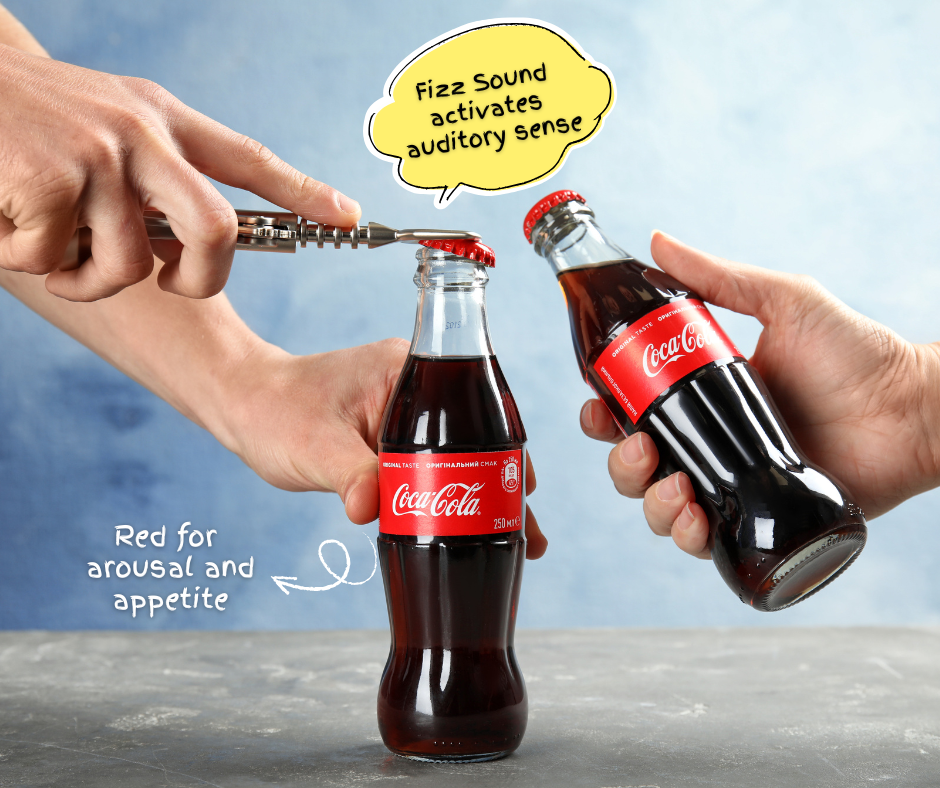
Pair that with the familiar “pssst” of the can opening, the fizz bubbling up, and the dripping condensation—the brand’s audio and visual language is basically Pavlovian conditioning.
The moment you hear the hiss of carbonation, your brain anticipates sweetness and dopamine. Coca-Cola’s neuromarketing genius lies in creating a full-sensory loop: sight, sound, and even imagined taste converge to make you feel refreshed before the drink even hits your tongue. The product is irrelevant; the stimulus is everything.
Netflix – The ‘Tudum’ that trains the brain
Netflix’s now-iconic “Tudum” isn’t a random noise. It’s a sound-engineered trigger. Created after months of neuro-audio testing, the two-beat tone is designed to create anticipation and instant recognition.
The brain’s superior temporal gyrus (the part that processes auditory cues and associations) locks that sound with pleasure memory—meaning, every time you hear it, your brain preloads the emotional reward of entertainment. It’s the modern version of a Pavlov bell for binge-watchers.
Short, deep, and percussive, it evokes both authority and intimacy. You might not realize it, but Netflix’s audio logo has quietly trained your brain to feel a hit of satisfaction—before a single show begins. That’s not branding; that’s neuro-conditioning through sound.
Hyundai – The heartbeat test drive
Hyundai turned a basic test drive into a biofeedback experiment. Using EEG headsets and biometric sensors, they tracked how drivers’ heart rates, excitement levels, and engagement fluctuated while handling the car.
Subscribe to our bi-weekly newsletter
Get the latest trends, insights, and strategies delivered straight to your inbox.
The results? People’s emotional peaks coincided with specific sensory moments, such as engine revs, speed changes, and tactile vibrations through the wheel. Hyundai then tuned those sensory touchpoints into design features, amplifying the emotional connection drivers feel with the car.
This wasn’t a marketing experiment. It was the science of embodied cognition in motion. The car wasn’t being sold to the rational brain (“great mileage”); it was being wired into the emotional brain, where memory and desire live. When your heart races with the car, it’s not a coincidence—it’s engineered chemistry.
Amazon – The subtle psychology of purchase triggers
Amazon’s interface might look minimal, but it’s a masterclass in subconscious persuasion. Every detail—from the “Only 3 left in stock” alert to “People also bought” recommendations—is a calculated neuromarketing cue.

The platform leverages scarcity bias and social proof, exploiting the fear of missing out (FOMO) to prompt rapid decision-making in the brain’s amygdala. Personalized recommendations act like digital dopamine snacks, using behavioral data to predict what you might crave next.
The one-click purchase option eliminates cognitive friction, making buying an effortless reflex. Add to that seamless UX, trustworthy color palettes (blue and white = safety and logic), and constant feedback loops (“Your order has shipped!”). And you’ve got a platform that doesn’t just serve customers—it trains their reward systems for repetition.
Dove – Mirror of self-perception
Dove’s “Real Beauty” campaign rewired beauty marketing forever—not through neurological empathy.
The brand employed deep emotional storytelling that engaged the brain’s insula and mirror neurons, the regions associated with self-recognition and emotional resonance. By showcasing real women, their real flaws, and genuine emotions, Dove created cognitive dissonance in viewers accustomed to perfection. That discomfort turned into reflection, and reflection into connection.
People didn’t just watch the ad; their brains felt it. The gentle tone, authentic visuals, and slow narrative pacing lowered cognitive resistance, opening the door to vulnerability and trust. Dove didn’t pitch soap—it sold self-acceptance. And the brain, wired to seek belonging, bought in completely.
Are Neuromarketing campaigns plain manipulation or genius science?
Some might call these tactics manipulative. Others would call them neuroscience in action. The truth lies somewhere in that gray area where psychology meets persuasion.
Brands today aren’t just chasing eyeballs; they’re studying neural stressors—the triggers that dictate attention, emotion, and decision-making. Activating those brain nodules isn’t child’s play; it is about targeting the cognitive level.
Neuromarketing doesn’t always aim for direct sales. Sometimes, it’s about creating instant mental recall—the way a single swoosh or a familiar “tudum” sound can flip on brand awareness like a light switch. That’s the kind of psychological architecture we’re dissecting here.
In today’s attention, stimulation has become a survival. Without prodding consumers’ neural circuits, brands risk becoming wallpaper in a world where every pixel screams for focus. The question isn’t whether neuromarketing is ethical—it’s whether any brand can afford not to use it.
Cut to the chase
Neuromarketing campaigns are not usually labelled as such. Hence, we thought to tell you before it’s late. Marketers must peel the curtain on the psychological puppeteers behind some of the smartest ad campaigns ever.