How Smart Brands Scale Without the Noise
As we settle into 2026, brand leaders are confronting one of the most nuanced strategic decisions in recent memory: growth or survival? The global economic climate is volatile; competition is increasing; and consumers are more knowledgeable about what they want (not just products, but also purpose and credibility).
The real question is not only about planning for growth but also about how to achieve substantial growth without threatening survival.
In 2026, brand strategy will be less concerned with having large budgets and more about making intelligent decisions. Companies that understand when and how to choose between growth versus survival are creating a new paradigm for brand leadership.
From surviving to thriving: The strategic continuum
By 2026, the line between survival and growth has blurred. Survival is no longer just about cutting costs—it’s about building resilience and relevance—while growth now means scaling in ways that compound long-term brand equity.
Recent industry studies show that over 70% of marketing leaders now prioritize brand building over short-term performance and even new tech investments like generative AI, because brands with strong emotional connections consistently outperform those chasing immediate ROI—especially as competition intensifies and customer acquisition costs keep rising.
Brand strategy trends shaping the 2026 agenda
Through their strategic priorities and responses to the current economic environment, leaders have identified several key trends that illustrate how they are attempting to balance growth vs. survival this year:
1. Hyper-personalization as a growth engine
According to the current trend of moving away from the one-size-fits-all branding model, brands can leverage AI and real-time data to provide hyper-personalized experiences with all types of interactions (product selection, messaging, follow-up after purchase, etc.) As personalization becomes part of the brand experience, it enhances customer satisfaction and increases customer lifetime value.
Successful brands will have a greater ability to build loyalty and retain customers through hyper-personalized experiences than those that do not. By providing customized experiences, the lines between growth and survival are blurring.
2. Purpose and sustainability earn brand trust
Today’s consumers, especially Millennials and Gen Z, are looking for more than just items and services – they also want companies that align with their values. Ethically produced products and sustainability have moved from being mere marketing claims to core strategic expectations for brands. Brands that create purpose within their operations and share it through stories are more likely to build long-term trust.
Purpose-driven strategies serve as both a buffer against reputation shocks and a magnet for growth, attracting advocates willing to pay higher prices.
3. Phygital and community-led brand experiences
The next decade will see the merging of digital convenience with the experience of being physically present in a brick-and-mortar store. The phygital experience is created by engaging customers through augmented reality (AR), virtual reality (VR), interactive in-store experiences, and hybrid activations, enabling a brand to form deeper emotional connections with its customers and build brand relevance across all contexts.
The community-first branding approach also provides brands with opportunities to leverage their users as co-creators and advocates, enabling passive audience members to become active participants in a brand’s ecosystem, driving retention and referrals without relying solely on paid media.
4. Retention and customer relationships
Retaining customers is just as important to business growth as acquiring new customers. A priority trend through 2026 will be lifecycle marketing and retention marketing practices, such as developing and implementing personalized SMS/text and email marketing flows, building VIP/loyalty communities, creating recurring revenue (subscription) models, and implementing customer ambassador programs that turn customers into promoters.
These marketing strategies reduce dependence on endless acquisition spending by improving the chances of long-term survival and fostering sustainable growth.
5. Content authority over noise caused by clicks
Authority-led content—long-form, instructional, narrative-driven materials that establish businesses as subject-matter experts—is replacing short-form advertisements and opportunistic campaigns. This subtly, yet effectively, moves brands toward long-term growth through trust by positioning them as trusted resources rather than faceless suppliers.
Marketing growth strategies winning in 2026
While macro strategy sets the tone, executional tactics are where growth and survival meet in practice. Here are some standout approaches leaders are using:
Strategic AI Use + creative: Automation AI is helping brands scale content without creating chaos. Using AI to reduce friction, access insights, and make quicker, more intelligent creative decisions is what will win, not more AI.
Messenger-driven and retail commerce: The journey from discovery to acquisition is being disrupted by retail media networks and DM-led shopping, such as WhatsApp catalogs. Compared to traditional paid media, these channels are less competitive, seem more intimate, and convert more quickly.
Influencers as catalysts of programmatic growth: Influencer marketing is evolving from one-time wagers to planned, quantifiable initiatives. In situations where traditional advertisements fail short, creators can increase deeper engagement—not just reach—when viewed as a performance channel.
Examples of successful implementation of smart innovation strategies
Real-life examples of these three brands illustrate the successful implementation of their strategies.
Uniformity in Branding: Heinz
Kraft Heinz created a uniform brand system to eliminate inconsistent and fragmented creative work; using a unified brand and marketing platform increased Kraft’s efficiency and allowed them to increase the size of their master brand by using emotional clarity and consistency to provide a unified voice – not through volume.
Value-driven Expansion: Patagonia
Patagonia has significantly grown its revenue and increased its number of customers by focusing on its mission. This means telling customers not to buy certain products, something most companies would never consider doing, because Patagonia’s message perfectly matched the core values of its audience.
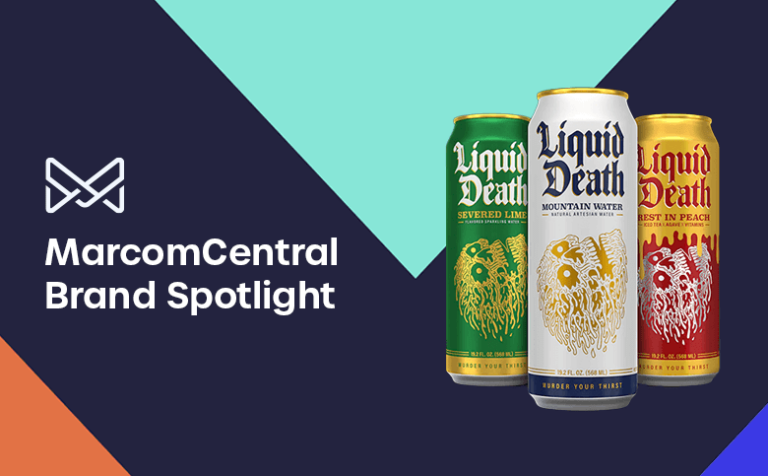
Distinctive Brand Personality: Liquid Death
Liquid Death, a company that sells water, is building a brand identity through an unconventional tone and emotional resonance. Thus, they have grown significantly without relying on new or emerging technologies.
2026 brand strategy decision-making
One fundamental strategic change—decision-making based on adaptability and real-time learning—is at the root of all these developments. Rigidity is a liability in a society where upheaval is commonplace. Leaders are implementing structures that enable:
- Small tests that scale only if successful are known as incremental experimentation.
- Lift and actual impact are given precedence above vanity reach in incrementality measurement.
- Breaking down walls between product, marketing, and customer insights through cross-disciplinary collaboration.
A deeper understanding is reflected in this flexible mindset: growth tomorrow is made possible by surviving now. Leaders are combining growth and survival into unified plans rather of viewing them as mutually exclusive.
Cut to the chase
In 2026, successful companies employ artificial intelligence to create a better working environment by accelerating commercial sales processes and leveraging an influencer model that drives measurable revenue growth rather than just increasing product popularity (hype). If your organization’s growth strategies for 2026 are similar to those of 2024, consider evaluating ways to increase your scale.
FAQ’s you must know
Personalization, retention, community-led growth, and authority-driven content.
It’s shifting from short-term performance to long-term trust and brand equity.
Because rising acquisition costs make loyal customers more profitable.
By using AI smartly, strengthening relationships, and focusing on real impact over reach.