Brand Lift in 2026: Why Perception, Not Presence, Decides Who Wins
In 2025, brands spent more money than ever trying to stay visible. U.S. ad spending crossed the $400 billion mark. Result?
Noisy feed, AI slop, and constant flooding from brands. And yet, despite the flood, trust continued to erode. Awareness didn’t translate to preference. Reach didn’t guarantee relevance. This is exactly why brand lift stopped being a nice-to-have metric and became a survival metric.
So, what’s the equation for brand lift in 2026?
Creativity × Credibility × Context × Measurement. These forces don’t work in isolation. Get them right and lift the compounds. Let’s dive into these elements before the year starts.
Ever-changing meaning of brand lift in 2026
Brand lift in 2026 is shifting towards perception than presence. It will not be about whether people saw your campaign. It’s about whether it changed anything meaningful.
How people feel about your brand, whether they trust it, and whether they’d choose it when it actually matters.

Despite brand lift’s importance, only 35 percent of marketers reported using formal brand lift studies in their measurement stack in a mid-2025 survey of M+C Saatchi, highlighting a gap between intent and measurement practice.
In a market drowning in impressions, brand lift measures perception. And it is what drives growth. The first C from the brand lift formula is creativity.
Creativity, a standout in the age of infinite content
By 2025, AI had made content abundant, but originality was scarce. Audiences learned to spot template storytelling instantly.
From Coca-Cola holiday spot that doubled down on its AI venture to McDonalds Netherland’s ad pulling stunt after receiving backlash on AI ad, consumers have been noticing these details.
Subscribe to our bi-weekly newsletter
Get the latest trends, insights, and strategies delivered straight to your inbox.
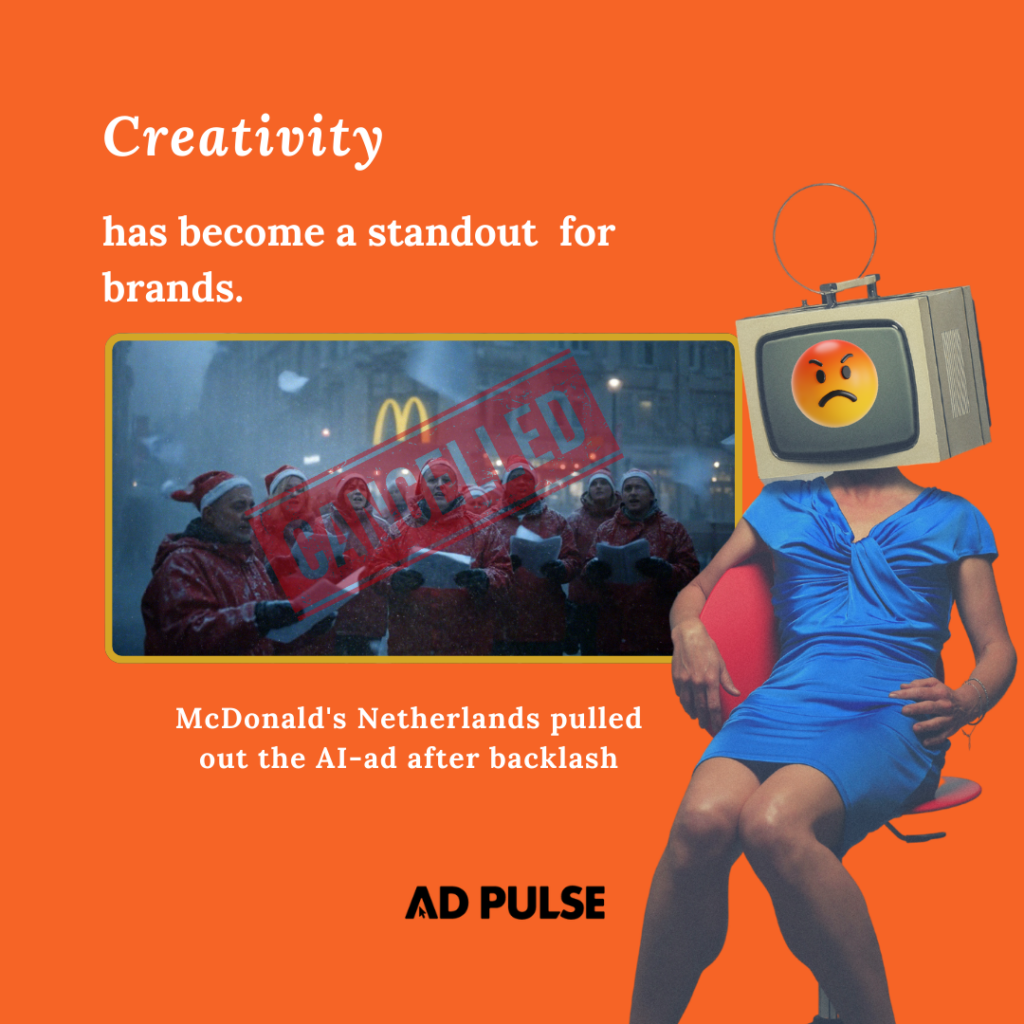
In April 2025, Dentsu report highlighted a strong marketing sentiment from industry on AI in creative works. CMOs overwhelmingly agree that human creativity and empathy will remain essential—with 87 percent saying human creativity is demanded for future marketing success, and 78 percent asserting AI will never fully replace human imagination.
Nielsen at the start of 2025 reported that consumers perceive AI ads as less engaging, boring, and confusing compared to traditional ads. That’s why creativity amounts to perception and belief. Creativity that drives brand lift now feels intentional and human.
Credibility, a reality that marketing cannot outrun
If creativity earns attention, credibility decides whether that attention turns into trust. In 2025, consumers became ruthless fact-checkers.
They compared ads against reviews, scanned Reddit threads, watched creator reactions, and noticed gaps between promises and performance.

Aerie’s decision to avoid AI-generated ads became its most liked Instagram post of 2025, with engagement jumping significantly as audiences praised the brand’s human-centered approach. That’s hard proof that audiences value authentic creative over AI output.
Brand lift rose when messaging aligned with real product experience and company behavior. It collapsed when brands leaned into values they couldn’t uphold or hype they couldn’t deliver.
This is why brand lift is no longer owned solely by marketing teams. Customer support, leadership visibility, and operational transparency now directly influence perception. In 2026, credibility isn’t built in campaigns; it’s tested by them.
Context, the quiet power behind real brand lift
The death of third-party cookies killed lazy targeting and empowered the privacy aspect. In 2025, context became one of the strongest predictors of brand lift. Where and how a message appears matter as much as what it says.
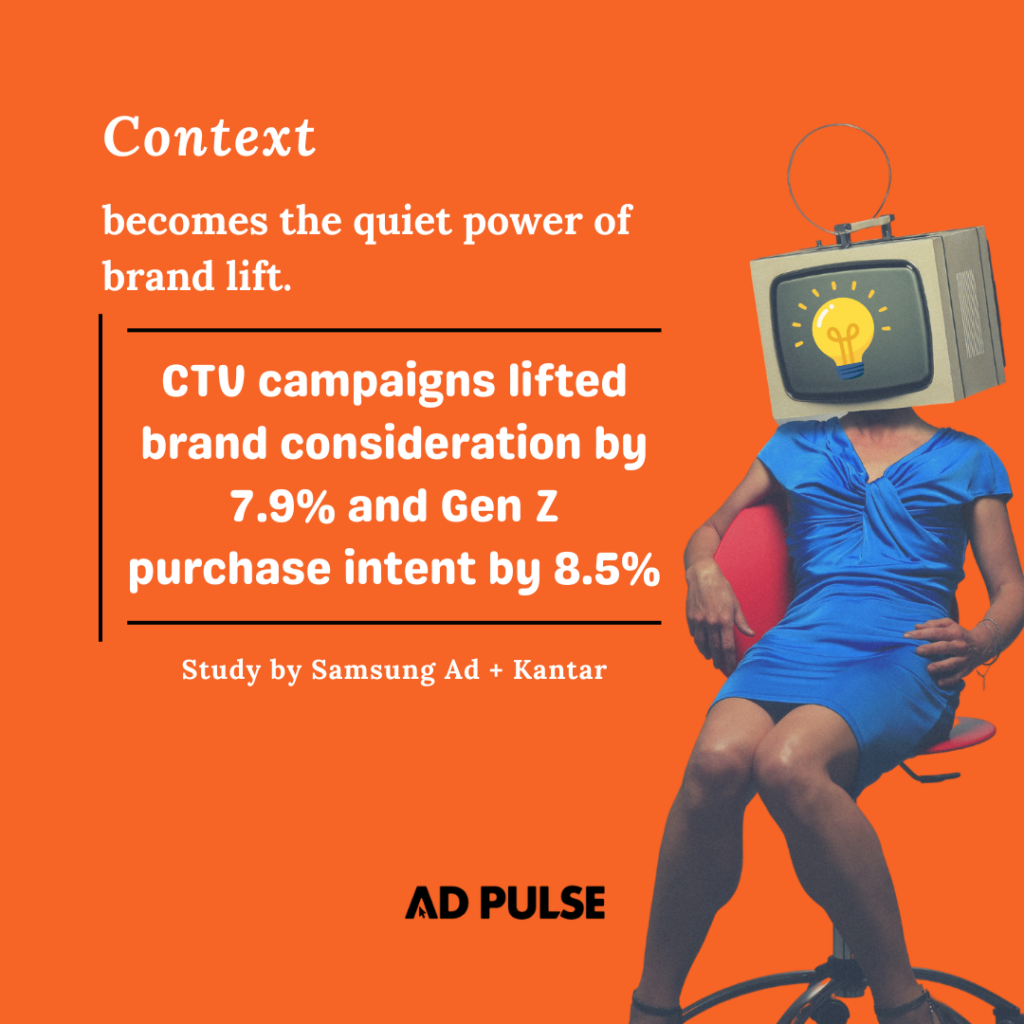
A Samsung Ads + Kantar study found that connected TV (CTV) campaigns lifted brand consideration by ~7.9 percent and Gen Z purchase intent by ~8.5 percent — showing that modern TV formats still deliver measurable brand impact, especially with repeat exposure frequency.
Connected TV proved this at scale. Studies from 2025 showed CTV campaigns driving nearly eight percent lifts in brand consideration and even higher gains among Gen Z when frequency and creative quality were controlled.
Retail media also stepped out of the performance-only box. Brands using retail platforms for upper-funnel storytelling saw measurable lifts in both awareness and favorability, not just conversions.
Contextual relevance, not hyper-personalization, became the trust-preserving path to lift.
Measurement, where brand lift finally gets a reality check
For years, brand lift measurements leaned too heavily on platform surveys and post-campaign reports.
Only about a third of marketers reported using formal brand lift studies consistently, even as pressure to prove impact intensified.

The global advertising effectiveness and ROI measurement market (which includes brand lift solutions) is forecast to grow from about $4.6B in 2025 to $16.4B by 2034, driven by cross-channel analytics and privacy-first tools, showing that investment in rigorous measurement is rapidly escalating.
Leading brands shifted to blended measurement frameworks — combining incrementality tests, geo-lift experiments, media mix modeling, branded search movement, and sentiment analysis.
Synthetic audiences gained traction as a way to stress-test creative before launching, reducing risk and sharpening outcomes. Measurement became continuous, not ceremonial.
Cut to the chase
Brand lift in 2026 is not about being everywhere. It’s about being believed. Creativity earns attention. Credibility earns trust. Context earns relevance. Measurement earns proof. Brands that master this equation will build an advantage in the new landscape.
FAQs
Brand lift is the measurable change in awareness, perception, favorability, or intent caused by exposure to a brand’s marketing, measured by comparing exposed audiences to those who weren’t.
Performance metrics capture immediate actions like clicks or conversions. Brand lift captures the perception of shifts that influence long-term growth and future demand.
No. Smaller brands often see clearer lift because perception shifts are easier to detect. Discipline matters more than budget size.
Both. AI improves analysis and efficiency, but when it replaces judgment and originality, it hurts perception. Audiences reward intent, not automation.